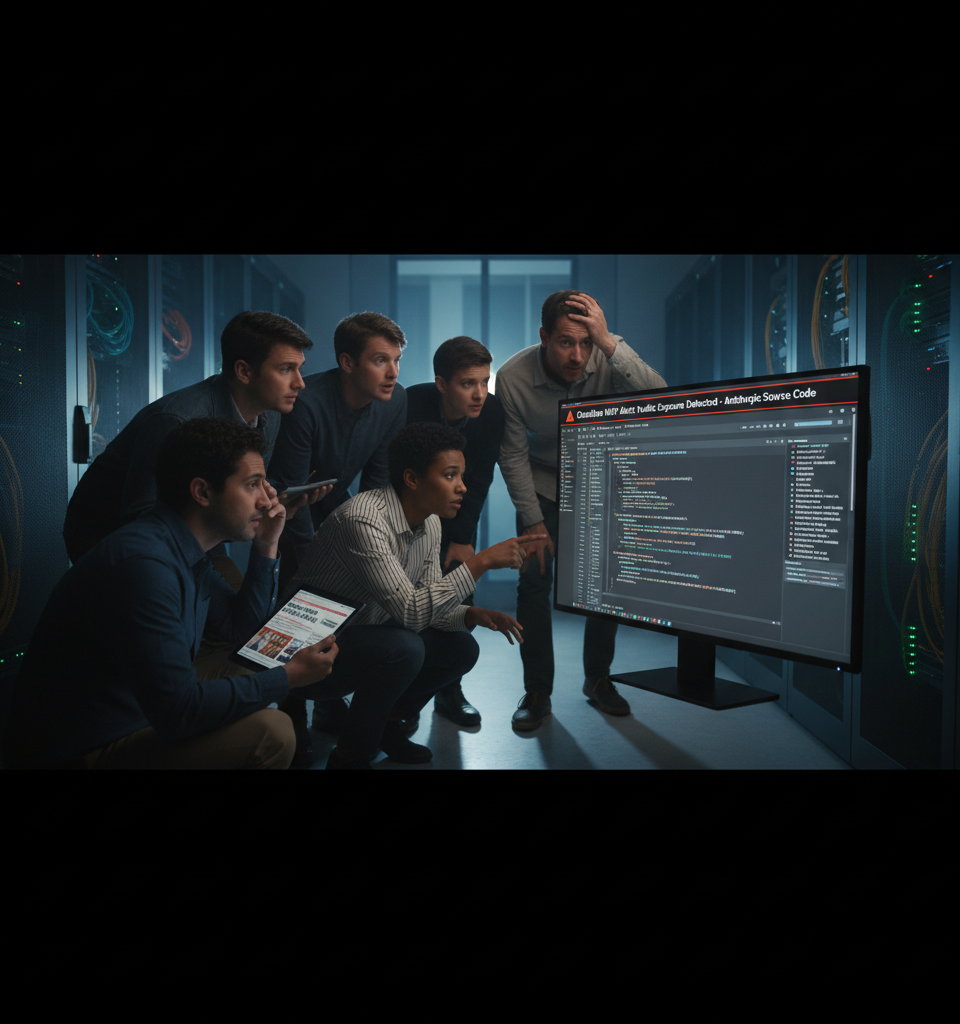
On March 31, 2026, artificial intelligence innovator Anthropic experienced a substantial security breach when it inadvertently uploaded the complete source code for its Claude Code model to a public npm registry. This accidental exposure made 512,000 lines of TypeScript code, distributed across 1,906 files, publicly accessible for an unspecified period. The sensitive data, which included 44 hidden feature flags and references to an unreleased AI model codenamed 'Mythos,' was hosted on a Cloudflare storage bucket until its discovery by a security researcher, who subsequently publicized the finding.
This incident casts a harsh light on the often-overlooked security implications within the rapidly evolving artificial intelligence sector. While the focus has largely been on algorithmic bias, data privacy, and ethical AI development, the secure handling of proprietary codebases remains a critical, yet evidently vulnerable, aspect. The exposure of such a significant volume of intellectual property from a leading AI firm like Anthropic underscores a broader industry challenge that many companies in the competitive AI landscape may be reluctant to openly address.
The specifics of the leak are particularly revealing. The inclusion of 44 hidden feature flags suggests internal development pathways, experimental functionalities, or even potential mechanisms for controlling or modifying the model's behavior that were never intended for public scrutiny. More intriguingly, the presence of references to 'Mythos,' an unreleased model, provides a rare glimpse into Anthropic's future product pipeline and strategic direction. This type of information is usually guarded zealously, given its competitive value.
For the broader technology industry, this event serves as a stark reminder of the perils associated with insufficient security measures in software development and deployment workflows. The npm registry, a widely used package manager for JavaScript, makes it easy for developers to share code, but also carries the inherent risk of public exposure if publishing protocols are not meticulously followed. The incident highlights the need for stringent automated checks, developer training, and robust access controls, especially when dealing with highly valuable and sensitive assets like the core algorithms of advanced AI models.
Given Anthropic’s prominent position in the AI development space, this breach could have significant repercussions beyond the immediate embarrassment. Competitors could potentially gain insights into their architectural choices, optimization strategies, and even reverse-engineer aspects of the Claude Code model. The early exposure of 'Mythos' could also diminish some of its impact upon official launch, potentially giving rivals a head start in developing competitive products or features.
Security researchers and industry analysts are likely to scrutinize this incident closely, using it as a case study for improving best practices across the AI and software development communities. The accidental nature of the leak, rather than a malicious hack, emphasizes that even internal operational oversights can lead to severe security vulnerabilities. This type of 'insider threat,' albeit unintentional, is often harder to detect and prevent than external attacks.
The long-term implications for Anthropic will depend on their response and the full extent to which the leaked code can be exploited or utilized by external parties. While the immediate focus might be on damage control and tightening internal security protocols, the incident may also prompt a wider industry conversation about the necessity of transparent security audits and unified standards for protecting highly sensitive AI intellectual property. This unforeseen event could necessitate a re-evaluation of how AI companies manage, deploy, and ultimately secure their most valuable assets in an increasingly complex and interconnected digital environment.
Looking ahead, this episode is expected to accelerate discussions around 'DevSecOps' — integrating security considerations into every stage of the software development lifecycle — specifically within the AI development paradigm. Companies may move to implement more sophisticated code scanning tools, automated deployment gatekeepers, and immutable infrastructure to prevent similar occurrences. The 'AI security gap' that this incident so vividly exposes is now undeniably at the forefront of concerns for anyone operating in or around advanced technological innovation.