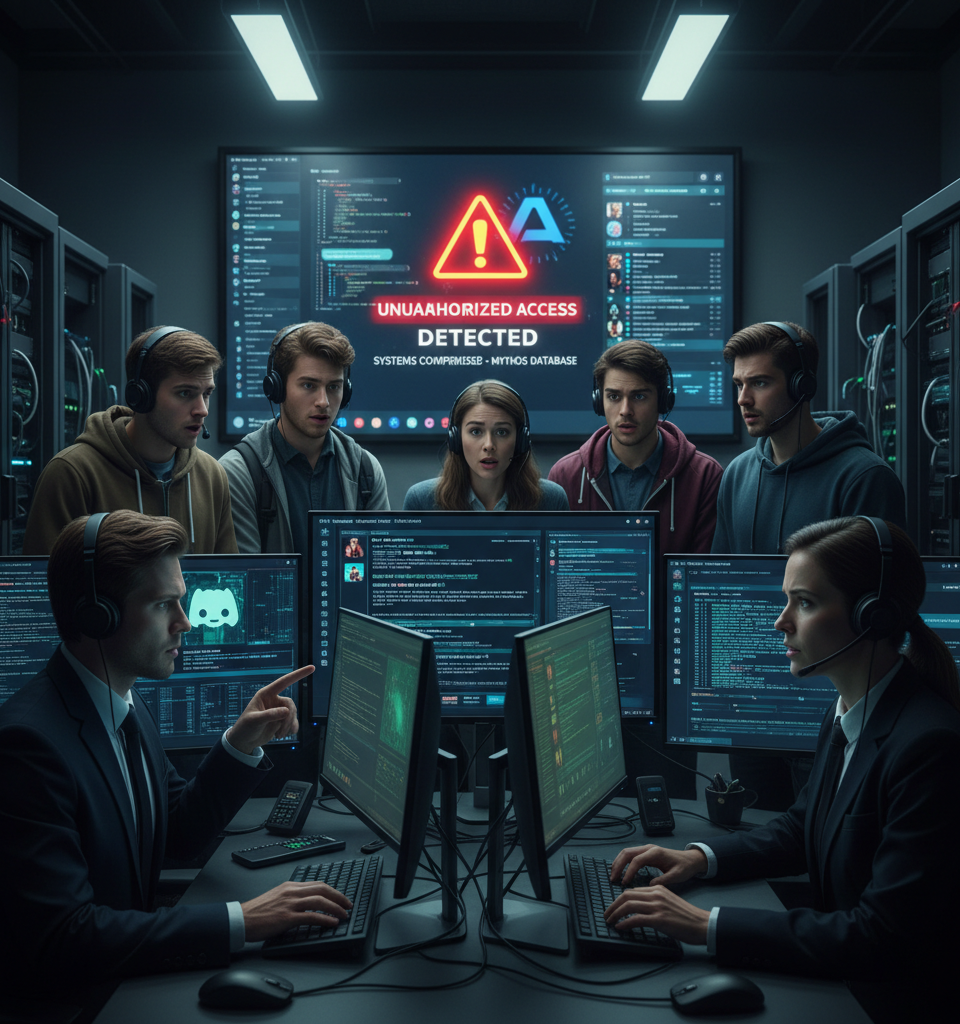
In a significant cybersecurity incident, members of a public Discord server have reportedly obtained unauthorized access to Anthropic's "Mythos" AI model, a sophisticated language model still under development. This breach, which came to light in recent days, allowed external individuals to interact with and potentially extract information from a highly sensitive, unreleased AI system. The event underscores profound security challenges facing leading artificial intelligence developers as they navigate rapid innovation cycles alongside mounting threats.
Context and Significance
The unauthorized access to Mythos is more than just a technical glitch; it represents a critical stress test for the security protocols of advanced AI research labs. Anthropic, a prominent AI safety and research company, positions itself as a responsible developer of large language models, emphasizing ethical considerations and robust safeguards. The compromise of an internal model like Mythos, which likely contains proprietary architecture, training data, and emergent capabilities, could have far-reaching implications, from competitive disadvantages to potential misuse if sensitive algorithms are exposed. This incident echoes past breaches across various industries, reminding us that even the most advanced technological frontiers are not immune to vulnerabilities, often originating from overlooked human or systemic weaknesses.
Key Details of the Breach
The specifics of how the Discord users bypassed Anthropic's security measures remain under investigation. Initial reports suggest the access was gained through an exploited API or an inadvertently exposed endpoint, rather than a direct malicious hack of Anthropic's core infrastructure. Users on the Discord server, reportedly focused on AI model exploration and benchmarking, shared screenshots and textual interactions with what they identified as the Mythos model. One user noted, "It felt like talking to something much more advanced than Claude 2.1." This interaction continued for an undisclosed period before Anthropic reportedly became aware and patched the vulnerability. The incident did not, according to current information, involve a widespread data exfiltration, but the mere ability to interact with and probe an internal model constitutes a significant security breach.
Broader Industry and Market Impact
This incident sends ripples across the nascent but rapidly expanding AI industry. For venture capitalists and investors who have poured billions into companies like Anthropic—valued at an estimated $18 billion after recent funding rounds—it serves as a stark reminder of the non-technical risks associated with AI development. Rival companies will undoubtedly scrutinize their own internal security measures, particularly for pre-release models. The breach also fuels the ongoing debate about AI safety and regulation, with critics pointing to such incidents as evidence that current security practices may not be adequate for systems with potentially transformative, and sometimes unpredictable, capabilities. The trust in AI developers to secure their intellectual property and prevent misuse is paramount for market adoption and regulatory acceptance.
Expert Analysis and Commentary
Cybersecurity experts are largely unanimous in their assessment: AI companies are increasingly high-value targets, and their security postures must mature alongside their technological advancements. Dr. Eleanor Vance, a leading AI ethics researcher, commented, "This isn't just about protecting code; it's about protecting the integrity of artificial intelligence itself. A breach of an unreleased model can leak competitive secrets, but more dangerously, it can reveal unforeseen biases or vulnerabilities that haven't been rigorously tested." Others highlight the 'human element' vulnerability, suggesting that even sophisticated technical safeguards can be undermined by internal procedural oversights or social engineering tactics. "The more complex the system, the more potential points of failure," noted one security consultant, emphasizing the need for comprehensive security audits encompassing both infrastructure and human workflows.
What Lies Ahead
Anthropic has not yet released a detailed post-mortem report on the incident but is expected to do so. The company will likely reinforce its security protocols, focusing on stricter access controls, API security, and internal auditing. This breach will undoubtedly lead to a broader industry re-evaluation of safeguarding unreleased AI models, potentially accelerating the adoption of zero-trust architectures and continuous security testing. Regulators, already grappling with how to govern AI, may cite such incidents to advocate for more stringent compliance requirements concerning data security and model integrity for AI developers. Ultimately, this episode serves as a powerful cautionary tale: as AI models become more powerful and pervasive, the imperative to secure them becomes exponentially critical, demanding constant vigilance and adaptability from developers and security professionals alike.