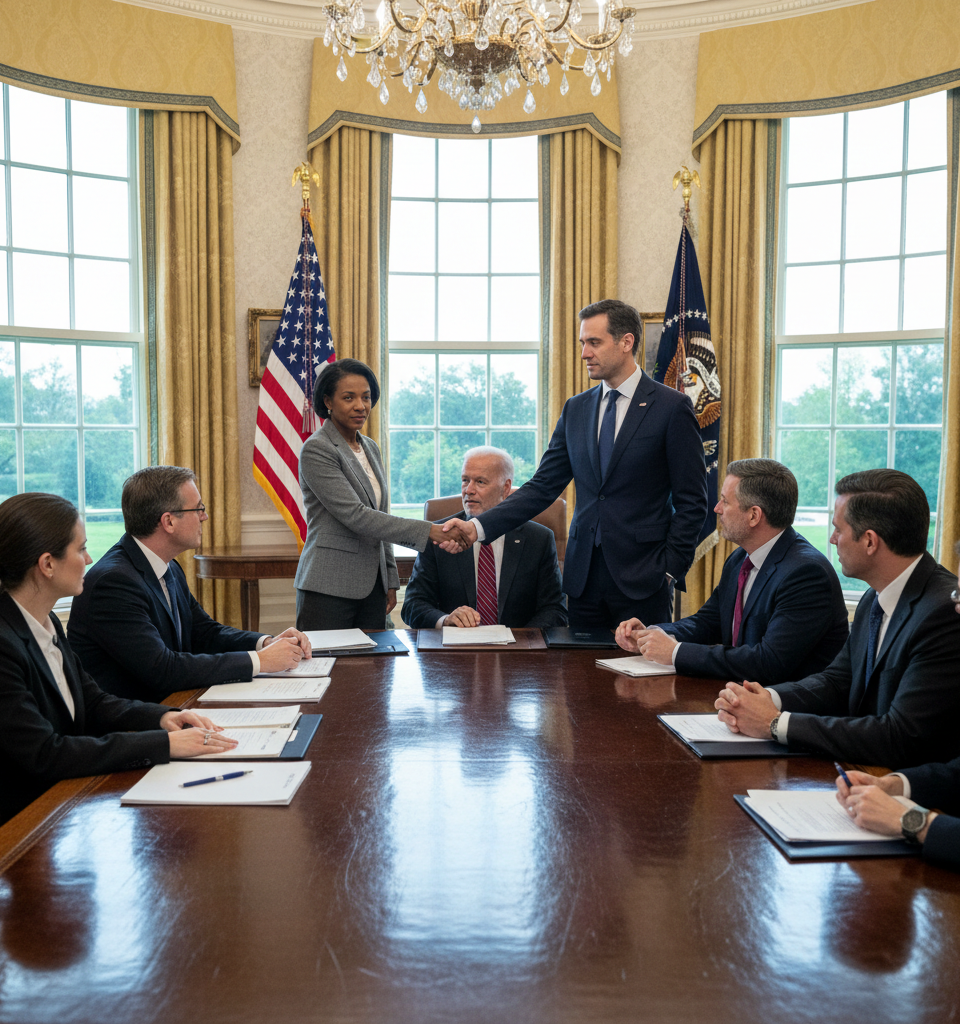
Washington D.C. – In a high-stakes meeting at the White House on Friday, Anthropic CEO Dario Amodei engaged directly with Chief of Staff Susie Wiles and Treasury Secretary Scott Bessent, initiating what officials described as "productive and constructive" discussions. The talks represent the critical first step toward de-escalating a growing standoff concerning Anthropic's commercially sensitive AI models, particularly those underpinning the 'Mythos' project. This bilateral engagement underscores the Biden administration's increasing focus on the intersection of advanced technology, national security, and economic policy, as well as its determination to shape the future of artificial intelligence development.
The Genesis of the Mythos Standoff
The roots of this high-level intervention lie in escalating concerns within federal circles regarding the potential implications of Anthropic's advanced AI systems, collectively known as 'Mythos'. While specific details remain largely under wraps due to their proprietary and potentially sensitive nature, it is understood that the administration harbors apprehensions about the far-reaching capabilities of these models. These concerns span potential dual-use applications, data privacy imperatives, and the broader societal impact of highly sophisticated autonomous systems. The White House's decision to bring Amodei to the table directly reflects a comprehensive strategy to engage leading AI developers before regulatory frameworks become entrenched, seeking cooperative solutions rather than adversarial mandates.
Key figures from within the administration, speaking off the record, indicated that the talks focused on striking a balance between fostering innovation and safeguarding national interests. Secretary Bessent's presence highlights the economic dimensions of the dispute, particularly regarding competitive advantages, market disruption, and the potential for unfair practices. Chief of Staff Wiles, meanwhile, emphasized the broader administrative and policy alignment necessary for navigating this uncharted technological territory. The discussions aimed to establish clear lines of communication and a framework for ongoing dialogue, rather than yield immediate resolutions.
Market Implications and Industry Reaction
This high-profile meeting sends ripples across the burgeoning artificial intelligence industry. Companies like Google, OpenAI, and Meta, all heavily invested in large language models and advanced AI, are closely watching the developments. The administration's engagement with Anthropic could set a precedent for future interactions between government and leading AI firms, potentially shaping regulatory trajectories and industry standards. Analysts suggest that increased governmental scrutiny, while perhaps perceived as a burden by some, could also lend legitimacy and stability to the sector if handled effectively, distinguishing responsible actors from those taking excessive risks. The AI market, projected to reach trillions within the decade, hinges on such careful navigation.
Industry insiders note that the transparency and ethical guidelines surrounding AI development are becoming paramount. "This isn't just about technical capabilities anymore; it's about trust and societal integration," commented Dr. Anya Sharma, a leading AI ethicist at Stanford University. "The government's proactive role, exemplified by this meeting, signifies a maturing of the AI landscape where ethical considerations are elevated to a national priority, not just a corporate afterthought." The discussions likely touched upon governance models for AI, data provenance, and the mechanisms for ensuring equitable access and preventing bias in advanced systems.
Expert Perspectives on Future Regulations
Experts widely believe that Friday's discussions are a harbinger of more robust regulatory frameworks for AI in the United States. While the EU has advanced with its AI Act, U.S. policy has been more fragmented. "The White House engaging directly at this level signals a strategic shift towards a more coherent national AI policy," stated Dr. Elias Vance, a former Department of Commerce advisor. "It suggests a move away from purely reactive measures towards a more proactive, collaborative approach with industry leaders like Anthropic. This is critical for maintaining American leadership in AI while mitigating its inherent risks." The outcome of these negotiations could influence forthcoming legislation and the allocation of federal research grants, steering the direction of future AI innovation.
The Path Forward: Dialogue and Oversight
The immediate outcome of the White House talks is not a definitive resolution but rather a commitment to continued dialogue. Both parties acknowledged the complexity of the issues and the necessity of a sustained, multi-faceted approach. Future meetings are expected to delve deeper into specific technical safeguards, data governance protocols, and the establishment of independent oversight mechanisms for Anthropic's cutting-edge AI. For Anthropic, the stakes are immense; successfully navigating this regulatory scrutiny could cement its position as a trusted leader in responsible AI development, while missteps could invite stifling restrictions. The administration, meanwhile, aims to demonstrate its capacity to guide technological advancement responsibly, ensuring that the benefits of AI are realized without compromising national security or public trust.
The White House's engagement reflects a growing recognition that AI, particularly the frontier models developed by companies like Anthropic, poses unique challenges that traditional regulatory frameworks may not adequately address. The 'Mythos' project, therefore, serves as a test case for how the U.S. government intends to interact with the cutting edge of technological innovation. The success of these ongoing discussions will likely dictate the pace and nature of AI integration into critical sectors, defining a new era of collaboration – or contention – between Silicon Valley and Washington D.C.