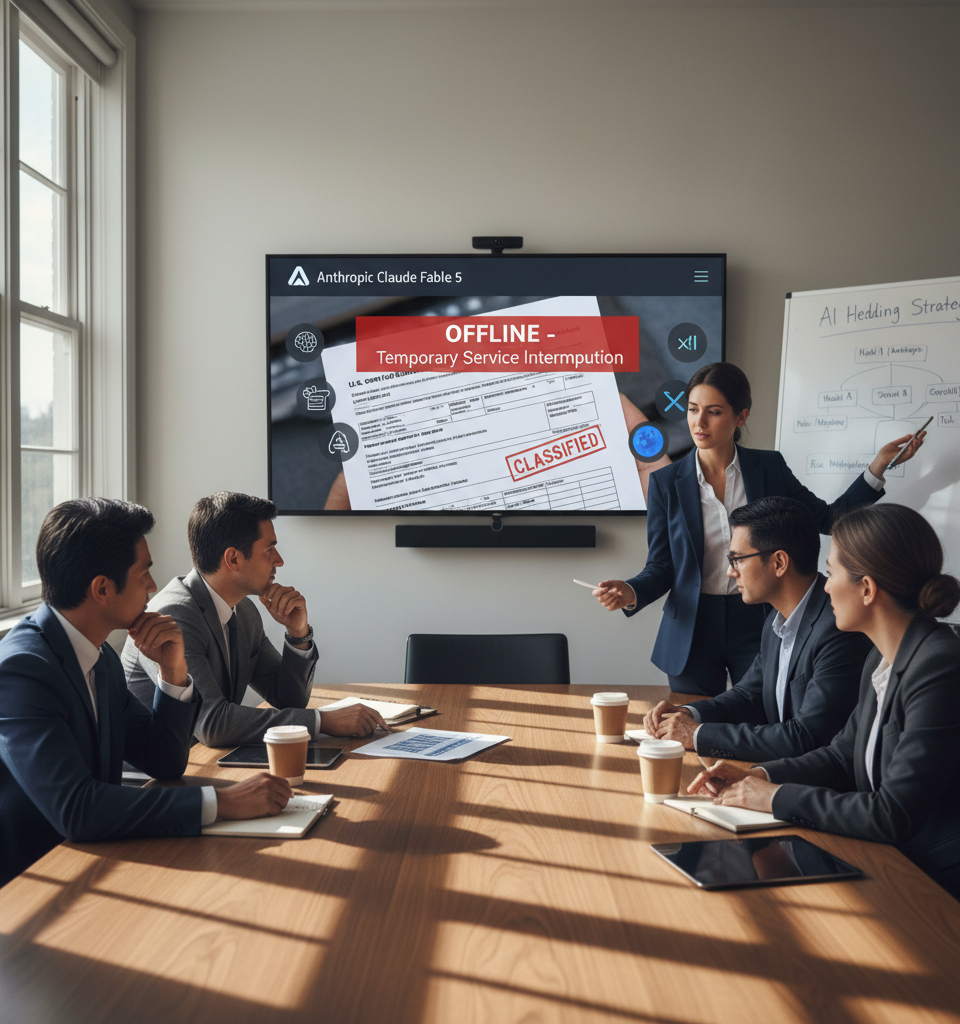
The sudden, unannounced suspension of Anthropic's Claude Fable 5, previously considered the market's most capable AI model, illustrated the critical importance of a diversified AI strategy for businesses. On June 12, a U.S. export-control order effectively pulled the model offline for all customers, leaving many without their primary AI tooling for weeks. This episode, culminating in the model's return this week under "tighter safeguards" following the release of China's Z.ai open-weights GLM-5.2, confirmed the foresight of enterprises that had already built hedges against such disruptions.
The Strategic Imperative of AI Hedging
New data indicates that a significant majority—two-thirds—of enterprises had proactively hedged their AI model strategy even before this recent controversy. This widespread adoption reflects an understanding within the corporate sector that reliance on a single, potentially vulnerable AI model poses substantial operational and strategic risks. The unprecedented nature of the Claude Fable 5 outage, which offered no prior warning or timeline for resolution, undoubtedly solidified this perspective among those still contemplating such measures.
The concept of an "AI hedge" typically involves distributing AI workloads across multiple vendors or utilizing diverse model architectures to mitigate the impact of a failure or restriction imposed on any single provider. This can range from maintaining subscriptions with competing AI developers to integrating open-source alternatives that can be deployed internally. The market's swift response to the Claude Fable 5 vacuum, specifically with the release of Z.ai's GLM-5.2, further emphasizes the dynamic and competitive nature of the AI landscape.
Unforeseen Geopolitical and Regulatory Risks
Anthropic’s situation was not merely a technical glitch but a direct consequence of escalating geopolitical tensions and regulatory scrutiny. The imposition of a U.S. export-control order on a leading AI model highlights a new frontier of risk, where technological capabilities intersect with national security and international relations. This adds a complex layer to AI adoption strategies, requiring businesses to consider not just performance and cost, but also the geopolitical stability and regulatory compliance of their AI partners.
The U.S. government's ability to swiftly revoke access to a critical AI tool for all customers, without recourse or immediate clarification, presents a challenging precedent. Companies are now compelled to scrutinize the jurisdictional and ownership structures of their AI providers more deeply. The incident underscores the potential for AI models, especially those deemed "most capable," to become instruments of national policy or sources of diplomatic leverage.
Market Dynamics and Competitive Responses
The temporary void created by the Claude Fable 5 outage was quickly eyed by competitors. China's Z.ai, by releasing its open-weights GLM-5.2 into the market vacuum, demonstrated an opportunistic and agile response. This move not only provided an alternative for enterprises left in the lurch but also intensified competition in the high-end AI model space. The GLM-5.2's open-weights nature offers an additional layer of appeal for businesses seeking greater control, transparency, and independence from single-vendor ecosystems.
The return of Claude Fable 5, now equipped with "tighter safeguards," indicates a future where AI models will likely operate under more stringent oversight. While the exact nature of these safeguards remains unspecified, they are expected to address concerns that led to the export-control order, potentially involving data residency, algorithmic transparency, or access protocols. This evolution signals a maturing industry navigating complex ethical, regulatory, and geopolitical landscapes.
The Future of Enterprise AI Resilience
The episode with Claude Fable 5 serves as a stark reminder that even the most advanced AI technologies are not immune to external shocks. For enterprises, the lesson is clear: robust AI strategies must incorporate resilience and diversification as core tenets. This trend towards hedging is not just about avoiding downtime; it is about ensuring business continuity, mitigating regulatory exposure, and maintaining strategic agility in a rapidly evolving technological and geopolitical environment.
Moving forward, we can expect to see an accelerated investment in multi-cloud AI strategies, increased exploration of open-source models, and a greater emphasis on contractual agreements that address potential geopolitical or regulatory interruptions. The mainstreaming of AI hedging is not merely a reaction to a single incident but a fundamental shift in how enterprises perceive and manage their technological dependencies in the age of advanced artificial intelligence.