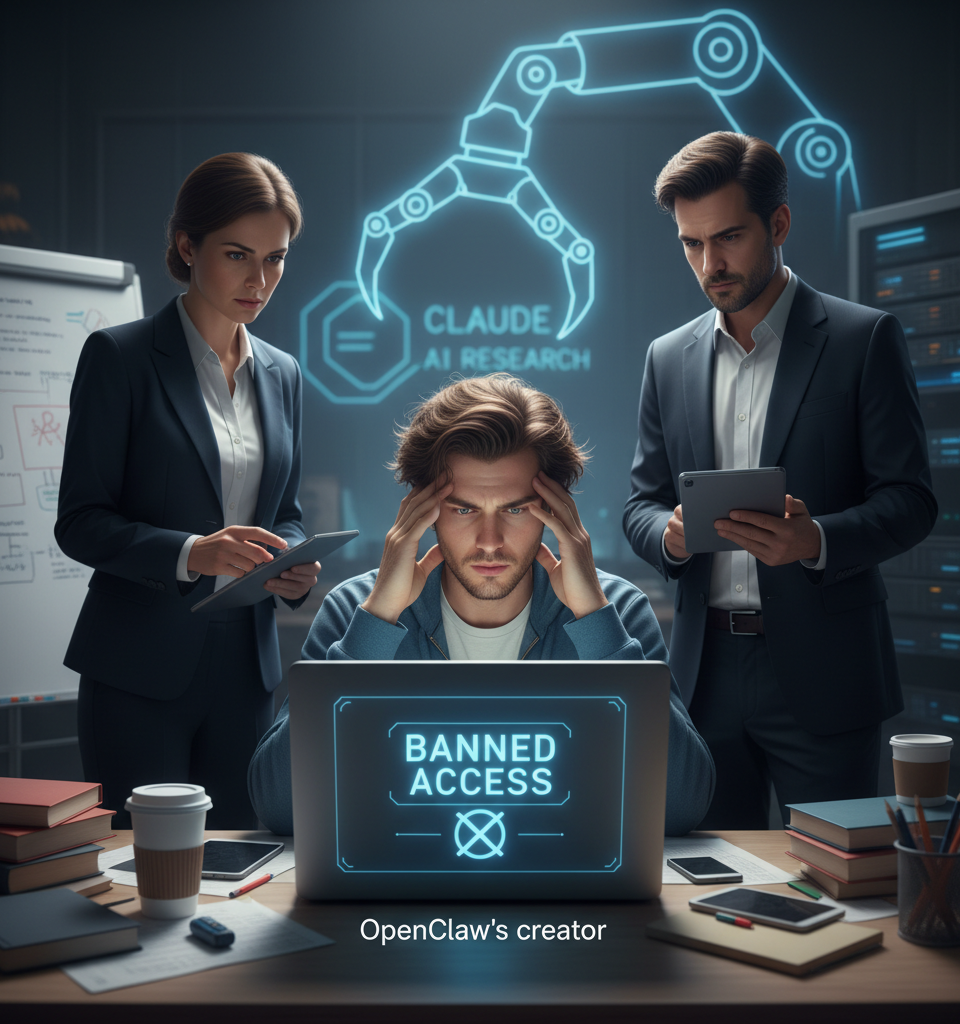
Anthropic has temporarily restricted the creator of OpenClaw, a prominent user of its advanced AI model Claude, from accessing the platform. This access suspension occurred in the immediate aftermath of a recent alteration to Claude's pricing model specifically impacting OpenClaw users. The incident underscores growing tensions between AI developers and the platforms they rely upon, with changes in commercial terms potentially leading to direct repercussions for third-party integrators.
The ban highlights the complex and often delicate relationship between foundational AI model providers and the developers who build applications on top of these powerful technologies. As large language models like Claude become more integral to a wide array of software products, disputes over pricing, access, and usage policies are likely to become more frequent and impactful. The financial implications for dependent developers can be substantial, and sudden policy shifts can disrupt business operations and user experiences.
The Catalytic Pricing Shift
The genesis of the access restriction can be directly traced to a revised pricing scheme for Claude that was implemented last week, specifically targeting OpenClaw users. While the precise details of the new pricing structure have not been fully disclosed in this context, its immediate consequence was the temporary cessation of access for OpenClaw's creator. This suggests a potentially contentious increase or change in billing methodology that precipitated a strong reaction from Anthropic.
OpenClaw, having integrated Claude into its functionalities, would undoubtedly be sensitive to significant shifts in the cost of API calls or token usage. Such changes can directly affect profit margins, development roadmaps, and the end-user pricing of OpenClaw's own services. The temporary ban could be interpreted as an enforcement action, a negotiating tactic, or a response to a perceived breach of new terms, though Anthropic has not yet publicly elaborated on the specific reasons for the suspension beyond its proximity to the pricing change.
Industry Implications and Developer Ecosystems
This incident sends ripples across the developer ecosystem reliant on major AI models. It raises critical questions about platform stability, the security of integration, and the predictability of operational costs for businesses building on third-party APIs. Developers often invest significant time and resources into integrating and optimizing their applications with specific AI models. Sudden changes in pricing or access can jeopardize these investments and force costly pivots or re-architectures.
The broader industry impact could lead to increased scrutiny over the terms of service offered by leading AI model providers, including Anthropic, OpenAI, and Google. As AI becomes a foundational utility, the need for transparent, stable, and equitable commercial agreements with third-party developers will become paramount. This event may prompt developers to explore multi-model strategies to mitigate platform-specific risks, fostering a more diversified AI backend for their applications.
Near-Term Outlook and Future Relations
While the ban was temporary, its occurrence underscores a potential friction point in the rapidly evolving AI landscape. The immediate focus will likely be on the resolution of the dispute between Anthropic and OpenClaw's creator. The outcome could set a precedent for how similar disagreements are handled in the future. Will Anthropic offer clearer communication channels and more accommodating transition periods for pricing adjustments? Or will developers face a stricter enforcement regime?
Looking ahead, stakeholders will be observing how Anthropic manages its developer relations moving forward. Maintaining a strong, trusting relationship with the developer community is crucial for the widespread adoption and innovation powered by its AI models. Companies building on top of AI platforms are key drivers of their eventual success and market penetration. Clarity on pricing strategies, fair warning periods for changes, and robust support mechanisms will be essential to prevent similar disruptions and ensure a healthy, collaborative AI ecosystem. The temporary ban serves as a significant marker in the ongoing evolution of these critical business relationships.