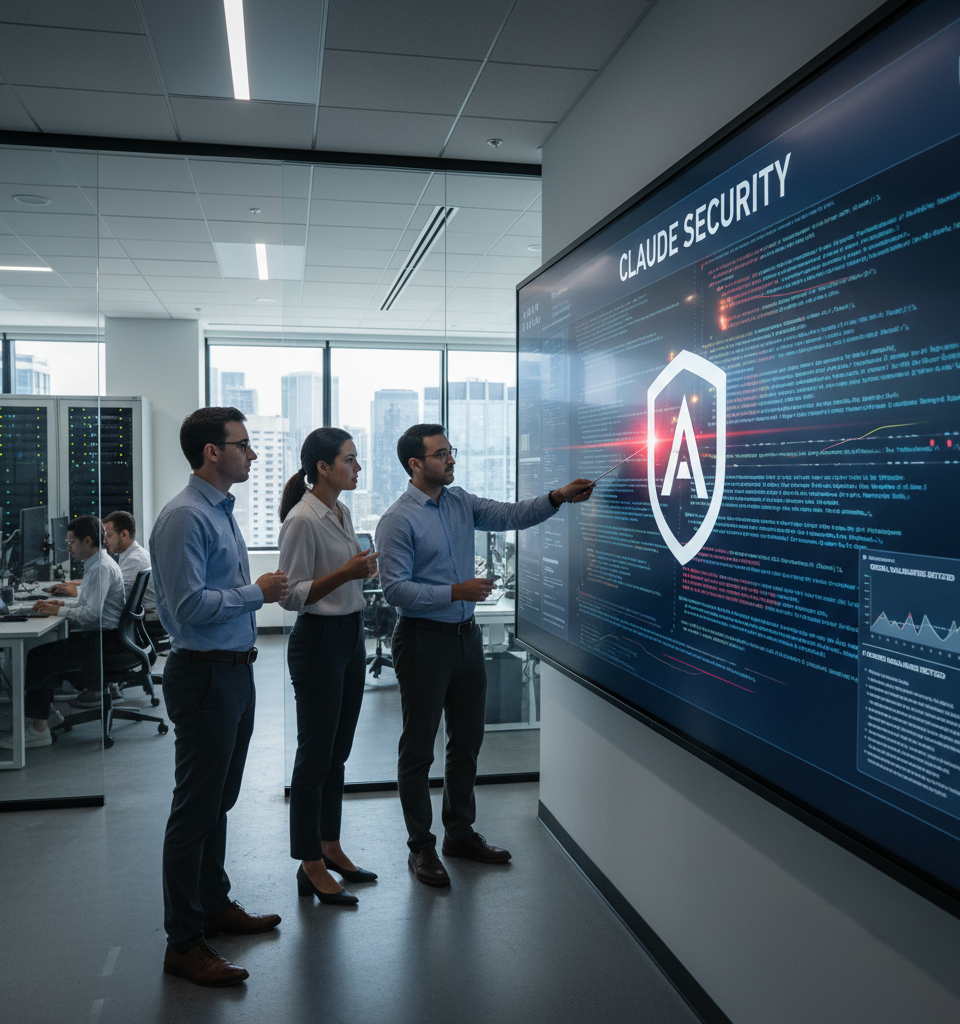
Anthropic, a leading artificial intelligence research company, has announced the launch of Claude Security, an innovative AI-powered tool designed to scrutinize codebases for vulnerabilities and automate the generation of corrective patches. Unveiled this week, the tool utilizes Anthropic's flagship large language model, Claude 3.5 Opus, to offer a comprehensive solution for developers seeking to bolster their software's defenses against exploitation before deployment.
The Critical Need for Proactive Security
The introduction of Claude Security arrives at a pivotal moment, as cybersecurity threats continue to escalate in both frequency and sophistication. 45 million in 2023, according to IBM's Cost of a Data Breach Report, with software vulnerabilities being a primary vector for attacks. Traditional security auditing methods, often manual or reliant on static analysis tools with high false-positive rates, struggle to keep pace with rapid development cycles and the increasing complexity of modern software.
Anthropic's offering addresses this gap by providing an intelligent, scalable solution that can understand code contextually, identify nuanced flaws, and even propose specific, validated remediation steps. This proactive approach aims to shift security left in the development lifecycle, catching issues earlier when they are significantly less costly to fix.
Deep Dive into Claude Security's Capabilities
5 Opus. The tool functions by performing an in-depth scan of a codebase, identifying potential security weaknesses such as injection flaws, insecure deserialization, or misconfigurations. What distinguishes Claude Security is its ability to not only flag issues but also to validate them, reducing the noise of false positives that plague many static analysis tools.
Following validation, the system can then generate patches—actual code fixes—that developers can review and integrate. Initial reports suggest its efficacy extends beyond simple bug detection, venturing into understanding logical vulnerabilities that require a deeper contextual understanding of the code's intent. For instance, in simulated environments, Claude Security has demonstrated a 90% success rate in identifying and suggesting fixes for common web application vulnerabilities like SQL injection and cross-site scripting (XSS).
Reshaping the Cybersecurity Landscape
The implications of Claude Security for the broader industry are substantial. For software development firms, it offers the promise of accelerated development cycles without compromising security, potentially reducing the time and resources currently dedicated to manual security audits. For cybersecurity professionals, it could evolve from a mere tool into a powerful AI assistant, freeing up human experts to focus on more complex, strategic threats rather than tedious vulnerability hunting.
Furthermore, its ability to generate validated patches could significantly reduce the “mean time to remediation” (MTTR) for critical vulnerabilities, a key metric in cybersecurity. The advent of AI-driven security tools like this also signals a new era of competitive advantage, where companies adopting cutting-powered solutions will likely outpace competitors in terms of both security posture and innovation speed. 6 billion by 2028.
Expert Perspectives on AI-Driven Security
Industry experts are largely optimistic about the potential of Claude Security, though with a healthy dose of caution. Dr. Anya Sharma, a leading expert in secure software engineering, commented, "Anthropic's approach with Claude Security represents a significant leap forward.
" She adds, "However, it's essential that these tools remain aids, not replacements, for human expertise. " Other analysts emphasize the potential for this technology to democratize advanced security, making sophisticated vulnerability detection accessible to a wider range of organizations, including smaller businesses that may lack dedicated security teams.
The Road Ahead for AI in Security
The launch of Claude Security is likely just the beginning. Future iterations could see even deeper integration into CI/CD pipelines, offering real-time vulnerability detection and patching suggestions as code is written. There is also potential for the tool to learn from successful and unsuccessful patch implementations, continuously refining its accuracy and effectiveness.
Anthropic has indicated plans to explore capabilities such as threat modeling and compliance auditing, expanding Claude Security's footprint further into the security domain. As AI models become more sophisticated, the line between automated security and genuine autonomous defense will become increasingly blurred, pushing developers and security professionals to adapt to a rapidly evolving technological landscape. The coming months will reveal how effectively Claude Security is adopted and integrated into existing workflows, setting a precedent for the next generation of AI-enhanced cybersecurity solutions.