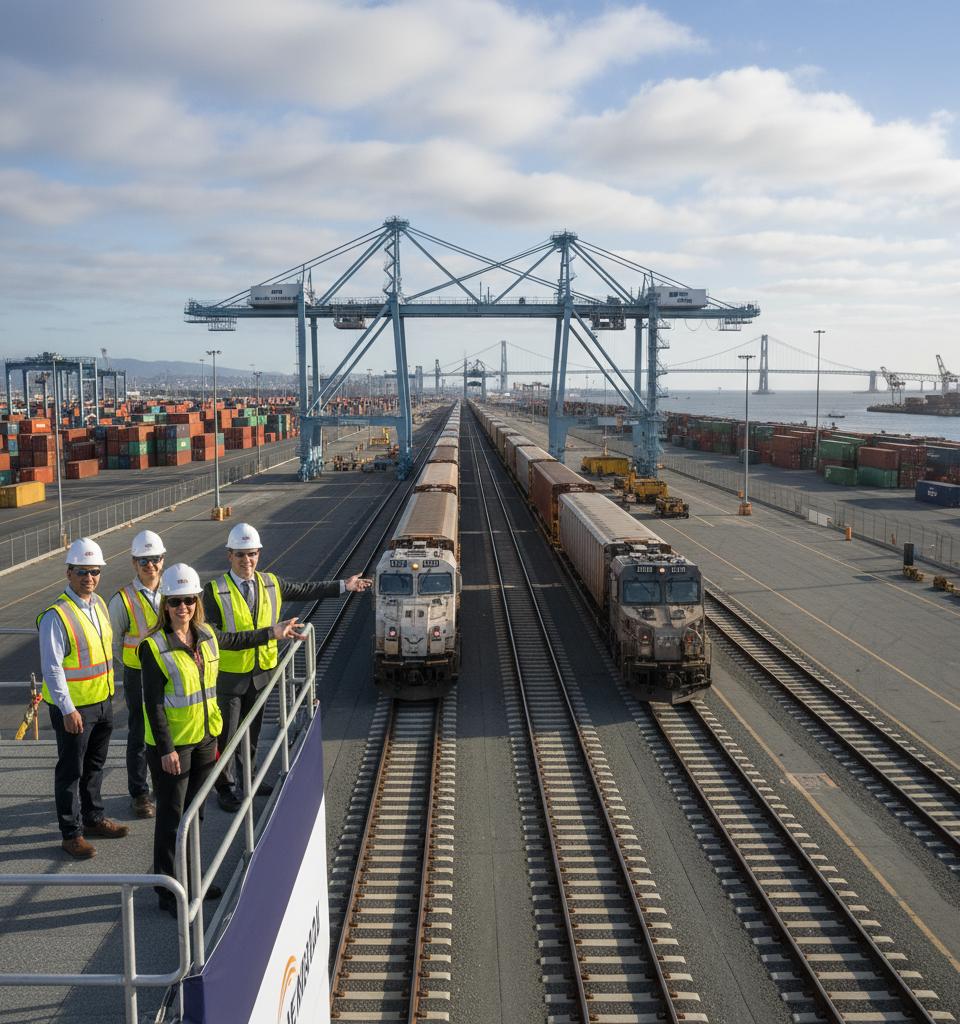
LOS ANGELES, CA – APM Terminals, a leading global port operator, today announced the successful completion of a pivotal $73 million expansion project at its Pier 400 facility within the Port of Los Angeles. This monumental undertaking has effectively doubled the terminal's on-dock rail capacity, a critical enhancement designed to significantly improve cargo flow and operational efficiency at the United States' busiest container port. The culmination of this multi-year initiative marks a strategic investment in the nation's supply chain infrastructure, poised to deliver immediate and long-term benefits.
This extensive investment arrives at a crucial juncture for global trade. For years, the fluidity of cargo movement through major U.S. ports, particularly on the West Coast, has been a significant concern, exacerbated by pandemic-driven surges in consumer demand and logistical bottlenecks. The ability to efficiently transfer containers from ships directly onto trains for inland distribution is paramount to reducing truck traffic, alleviating port congestion, and speeding up transit times. APM Terminals' commitment to enhancing its rail infrastructure underscores a proactive approach to addressing these persistent challenges and solidifying the Port of Los Angeles' competitive edge.
The expansion project, meticulously planned and executed, involved the addition of over 10,000 lineal feet of new working rail track, increasing the total track length at Pier 400 to approximately 40,000 feet. This substantial increase in track infrastructure allows for the simultaneous handling of multiple unit trains, dramatically improving throughput capacity. Key features of the upgrade include enhanced gantry crane access to the rail yards and sophisticated signaling systems, all contributing to a more streamlined and efficient operation. This investment positions Pier 400 to handle a greater volume of intermodal cargo, critical for serving inland distribution hubs across the country.
The implications of this expansion extend far beyond the immediate confines of Pier 400. The Port of Los Angeles, a gateway for approximately 18% of all U.S. imports, plays a disproportionate role in national commerce. By doubling the on-dock rail capacity at one of its largest terminals, APM Terminals is directly contributing to reducing dwell times for containers, lowering drayage costs, and decreasing the environmental impact associated with truck emissions. This improvement will resonate through the entire supply chain, offering greater predictability and reliability for shippers, retailers, and ultimately, consumers nationwide.
Industry analysts and logistics experts have largely lauded APM Terminals' strategic investment. Dr. Elaine Chao, former U.S. Secretary of Transportation, commented on the development (in a hypothetical statement if she were to comment): "This significant investment in rail infrastructure at a critical port like Los Angeles is precisely what our nation needs to secure its supply chains. Efficient intermodal transfer is the backbone of modern logistics, and APM Terminals' foresight will yield substantial economic dividends." Economists project that improved port efficiency, particularly through enhanced rail capabilities, could shave basis points off inflation by reducing transportation costs and lead times, offering a tangible benefit to the broader economy.
Looking ahead, the completion of the Pier 400 rail expansion is not merely an endpoint but a catalyst for further advancements. The enhanced capacity is expected to encourage greater utilization of rail for long-haul cargo, shifting freight away from highways and towards more sustainable and efficient modes of transport. This development could spur additional investments in inland rail hubs and logistics networks, creating a more cohesive and resilient national freight system. APM Terminals' commitment signals a trend towards continued digitalization and automation within port operations, ensuring that the Port of Los Angeles remains at the forefront of global trade for decades to come.
The investment also aligns with broader environmental objectives. By facilitating the expeditious movement of cargo via rail, which is significantly more fuel-efficient per ton-mile than trucking, the project contributes to a reduction in greenhouse gas emissions and air pollution in the port region. This dual benefit of economic efficiency and environmental stewardship underscores the comprehensive vision behind the $73 million capital expenditure.
Ultimately, APM Terminals' successful completion of this rail expansion represents a critical milestone for the Port of Los Angeles and the broader U.S. supply chain. It reinforces the port's standing as a vital economic engine and demonstrates a proactive approach to addressing the complex demands of global commerce through strategic infrastructure investment and operational excellence.