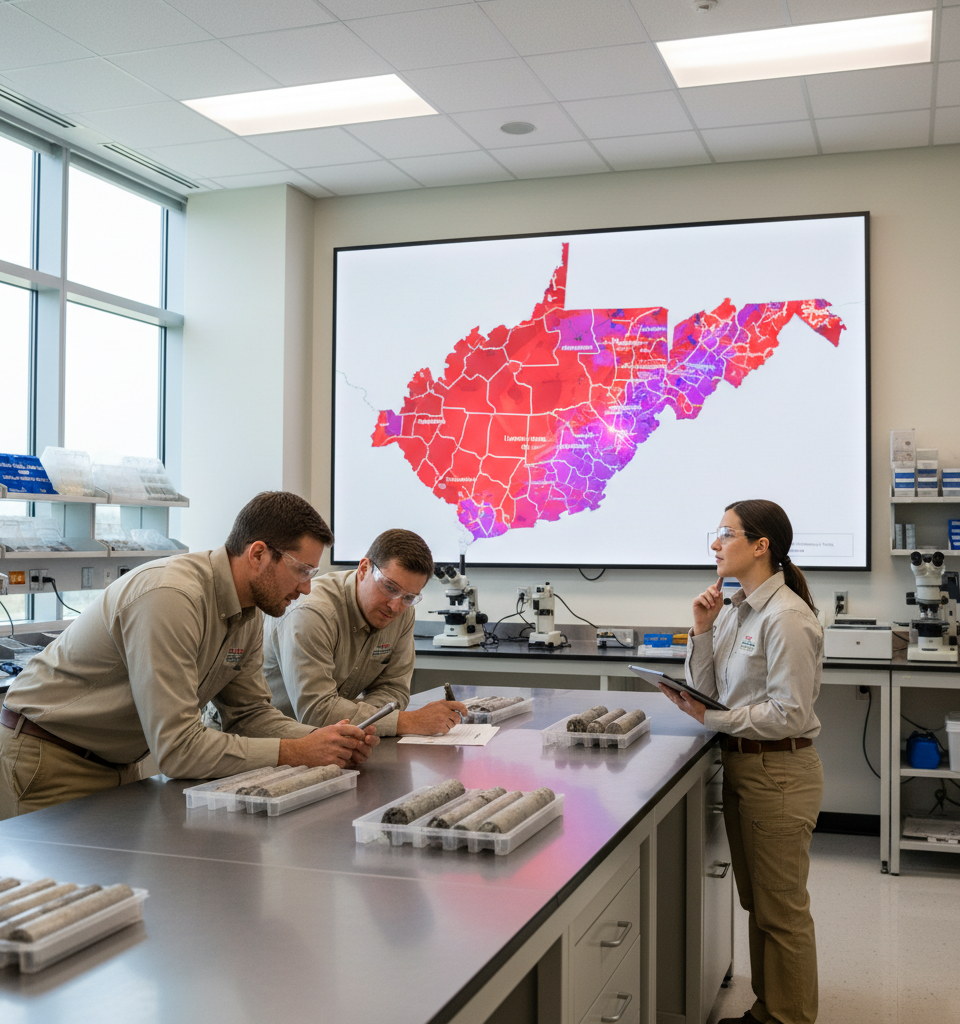
The U.S. Geological Survey (USGS) has unveiled a groundbreaking assessment, confirming that the Appalachian region possesses enough lithium – a critical component in electric vehicle (EV) batteries – to eliminate American dependence on international imports for potentially hundreds of years. This revelation, released recently, positions the eastern United States as a pivotal future source for a mineral essential to the nation's burgeoning EV industry and broader clean energy initiatives.
Context and Background The United
States currently imports the vast majority of its lithium, primarily from Australia and South America, with significant processing capabilities located in China. This reliance creates considerable supply chain vulnerabilities and poses geopolitical risks, especially as global demand for EVs skyrockets. The Appalachian discovery harks back to an earlier era of domestic resource exploitation, offering a strategic opportunity to re-establish U.S. leadership in critical mineral production. The push for domestic sourcing intensified under recent administrations, which have prioritized strengthening supply chains for critical minerals necessary for national security and economic resilience.
Key Details of the Discovery The
USGS report highlights that the lithium is found in underground brine formations, particularly within the Marcellus and Utica shale plays. While the exact quantity is still being quantified, preliminary estimates suggest reserves could exceed those currently known in some of the world’s leading lithium-producing nations. The lithium concentrations identified are considered economically viable for extraction, leveraging existing knowledge and infrastructure from the region's long history of oil and gas production. Extraction methods would likely involve advanced brine extraction techniques, similar to those used in other lithium-rich areas, potentially employing direct lithium extraction (DLE) technologies to minimize environmental impact and maximize efficiency. The report anticipates that initial commercial operations could begin within the next decade, provided regulatory and investment hurdles are cleared.
Industry and Market Impact
This domestic lithium source could dramatically reshuffle the global EV battery supply chain, offering American manufacturers a stable and secure supply of raw material. Automakers like General Motors and Ford, who have pledged billions into EV production, currently face intense competition and volatile pricing for lithium. Access to a domestic supply could stabilize costs, accelerate production timelines, and foster more competitive pricing for U.S.-made EVs. Furthermore, it could spur substantial investment in states like Pennsylvania, Ohio, and West Virginia, creating thousands of high-paying jobs in mining, processing, and related support industries. The localization of the supply chain would also enhance America's competitiveness against burgeoning EV markets in Asia and Europe.
Expert Perspectives Industry experts and analysts are calling this discovery a game-changer.
"This is not just about mineral reserves; it's about national energy security and economic revitalization," stated Dr. Elena Petrova, a senior analyst at Global Resources Insights. "The Appalachian region has the geological potential and, critically, the existing workforce with subsurface extraction expertise. The challenge now lies in developing environmentally sound and economically viable extraction processes at scale." Others point to the potential for technological innovation, with universities and private companies likely to invest heavily in refining DLE techniques tailored to Appalachian geology.
What's Next: Future Implications
The immediate next steps involve detailed geological mapping and extensive feasibility studies to precisely quantify the reserves and assess the commercial viability of extraction. Significant private and public investment will be required to develop the necessary infrastructure for mining, processing, and refining. Environmental considerations, including water usage and waste management, will be paramount and subject to rigorous regulatory oversight. Furthermore, securing social license from local communities will be crucial, given the region's complex history with resource extraction. The Biden administration's focus on critical minerals supply chain resilience suggests strong federal support could be forthcoming, potentially through grants, loan programs, and streamlined permitting. Over the longer term, this discovery could solidify the U.S. position as a global leader in EV technology, reducing its dependence on foreign adversaries for critical minerals and bolstering national security interests.