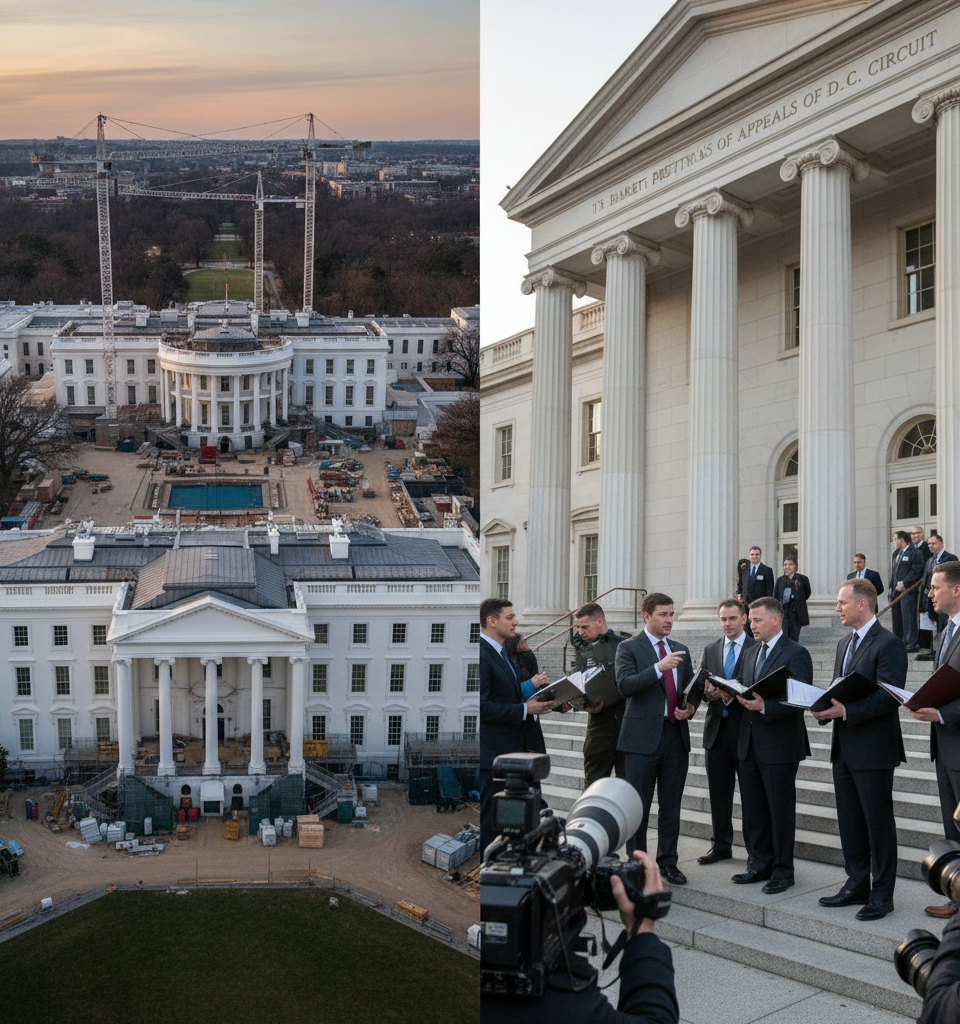
Washington D.C. — A federal appeals court has interceded in the ongoing legal dispute surrounding the construction of a new ballroom within the White House complex, mandating a thorough assessment of the national security ramifications of an existing injunction. The U.S. Court of Appeals for the D.C. Circuit has instructed U.S. District Judge Richard Leon to explicitly clarify how – and to what extent – his previously issued injunction interferes with the administration's stated plans for enhancing safety and security at the nation's most sensitive executive residence. This pivotal ruling, handed down on, escalates the legal and political stakes involved in the contentious infrastructure project.
Context: A Contentious Project and Judicial Restraint
The construction project, reportedly involving a significant expansion or renovation of facilities to include a new ballroom or event space, has been the subject of considerable public and legal scrutiny. Critics have raised concerns about potential historic preservation violations, environmental impact, and the appropriate use of presidential funds, while the administration has consistently maintained the necessity of the project for modern security protocols and operational efficiency. Previous legal challenges have primarily focused on procedural and environmental grounds, leading to Judge Leon's injunction that effectively halted significant progress. The D.C. Circuit's intervention now pivots the debate toward an often invoked but rarely detailed aspect of White House operations: national security.
Key Details: Judicial Scrutiny on Executive Power
The panel's directive to Judge Leon is precise: he must articulate whether his injunction inadvertently compromises established or planned security measures. This includes evaluating potential vulnerabilities introduced by unfinished construction, the disruption of existing security perimeters, or delays in implementing critical safety upgrades. Legal experts suggest this instruction reflects a judicial reluctance to broadly interfere with executive branch security decisions without a clear understanding of the full implications. While specific cost figures for the ballroom project remain largely undisclosed due to their classified nature, estimates for similar high-security government infrastructure projects often run into the hundreds of millions of dollars, underscoring the financial implications of prolonged delays.
Industry Impact: Government Contractors and Security Standards
The ramifications of this ruling extend beyond the immediate White House project, potentially setting a precedent for other government infrastructure initiatives. Contractors engaged in high-security federal projects, particularly those involving sensitive executive functions, will be closely watching the outcome. A clearer legal framework regarding the balance between judicial oversight and national security imperatives could influence future contract negotiations, risk assessments, and project timelines. For instance, companies specializing in secure construction, like [Hypothetical Company Name], might see increased demand for integrated security solutions if the court ultimately sides with the administration’s security claims, potentially driving up costs by an estimated 10-15% for projects with enhanced security mandates.
Expert Analysis: Balancing Powers
Legal scholars and former government officials are weighing in on the delicate balance of powers at play. "This ruling demands a level of specificity from the judiciary that acknowledges the unique exigencies of White House security," states Dr. Evelyn Pierce, a constitutional law expert at [Hypothetical University]. "It's a recognition that while courts have a role in overseeing government actions, they must do so with an informed understanding of legitimate national security concerns. The burden is now on the administration to credibly demonstrate these concerns, and on the judge to critically assess them." Others, however, caution against a precedent that could potentially shield executive actions from robust judicial review under the broad umbrella of 'national security.'
What's Next: Awaiting Judge Leon's Clarification
The immediate next step will be Judge Leon's response to the appeals court's directive. He is expected to issue a revised order or provide a detailed clarification addressing the national security dimensions of his injunction. This could involve requesting classified briefings from administration officials to gain a comprehensive understanding of the project's security imperatives. Depending on his findings and subsequent ruling, the case could either proceed with a more narrowly tailored injunction, be entirely overturned, or face further appeals. The political and legal future of the White House ballroom remains uncertain, but one thing is clear: the national security implications will now be front and center in the judicial debate, potentially delaying the project by another 6-12 months and increasing costs by an additional 5-8% due to extended legal proceedings.