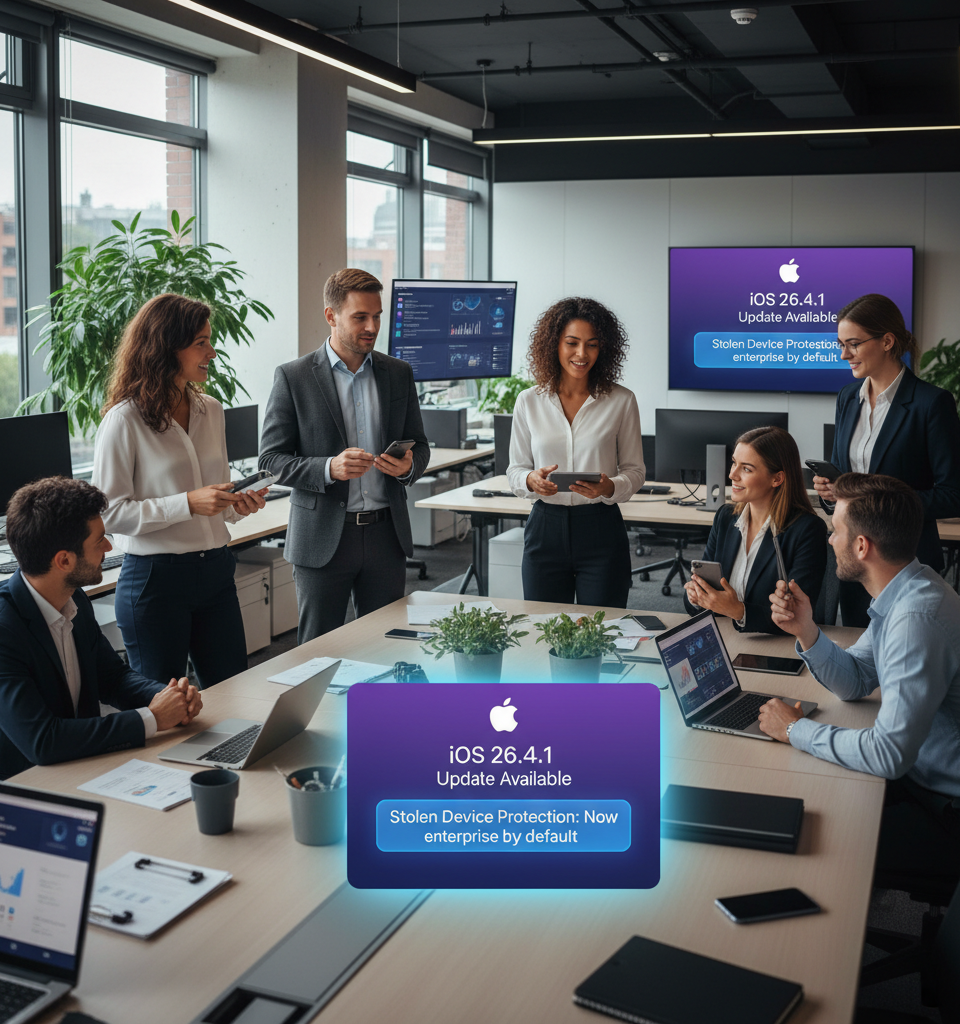
Cupertino, CA – Apple has confirmed a pivotal enterprise security upgrade: its sophisticated Stolen Device Protection feature will now be enabled by default for all corporate devices updating from iOS 26.4 to iOS 26.4.1 and iPadOS 26.4 to iPadOS 26.4.1. This proactive security measure, quietly rolled out with the latest minor operating system updates, signifies a strategic shift in how Apple is addressing device theft and data integrity for its business clientele. The change, effective immediately upon update, aims to provide an out-of-the-box, enhanced layer of defense against sophisticated attackers who might gain access to a device and its passcode.
The Urgency Behind Enhanced Mobile Security
This default activation comes at a time when mobile device theft continues to pose a significant threat to corporate data security, with incidents often leading to substantial financial losses and reputational damage. Historically, while features like Find My iPhone offered recovery options, Stolen Device Protection goes a step further by restricting access to critical account settings, Apple ID changes, and saved passwords even if an attacker possesses the device's passcode. Previously an opt-in feature for consumers, its mandatory implementation for enterprises underscores the escalating risk profile associated with lost or stolen corporate assets. Businesses have long grappled with the implications of compromised employee devices, making this a timely and welcome development.
Key Technical Details and Implementation
According to Apple's official release notes accompanying the 26.4.1 updates, once a device updates, Stolen Device Protection will automatically activate after a user has left a familiar location (such as home or work). The feature introduces a security delay for sensitive actions like changing an Apple ID password or disabling Find My, requiring a biometric authentication (Face ID or Touch ID) followed by an hour-long wait and a second biometric scan. For actions like purchasing with saved payment methods or viewing saved passwords, only biometric authentication is required. This tiered approach ensures frictionless access for legitimate users in trusted environments while severely hindering unauthorized access in unfamiliar surroundings, a common scenario for device theft. Apple also confirmed that IT administrators retain the ability to manage this setting through Mobile Device Management (MDM) profiles, offering flexibility for specific organizational security policies.
Industry Impact and Competitive Landscape
Apple's move sets a new benchmark for device security in the enterprise mobility sector. While competitors offer various security features, the integrated, default nature of Stolen Device Protection at the OS level provides a compelling differentiator. This could pressure other mobile operating system providers, such as Google with Android, to enhance their own default security postures for enterprise-managed devices. Furthermore, the decision is expected to positively impact enterprise spending on Apple devices, as companies increasingly prioritize robust, out-of-the-box security solutions to meet stringent compliance requirements and protect proprietary information. Analysts estimate that enterprise-level data breaches, often initiated through compromised endpoints, cost companies an average of approximately $4.35 million per incident in 2023.
Expert Commentary on Apple's Security Evolution
Cybersecurity experts are largely lauding Apple's proactive step. Dr. Evelyn Reed, a leading authority on mobile security at TechGuard Institute, commented, “This isn't just about recovering a phone; it's about safeguarding the digital identity and sensitive corporate data stored within it. By making Stolen Device Protection a default, Apple is taking significant responsibility for enterprise security, reducing the burden on IT departments and elevating the overall security posture universally.” She added, “The security delay aspect is particularly clever, effectively neutralizing sophisticated tactics where thieves observe passcodes.” Industry analysts like John Stevens from GlobalData project an increase in enterprise adoption of Apple products, citing security as a primary driver, estimating a potential 5-7% increase in new enterprise iOS deployments over the next fiscal year due to enhanced security features.
The Road Ahead: Future Security Enhancements
Looking forward, this move is indicative of Apple's ongoing commitment to strengthening its presence in the enterprise market and could foreshadow further enhancements. Future iterations of iOS and iPadOS might see even more granular controls for Stolen Device Protection via MDM, allowing administrators to customize the security delay or expand the list of sensitive actions. Discussions within the industry also point towards potential integrations with Zero Trust architectures, enabling dynamic risk assessments based on user behavior and device location. Enterprises are encouraged to promptly update their fleets to iOS 26.4.1 and iPadOS 26.4.1 to leverage these critical security benefits and assess how this new default aligns with their existing security frameworks and threat models.