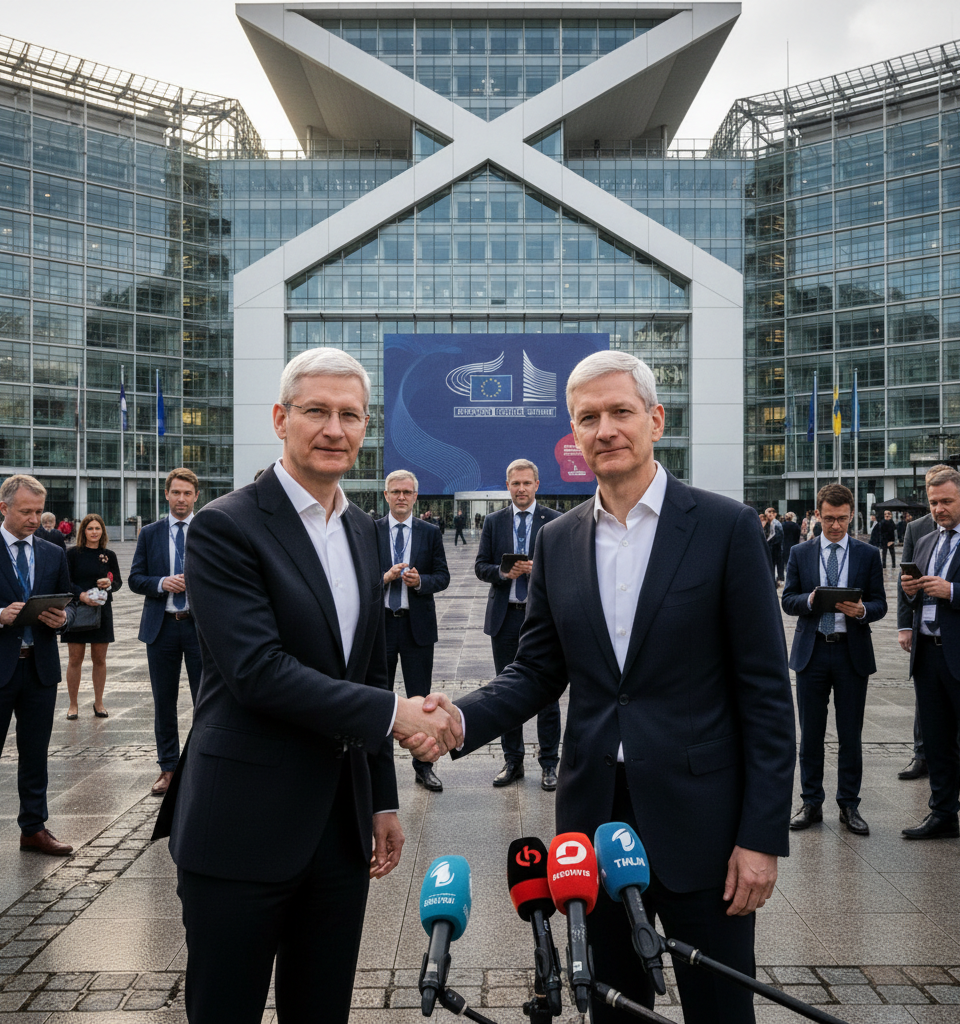
Cupertino, California – In an unusual show of solidarity, Apple has publicly backed Google's concerns regarding a looming European Union mandate that aims to compel the Android operating system to open its artificial intelligence (AI) functionalities to third-party developers. Both technology behemoths assert that such a move, intended to foster greater competition, could inadvertently jeopardize the privacy and security of millions of European users.
This surprising alignment between two of the world's most dominant tech companies highlights a growing tension between regulatory bodies seeking to curb market monopolies and firms prioritizing integrated user experiences and robust data protection. The EU's Digital Markets Act (DMA), which came into full effect this year, aims to prevent 'gatekeeper' platforms from stifling competition, and its implications are now reaching into the nuanced world of embedded AI. Google, as the developer of Android, faces substantial compliance burdens under these regulations, with the EU Commission specifically targeting its perceived dominance in mobile operating systems and associated services.
Regulatory Pressure and Tech Giants' Response
The EU's push stems from a broader legislative effort to level the playing field for smaller tech innovators and ensure fair competition within the digital single market. Regulators believe that opening up access to core AI components within Android would allow for the development of alternative, competitive AI services, thereby empowering consumers with more choices beyond Google's proprietary offerings. However, both Apple and Google contend that deeply integrated AI systems, which often rely on vast amounts of user data to function effectively, demand stringent controls to prevent misuse or security breaches. Apple's stance, while not directly affected by the Android mandate, lends considerable weight to Google's argument, suggesting a unified industry front on the potential perils of fragmented AI ecosystems.
Sources close to the matter indicate that the core of the tech giants' apprehension lies in the challenge of maintaining end-to-end encryption and secure data handling if third-party AI models gain unrestricted access to the OS's fundamental layers. This could potentially expose sensitive user information, from biometric data to personal communications, to a wider array of developers with varying security protocols and intentions. Both companies have invested billions in developing sophisticated security architectures within their respective operating systems, iOS and Android, which they argue would be undermined by such mandates.
Industry Implications and Expert Analysis
The ripple effects of this regulatory clash are substantial, potentially impacting not only the mobile AI landscape but also future developments in consumer electronics and data privacy globally. Analysts are closely watching how this scenario unfolds, as it could set a precedent for how governments approach the regulation of complex technological ecosystems. "This isn't just about Android; it's about the very architecture of embedded AI and how user data is protected," explains Dr.
Anya Sharma, a leading technology policy expert at the European Institute for Digital Innovation. " She further noted that the financial penalties for non-compliance under the DMA are severe, potentially reaching up to 10% of a company's global annual turnover, which for Google could translate into billions of euros.
The Path Forward: Negotiations and Potential Compromises
As the deadline for compliance approaches, intense negotiations are expected between the European Commission and Google. The involvement of Apple, traditionally a staunch adversary, introduces a new dynamic, suggesting that these concerns transcend corporate rivalries. Microsoft, while not directly commenting on this specific mandate, has also expressed broader reservations about certain DMA provisions impacting its Windows ecosystem. It remains to be seen whether the EU will reconsider the scope of its demands or if Google will be compelled to implement changes it deems detrimental to user safety. The ongoing dialogue will likely center on finding a compromise that balances competitive fair play with a robust framework for user data protection and system integrity.
Future developments could include Google proposing a tiered access system for third-party AI, or more stringent vetting processes for developers seeking integration. The outcome of this dispute will undoubtedly shape the future of AI development and regulation, not just in Europe, but potentially as a global benchmark for how technological innovation is balanced with privacy and competitive markets. The tech world watches to see if innovation can thrive amidst increasing regulatory scrutiny, particularly when the two biggest players find common ground on safeguarding user data within their digital empires.