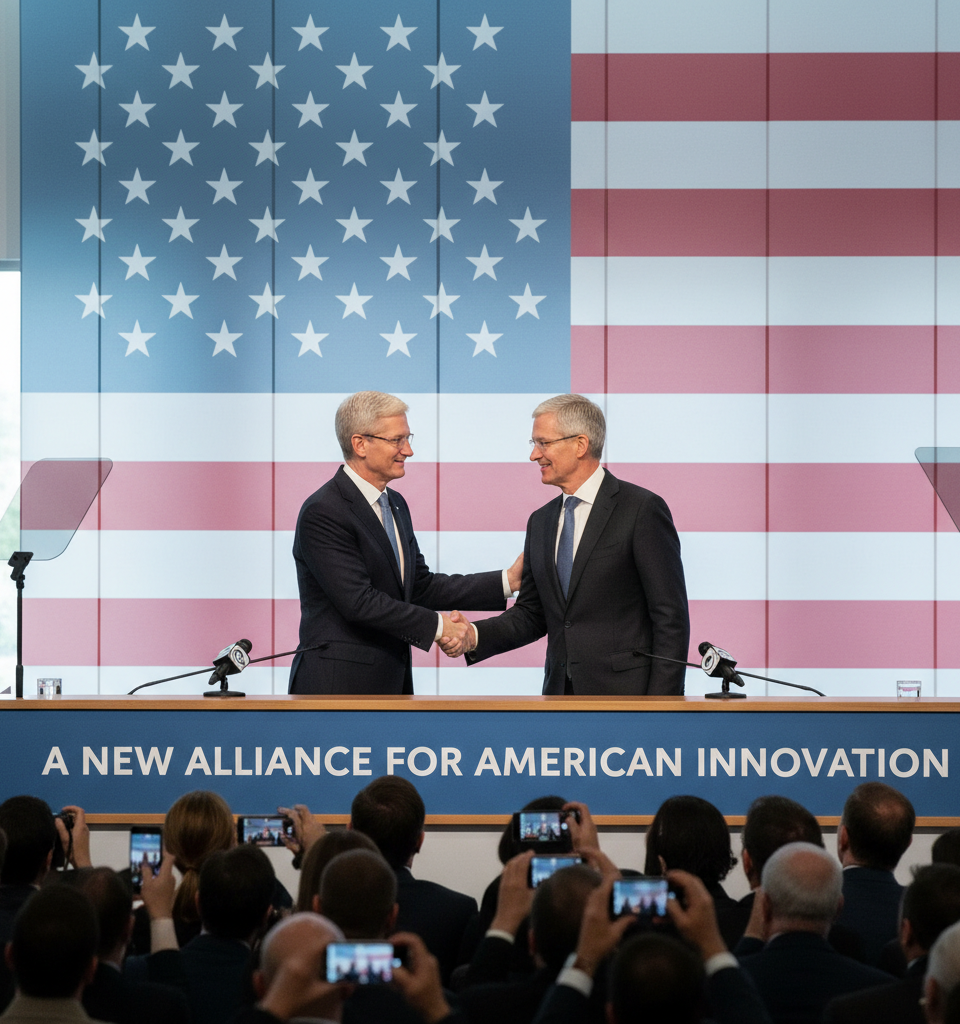
In a development poised to reshape the technology landscape, Apple Inc. and Intel Corporation have reportedly finalized a preliminary agreement for Intel to manufacture advanced silicon for upcoming Apple devices. This strategic partnership, heavily influenced by the Trump administration's directive for increased domestic production and reduced reliance on overseas supply chains, signifies a pivotal moment for both tech titans and the broader semiconductor industry.
The agreement represents a crucial turning point for Apple, which has been steadily transitioning away from Intel as its primary chip supplier for Mac products, opting instead for its custom-designed Apple Silicon. For Intel, securing Apple's business could provide a much-needed boost, leveraging its advanced fabrication capabilities after facing challenges in process technology development. The reported impetus from the Trump administration suggests a broader geopolitical strategy, aiming to bolster American technological self-sufficiency and national security interests following recent global supply chain disruptions.
While specific terms of the preliminary agreement remain undisclosed, insiders suggest the deal could encompass the production of a range of chips, potentially extending beyond CPUs to other specialized components for iPhones, iPads, and even Macs. Sources close to the discussions indicate that the negotiations were complex, involving high-level consultations and a significant push from Washington to ensure the deal’s fruition. This move could see Apple diversify its manufacturing partners beyond its current heavy reliance on Asian foundries, primarily TSMC, for its most advanced processors. The extent of Intel's involvement in Apple's future product roadmap is expected to become clearer as the agreement matures into definitive contracts.
Industry and Market Impact
This nascent partnership sends ripples across the semiconductor and consumer electronics industries. For Intel, securing a high-volume, high-profile customer like Apple could significantly buoy its struggling foundry business, proving its capability to compete with industry giants like TSMC. This could also lead to substantial investments in U.S.-based manufacturing facilities, aligning with governmental objectives. Competitively, TSMC, while still a dominant player, might face increased pressure to innovate and retain its market share, especially if other American tech firms follow Apple's lead in seeking domestic fabrication partners. For Apple, the diversification of its supply chain could enhance resilience against geopolitical risks and production bottlenecks, though integrating new manufacturing processes and partners always presents complex challenges.
Expert Perspective
Industry analysts are cautiously optimistic about the potential implications. "This isn't just a business deal; it's a geostrategic alignment," notes Dr. Evelyn Reed, a semiconductor industry expert at Tech Insights Group. "For Intel, it validates their ongoing investments in process technology, even after recent stumbles. For Apple, it secures an additional, domestically-located supply route for critical components, a clear response to the vulnerabilities exposed during the pandemic." Others, such as financial analyst Mark Thompson, highlight the financial upside for Intel, projecting potential revenue increases in the billions once production scales. "The key will be Intel's execution on advanced nodes and its ability to meet Apple's stringent quality and volume demands," Thompson added.
What's Next
The preliminary agreement will now move into a phase of detailed negotiations, focusing on production timelines, technological specifications, and contractual obligations. Both companies are expected to dedicate significant resources to integrating their respective engineering and supply chain teams. The outcome of these discussions will determine the precise scope and scale of Intel's role in Apple's future product lines.
S. fabrication facilities over the next 12 to 24 months. The technology world will be closely watching for formal announcements and the first tangible products emerging from this landmark collaboration, which could redefine the competitive landscape of the global semiconductor industry for years to come.