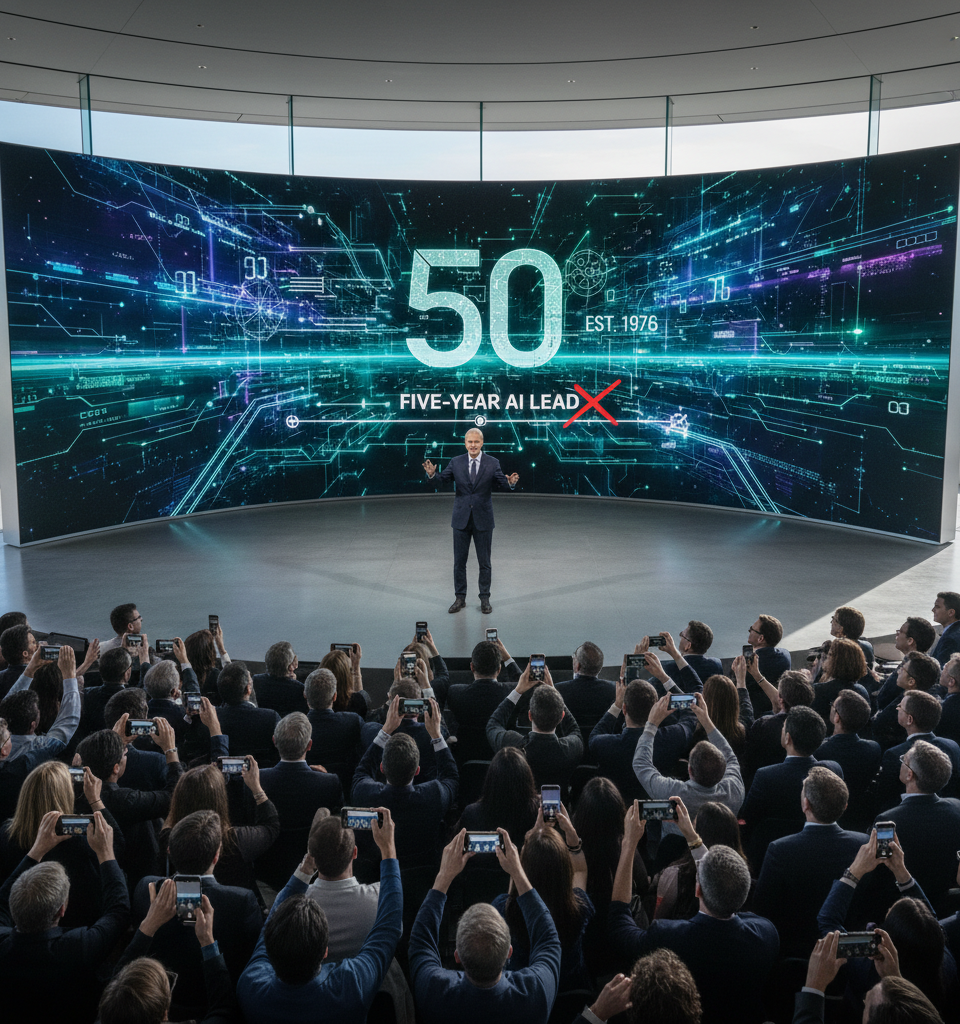
Cupertino, CA – As Apple Inc. approaches its five-decade mark, a critical examination of its strategic positioning in the artificial intelligence (AI) race reveals a landscape fraught with challenges and opportunities. Former Apple insiders and industry observers contend that the tech titan, synonymous with innovation and user experience, "blew a five-year lead" in AI development, leaving it playing catch-up against nimble competitors like Google, Microsoft, and OpenAI. This perceived lag, particularly in areas like generative AI, forces Apple to re-evaluate its long-held ethos, especially its vaunted commitment to user privacy, which has historically been a cornerstone of its brand identity and market dominance in consumer hardware.
The Roots of the AI Lag
Apple's current predicament in AI is not a sudden development but the culmination of strategic choices and a unique corporate culture. For years, Apple's AI efforts, primarily centered around Siri, have been criticized for lacking the sophisticated capabilities seen in rival voice assistants and large language models. The company's unwavering focus on on-device processing and robust data privacy, while commendable from a user perspective, inherently limited the scale and speed of data collection and model training crucial for advanced AI development. This contrasts sharply with competitors who leveraged vast user data for cloud-based AI, leading to more rapid advancements and broader applications. The company's internal structure, characterized by a penchant for secrecy and a focus on polished product launches, may also have hindered the more open, iterative, and research-heavy approach often necessary for groundbreaking AI innovation.
The Privacy Paradox: A Double-Edged Sword
Apple's formidable reputation for user privacy, often touted as a competitive differentiator, now presents a significant strategic dilemma. While consumers value the protection of their personal data, advanced generative AI models thrive on access to massive datasets for training and improvement. For Apple to truly compete, particularly in the realm of personalized, intelligent assistants or deeply integrated AI features, it may need to find a new balance between its privacy commitments and the data requirements inherent to cutting-edge AI. This is a delicate tightrope walk, as a perceived wavering on privacy could erode the trust it has painstakingly built with its loyal customer base, potentially costing billions in brand equity. The potential for on-device AI innovations, however, offers a glimmer of hope, allowing for powerful AI capabilities without extensive cloud data sharing.
Industry Repercussions and Competitive Landscape
The AI gap has significant implications across the technology sector. While Apple continues to dominate the premium smartphone market, selling hundreds of millions of iPhones annually and generating billions in revenue (e.g., Q1 2024 iPhone revenue of $69.7 billion), the perception of its AI capabilities can influence future device adoption and ecosystem stickiness. Competitors are aggressively integrating generative AI into search engines, productivity suites, and operating systems, creating compelling alternatives for consumers and enterprise users. Google's Gemini, Microsoft's Copilot, and Meta's Llama models are pushing the boundaries of what AI can do, setting a new benchmark that Apple must meet or exceed. The battle for developer mindshare in AI is also heating up, and Apple's platform must remain attractive to ensure cutting-edge AI applications are built for iOS.
Expert Analysis: A Path Forward
Technology analysts weigh in on Apple's next moves. "Apple's brand strength and unparalleled ecosystem provide a tremendous runway, but they need a decisive, bold move in AI," observes Sarah Jenkins, a principal analyst at Tech Insights. "Their vast hardware installed base offers an advantage for on-device AI, and their control over the entire vertical stack – from chip design to software – means they can integrate AI more deeply than anyone else. The question is whether they will and how quickly." Another analyst, David Chen of GlobalTech Research, points to strategic acquisitions as a potential accelerant. "Apple has over $160 billion in cash and marketable securities. A significant acquisition in the AI space, similar to Google's DeepMind purchase, could rapidly bridge the technological gap and signal a serious commitment." He also highlights Apple's potential to redefine AI through innovative user interfaces that align with its design philosophy.
What Lies Ahead: WWDC and Beyond
All eyes are on Apple's upcoming Worldwide Developers Conference (WWDC), where the company is widely expected to unveil its AI strategy. Rumors abound about a revamped Siri, deeper AI integration across iOS and macOS, and potentially partnerships for generative AI capabilities. A significant announcement is anticipated regarding on-device AI models for enhanced privacy and performance, a move that could differentiate Apple in a crowded market. The success of its future AI initiatives will not only determine its competitive standing against rivals but also its ability to maintain its aspirational brand image and drive innovation for the next five decades. Partnerships, acquisitions, and a potential recalibration of its privacy stance will be key indicators of Apple's long-term AI commitment.
The Stakes: Maintaining Dominance
For Apple, the future of AI is not merely about launching new features; it's about safeguarding its market leadership and maintaining its position as a leading innovator. The company's ability to seamlessly integrate AI into its hardware and software, while preserving user trust, will define its next era of growth. Failure to adapt could see its meticulously crafted ecosystem begin to fray as users gravitate towards platforms perceived to be more advanced and intelligent. The coming months will be crucial in demonstrating whether Apple has truly learned from its past and is prepared to aggressively pursue leadership in the AI revolution.
Conclusion: A Turning Point
Apple stands at a pivotal juncture. Its past success, built on an unwavering focus on hardware and user experience, provides a robust foundation. However, the future of technology is undeniably intertwined with AI. How Apple navigates the complexities of this evolving landscape, balances its core values with the demands of cutting-edge AI, and leverages its immense resources will dictate whether it merely participates or once again leads the charge into the next technological frontier.