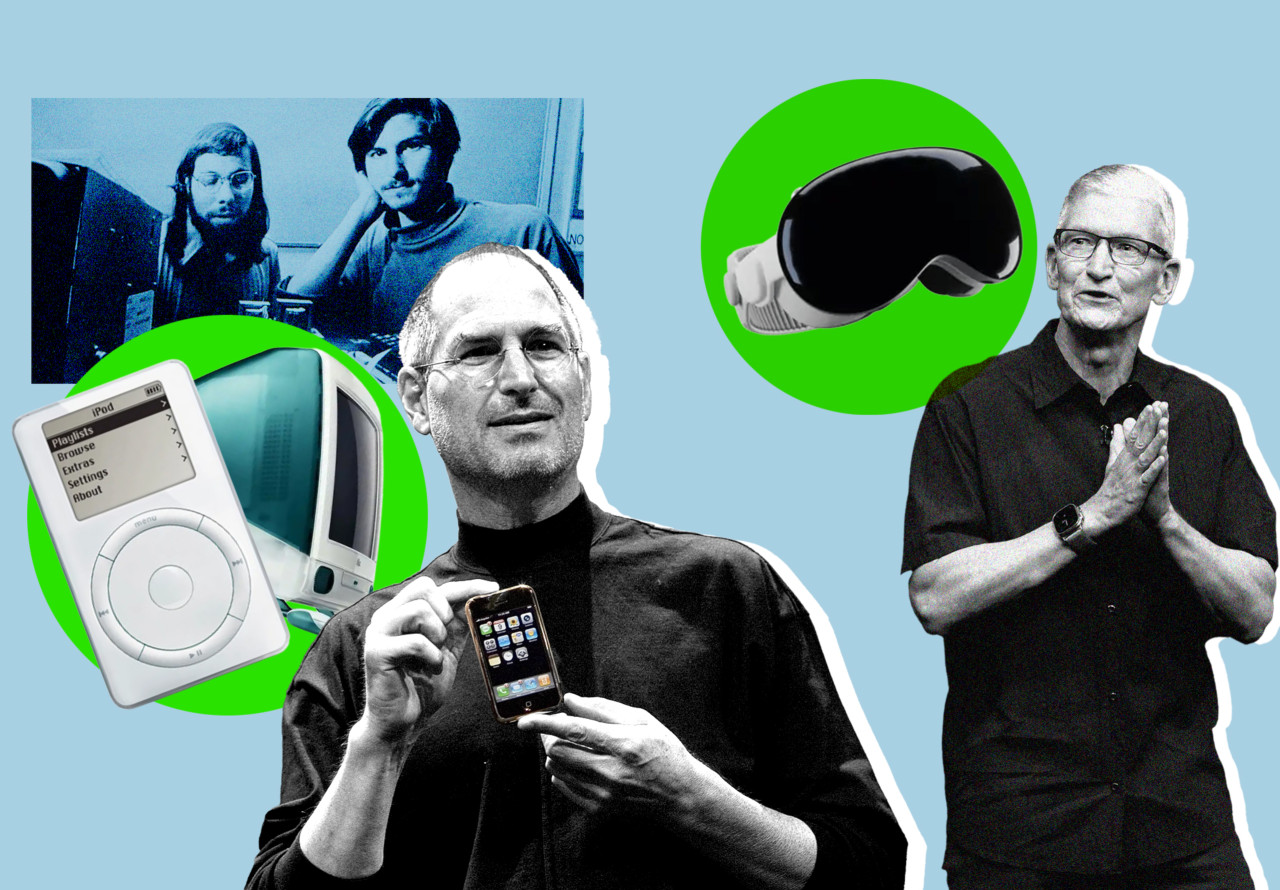
Cupertino, CA – As Apple Inc. approaches its 50th anniversary, the technology behemoth finds itself at a critical juncture, tasked with demonstrating its capacity for groundbreaking innovation in the accelerating era of artificial intelligence. Having profoundly reshaped the landscape of personal computing with Macintosh and revolutionized communication with the iPhone, the company is now under intense scrutiny to articulate and execute a compelling strategy for AI integration, ensuring its continued dominance and growth amidst fierce competition from rivals like Google, Microsoft, and Amazon.
This juncture is particularly significant given Apple's historical trajectory of setting industry standards rather than merely following them. The company's valuation, consistently hovering around the $3 trillion mark, largely rests on market confidence in its ability to consistently deliver category-defining products. However, the current AI wave, characterized by rapid advancements in generative AI and large language models, has seen other tech giants take a more visible lead, prompting concerns that Apple might be perceived as playing catch-up. The challenge extends beyond mere feature integration; it demands a philosophical re-imagining of Apple's core user experience, traditionally defined by intuitive design and privacy.
Recent financial reports underscore the urgency. While Apple's Q1 2024 earnings surpassed analyst expectations, reporting $90.75 billion in revenue, a slight decline from the previous year, much of this was driven by resilient iPhone sales, which generated $45.96 billion. However, growth in services, a key strategic focus, moderated to 14.2%, and Mac and iPad revenues saw contractions. Investors are keenly awaiting tangible AI-driven growth vectors that can propel Apple beyond its saturated core markets. Specific rumored AI initiatives include on-device large language models for enhanced Siri capabilities and deeper AI integration across its software ecosystem, potentially unveiled at the upcoming Worldwide Developers Conference (WWDC).
The broader tech industry is observing Apple's moves with bated breath. The company's approach to AI could single-handedly influence market trends, consumer expectations, and competitive strategies. A successful AI pivot from Apple could legitimize and accelerate mainstream adoption of new AI paradigms, especially if coupled with its renowned emphasis on privacy and user experience. Conversely, any misstep or perceived slowness could embolden competitors and potentially erode Apple’s premium market position, particularly in emerging markets where consumers are increasingly prioritizing AI-powered functionalities.
Industry analysts offer varied perspectives. "Apple's track record of perfecting rather than pioneering new technologies might serve it well in AI," states Sarah Chen, a senior tech analyst at Gartner. "They have the resources and the ecosystem to integrate AI seamlessly and securely, which could differentiate them from competitors who are rushing to market with less polished solutions." However, others, like Dr. Mark Thompson from Forrester Research, caution, "The 'fast follower' strategy for AI might not be sufficient. The pace of AI evolution demands proactive, bold innovation. Apple needs its 'iPhone moment' for AI, not just iterative improvements." Concerns also linger around Apple's reliance on existing hardware platforms and whether they possess the necessary neural processing capabilities to deliver truly groundbreaking on-device AI experiences without significant upgrades.
Looking ahead, Apple's strategy for AI is expected to unfold over the coming months and years, likely commencing with significant announcements at WWDC. Expectations are high for a comprehensive strategy encompassing on-device AI for enhanced personalization and privacy, cloud-based AI services for more intensive tasks, and a robust developer framework to encourage third-party innovation. The company's significant R&D investment, totaling $30 billion in 2023, points to an intense focus on these areas. Success will hinge not just on technological prowess, but on Apple's ability to articulate a clear vision for how AI will enhance the lives of its users, maintaining its brand allure in a rapidly changing technological landscape. The next half-century for Apple will undoubtedly be defined by its ability to master this new frontier.