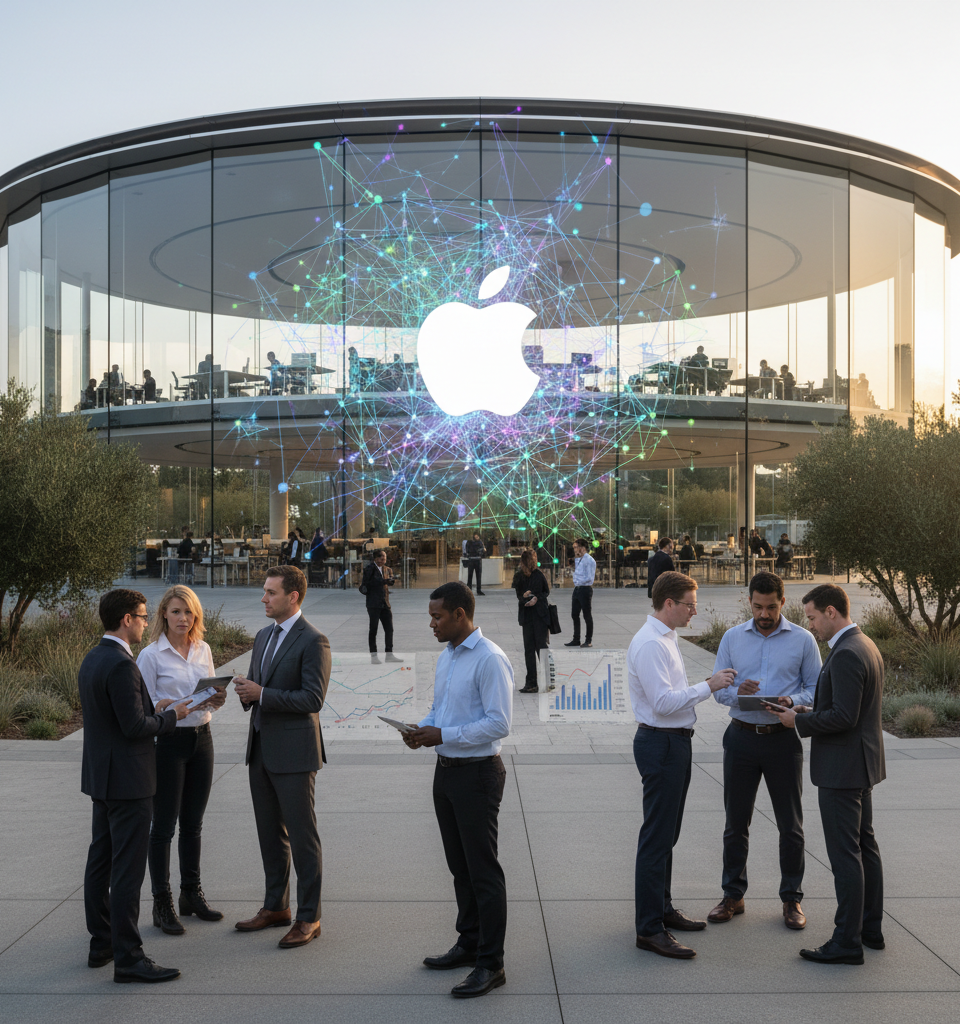
Cupertino, California — In a move that could redefine the landscape of mobile computing, Apple is reportedly engaged in internal discussions about fundamentally altering its App Store guidelines to facilitate the integration of sophisticated agentic artificial intelligence applications. This potential policy shift, first reported by sources close to the company, would allow AI agents greater autonomy and access within the iOS ecosystem, a notable departure from its historically tightly controlled environment. The deliberations underscore Apple's need to adapt to the rapidly evolving AI paradigm, even as such changes risk undermining its established and highly profitable App Store commission structure.
The AI Imperative and Apple's Walled Garden
Apple's current App Store policies, often described as a 'walled garden,' have long emphasized user privacy, security, and a consistent user experience. This stringent control has also been a cornerstone of its services revenue, which reached an astonishing $85.2 billion in fiscal year 2023. Agentic AI, by its very nature, demands more extensive permissions, background processing, and inter-application communication than traditional apps. These AI agents are designed to perform tasks autonomously, often across multiple applications and services, requiring a level of system access that current App Store rules largely restrict. The pressure on Apple to embrace this technology is immense, as competitors rapidly integrate advanced AI capabilities into their ecosystems, and developers clamor for the tools to build next-generation applications.
Economic Implications: A Double-Edged Sword
The fundamental challenge for Apple lies in the potential economic fallout. Loosening App Store restrictions for AI agents could enable new business models that bypass Apple's standard 15-30% commission on in-app purchases and subscriptions. If AI agents can negotiate and complete transactions directly with vendors or service providers outside of Apple's payment rails, a significant portion of its services revenue stream could be jeopardized. Analysts estimate that App Store commissions alone account for tens of billions of dollars annually, making it a critical component of Apple's financial health. The company is actively exploring various frameworks, including potential new revenue-sharing models or specialized API access, to mitigate this risk while fostering innovation.
Broader Industry and Regulatory Context
This internal debate at Apple unfolds against a backdrop of increasing regulatory scrutiny worldwide regarding monopolistic practices in app stores. The European Union's Digital Markets Act (DMA) and similar legislation in other jurisdictions are already forcing Apple to open up its ecosystem, notably allowing third-party app stores and alternative payment methods. The integration of agentic AI could accelerate the need for broader platform interoperability, adding another layer of complexity to Apple's compliance efforts. Should Apple decide to embrace agentic AI, it could paradoxically satisfy some regulatory demands for more open platforms, but simultaneously create new avenues for developers to circumvent its payment processing, impacting its bottom line.
Expert Perspectives on Apple's Dilemma
Industry experts are watching Apple's moves closely. "Apple is in a classic innovator's dilemma," stated Emily Chen, a senior analyst at Tech Insights Group. "They can either stick to their rigid control and risk falling behind in the AI race, or they can adapt and potentially cannibalize a core revenue source. The answer likely lies in a hybrid approach, where they maintain control over core system functions but create new, well-defined conduits for AI agents to operate." Other analysts suggest that Apple might introduce its own suite of powerful agentic AI services, tightly integrated with its hardware, to maintain a competitive edge and capture market share directly, rather than relying solely on third-party developers for innovation in this space.
The Path Forward: Innovation vs. Revenue Protection
Looking ahead, Apple's strategy will likely involve a phased approach. The company is expected to unveil significant AI advancements at its annual Worldwide Developers Conference (WWDC), potentially offering a glimpse into its evolving philosophy. Future developments could include new developer tools and APIs specifically designed for agentic AI, along with updated App Store review guidelines tailored to balance innovation with Apple's long-standing commitments to security and user privacy.
The challenge will be to craft a framework that encourages a vibrant ecosystem of AI agents without eroding the financial pillars that have underpinned Apple's extraordinary success. The coming months will be critical in determining how one of the world's most valuable companies navigates this foundational technological shift, balancing its imperative for innovation with the protection of its substantial recurring revenue streams.