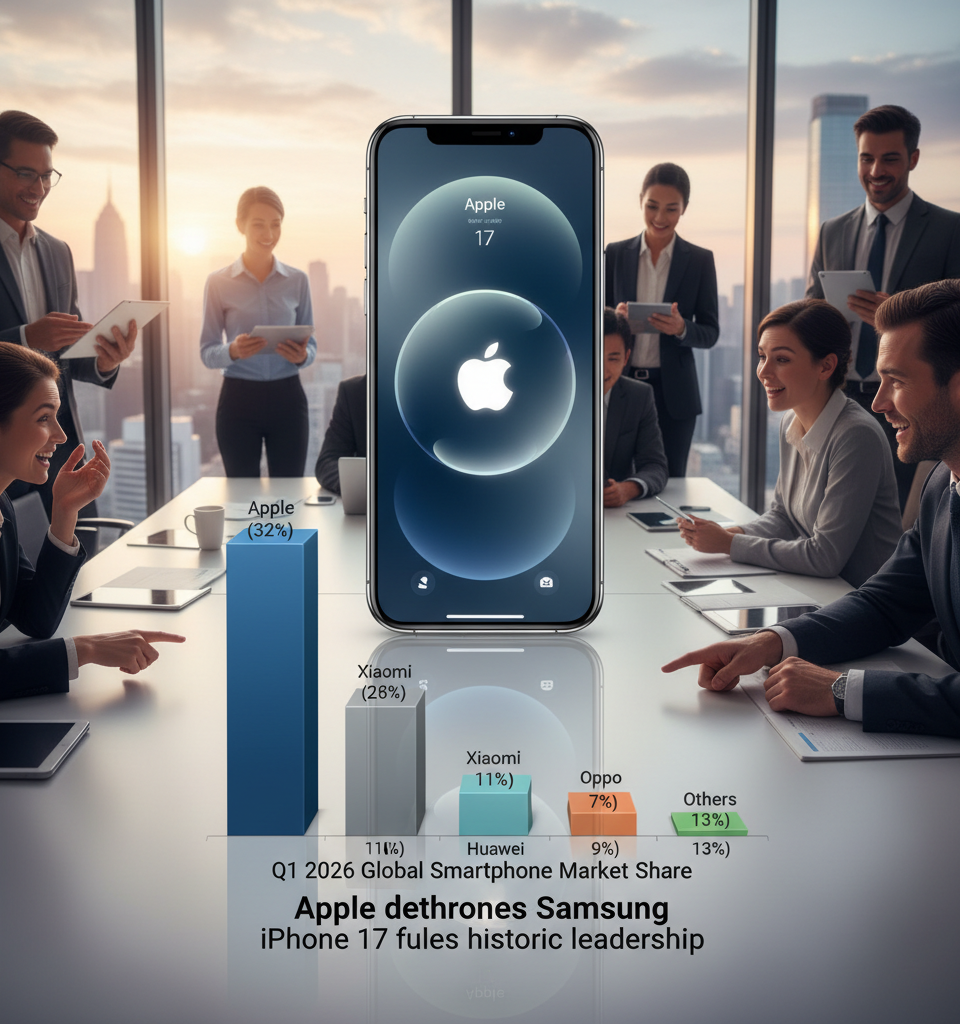
Cupertino, CA – April 18, 2026 – In a landmark development for the global technology sector, Apple Inc. has officially surpassed long-standing rival Samsung to claim the leading position in worldwide smartphone shipments for the first quarter of 2026. This historic achievement, as revealed in the latest report by Counterpoint Research, marks the first time the Cupertino-based giant has topped the market during a Q1 period. The surge in Apple's market share is primarily attributed to the exceptionally strong consumer reception and sustained demand for its flagship iPhone 17 series, defying a broader trend of contraction within the global smartphone market.
This shift in leadership is particularly notable given the traditional dominance of Android manufacturers, particularly Samsung, in the early parts of the year. Historically, Samsung's aggressive product launches across various price segments, combined with its extensive market presence, have secured its pole position in the first fiscal quarter. Apple's breakthrough underscores a significant strategic success and a growing consumer preference for its premium ecosystem, even as overall industry growth remains subdued. The report highlights a crucial turning point, indicating Apple's increasing capability to capture market share even outside its traditional holiday quarter peak.
According to Counterpoint Research's detailed findings, Apple secured an estimated 20% of the global smartphone market share in Q1 2026, slightly edging out Samsung, which registered approximately 19%. This represents a notable increase for Apple compared to its Q1 performance in previous years, which typically hovered around the 18-19% mark. Industry analysts point to the compelling features and perceived value proposition of the iPhone 17 lineup – including advancements in AI capabilities, camera technology, and battery life – as key drivers of its robust sales. Specific data points within the report indicated that demand for the Pro Max variants of the iPhone 17 were particularly strong in key markets such as North America, Europe, and parts of Asia.
The broader industry, however, depicted a more somber picture. Counterpoint Research reported an overall decrease of approximately 5% in global smartphone shipments year-over-year for Q1 2026, totaling roughly 280 million units. This continued decline reflects ongoing macroeconomic headwinds, extended upgrade cycles, and fierce competition from refurbished markets. Despite this challenging environment, Chinese manufacturers like Xiaomi, OPPO, and Vivo maintained their top five standings, albeit with varying degrees of shipment fluctuations. Xiaomi, for instance, held firm with approximately 13% market share, showcasing resilience in emerging markets.
Industry experts are carefully dissecting the implications of Apple's ascendance. "Apple's ability to not only maintain but significantly grow its shipments in a contracting market is a testament to the enduring strength of its brand and ecosystem," commented Neil Shah, Vice President at Counterpoint Research. "The iPhone 17 clearly resonated with consumers, demonstrating that premium innovation can still drive demand even amidst economic uncertainties and longer handset lifecycles. This also puts pressure on competitors to innovate more aggressively, especially in the high-end segment, where profits are highest."
Looking ahead, the competitive landscape is expected to intensify. Samsung is poised to respond with its next-generation flagship series due in the latter half of the year, likely incorporating new generative AI features and hardware innovations aimed at reclaiming market leadership. Chinese brands are also investing heavily in R&D to close the technology gap and offer more compelling value propositions. The second and third quarters will reveal whether Apple can sustain this momentum or if it was an isolated Q1 phenomenon driven by the iPhone 17's initial sales cycle. Furthermore, the global semiconductor supply chain, while stabilizing, remains a variable that could impact future production and shipment volumes for all players.
For consumers, this heightened competition is generally beneficial, potentially leading to faster innovation, more aggressive pricing strategies, and a wider array of cutting-edge features. The premium segment, where Apple and Samsung fiercely contend, is expected to be a primary battleground for the rest of 2026, pushing the boundaries of smartphone technology and user experience. The industry will closely watch how these titans adapt and innovate in an increasingly mature yet dynamic market that still holds significant revenue potential. The shift in Q1 2026 leadership undeniably signals a new chapter in the global smartphone wars, with Apple leveraging its enduring brand loyalty and technological advancements to reshape the competitive order.
Note: All market share figures and analysis are based on Counterpoint Research's Q1 2026 Global Smartphone Shipments Report.