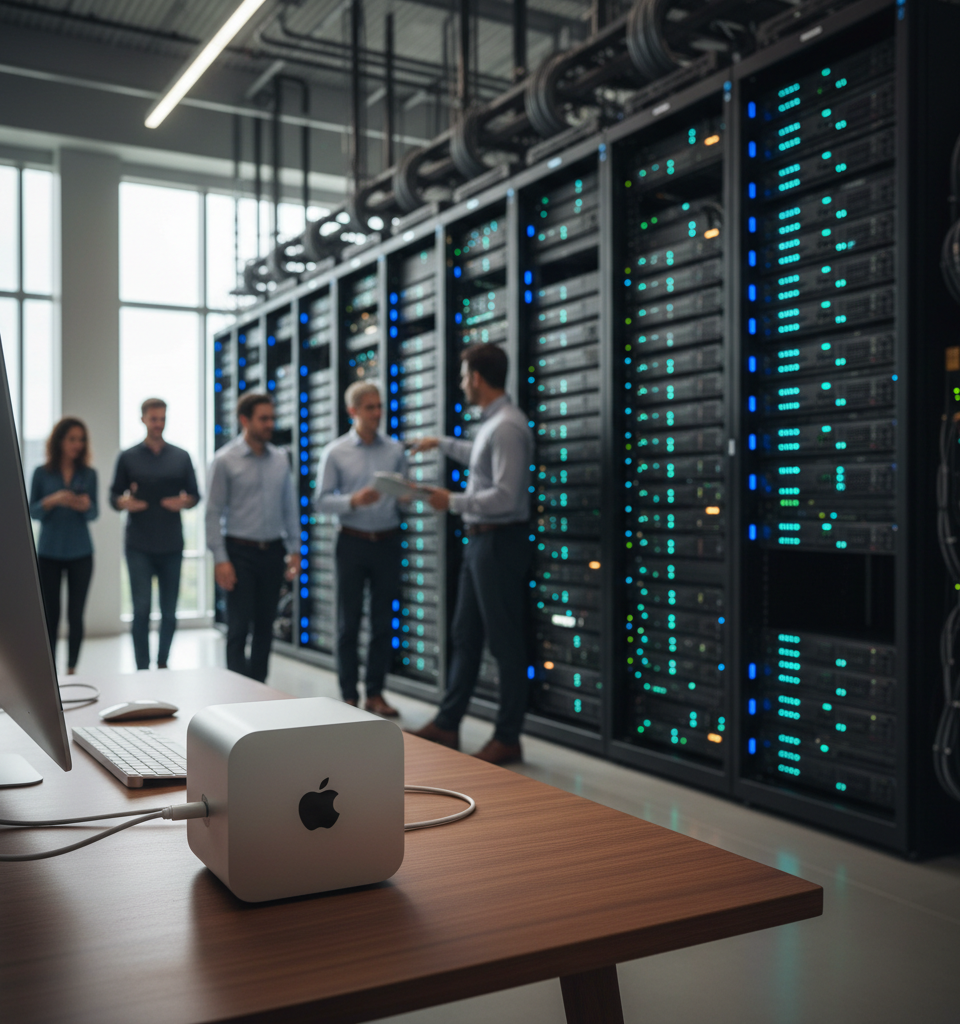
Apple Inc. has effectively eliminated its most budget-friendly desktop computer, the $599 Mac Mini featuring 16 gigabytes of RAM and 256 gigabytes of storage, from its global product lineup. The sudden discontinuation, which occurred last week, raises the entry price for a new Mac Mini to $799, now standardizing the base model with 512 gigabytes of storage. This significant pricing adjustment marks a notable departure from Apple's historical offering of accessible entry-level devices and signals a potential strategic recalibration in its desktop computer segment.
This decision carries considerable implications, particularly for consumers and developers who relied on the Mac Mini's previous price point as an affordable gateway into the Apple ecosystem. For years, the Mac Mini has served as a versatile workhorse, popular among hobbyists, small businesses, and as a compact server solution. Its accessibility at the sub-$600 mark made it a compelling choice for those needing macOS functionality without the premium price tag of an iMac or MacBook Pro. The removal of this configuration underscores a shift that could make Apple's desktop offerings less attainable for budget-conscious users, potentially pushing them towards alternative platforms or refurbished devices.
The now-defunct 256GB configuration, priced at $599, represented the lowest barrier to entry for an Apple desktop. The new base model, equipped with 512GB of storage, commands a 33% higher price point at $799. This move aligns with a broader industry trend where manufacturers are increasingly focusing on higher-specification, higher-margin products. While Apple has not formally commented on the reason behind the discontinuation, industry observers speculate it stems from a confluence of factors, including supply chain optimization, increased component costs, and a strategic push towards more powerful, profitable configurations that better serve emerging markets like artificial intelligence.
Industry and Market Impact
The discontinuation is likely to impact segments that previously leveraged the Mac Mini for its cost-effectiveness, such as developers, educational institutions, and small-scale media production studios. For these users, the $200 price increase for the base model represents a substantial rise in total cost of ownership, especially when deploying multiple units. This shift could also inadvertently benefit competitors offering more competitively priced desktop solutions, potentially eroding Apple's market share in the entry-level computing segment. Furthermore, the move could be interpreted as a strategic de-prioritization of mass-market affordability in favor of premium positioning across its entire hardware portfolio.
Expert Perspectives
Technology analysts suggest that Apple's decision might be closely tied to the burgeoning demands of artificial intelligence and machine learning. As compute-intensive tasks become more prevalent, the company may be preparing its hardware lineup to better accommodate these needs, both for developers and for its own data center operations. "The days of low-storage, minimal memory devices are numbered, especially for a company like Apple that's increasingly investing in AI and advanced computing," states a prominent tech industry analyst.
"They need robust internal systems and want to encourage their developer ecosystem to build on more capable hardware. " Another expert noted that optimizing manufacturing lines for fewer, higher-spec configurations can also improve efficiency and profitability.
Future Implications and What's Next
This strategic adjustment likely portends a future where Apple's hardware, even at its entry points, is designed with more demanding applications in mind. We could see future iterations of the Mac Mini and other Apple devices offering significantly more baseline performance and storage, reflecting the company's commitment to cutting-edge technologies like on-device AI processing and advanced multimedia creation. While the immediate impact is a higher entry cost for consumers, the long-term vision appears to be a more powerful, standardized product line capable of handling the computing challenges of the coming decade. Consumers seeking more affordable Apple desktop solutions may increasingly need to explore the refurbished market or older models, as Apple seemingly accelerates its move upmarket across its entire product portfolio.