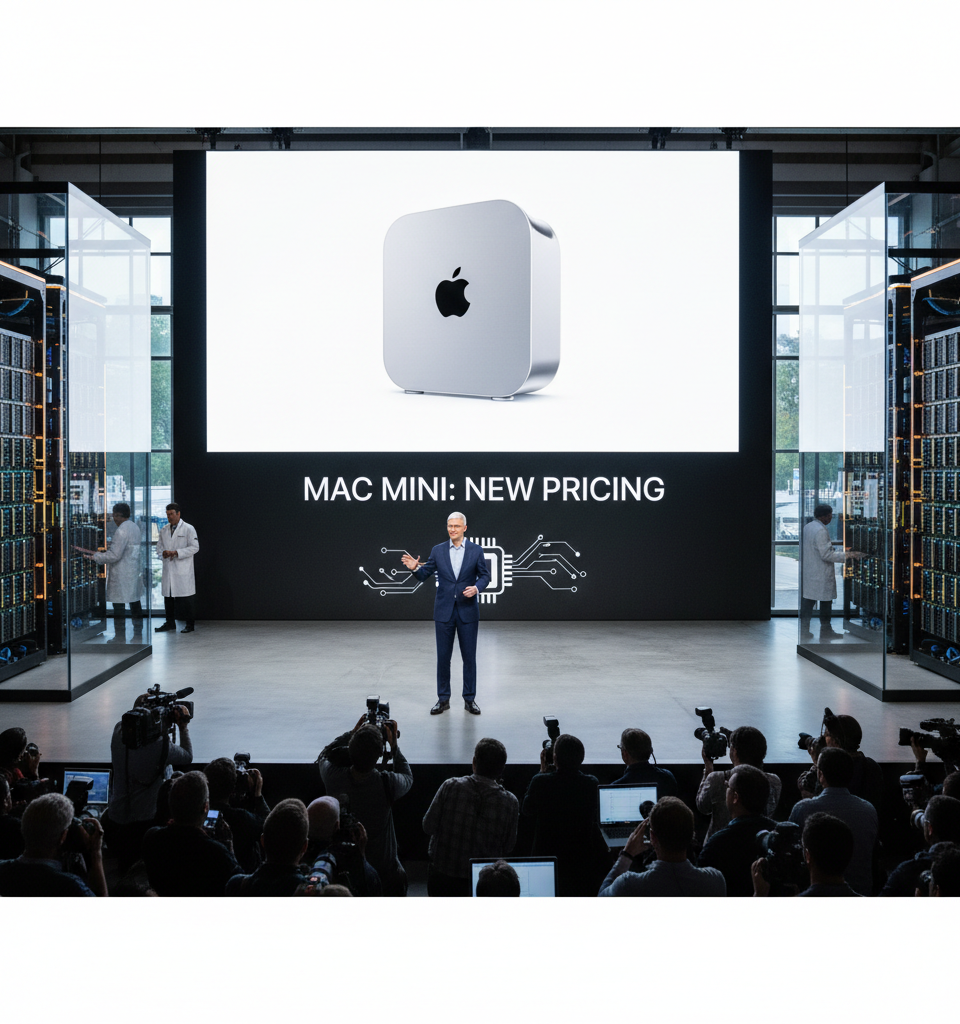
In a significant market adjustment, Apple has increased the entry-level price for its Mac Mini desktop computers, with the change taking effect this week. This strategic recalibration by the Cupertino-based tech giant is widely interpreted as a direct response to the unprecedented global surge in demand for high-performance computing components, particularly those critical for artificial intelligence operations. Apple CEO Tim Cook recently cautioned that the desktop computer market, specifically for models leveraging advanced chips, is likely to experience a "supply-demand imbalance" that could persist for several months.
This pricing adjustment serves as a potent indicator of the escalating competition for semiconductor foundry capacity and the raw materials essential for advanced chip manufacturing. The Mac Mini, particularly its configurations featuring Apple's M-series chips, has become a favored platform for developers and researchers engaged in AI model training and inferencing due to its potent processing capabilities within a compact form factor. The original entry-level Mac Mini was priced at $499, and the new starting price is now $599, representing a 20% increase for the base model.
The broader context for this move lies in the foundational shift within the technology industry towards AI integration across virtually all sectors. From large language models (LLMs) to advanced machine learning applications, the computational demands have skyrocketed, placing immense pressure on chip manufacturers like TSMC, which produces Apple's custom silicon. This environment has led to constrained supplies for even well-established tech giants, forcing them to either absorb higher costs or pass them on to consumers, as Apple has opted to do.
The impact of this pricing strategy extends beyond Apple's immediate customer base. It signifies a tightening market for components that power not just consumer electronics but also enterprise-grade data centers and cloud infrastructure, all of which are critical for the AI revolution. Smaller manufacturers and startups relying on similar supply chains may face even greater challenges in securing essential parts, potentially stifling innovation or leading to even steeper price hikes for their own offerings.
Industry analysts are closely monitoring these developments, viewing Apple's move as a bellwether. "Apple's pricing adjustment for the Mac Mini is a clear signal that the ripple effects of AI demand are now hitting the consumer hardware market in a tangible way," noted Sarah Chen, a lead analyst at TechInsights. "We anticipate that other manufacturers of high-performance computing devices will either follow suit with price increases or face erosion in their profit margins as they contend with rising input costs." She added, "The premium for processing power is only going to grow in the near term."
Looking ahead, the market is bracing for continued volatility in component pricing and availability. While Apple possesses significant leverage with its suppliers, even it is not immune to fundamental market forces. The duration of this price increase and potential future adjustments will heavily depend on how quickly semiconductor manufacturing capacity can expand to meet the burgeoning AI demand. Further supply chain optimizations and potential shifts in global manufacturing hubs could also play a role in stabilizing costs, though this is unlikely to happen rapidly. Consumers and businesses reliant on these technologies should prepare for higher costs and potentially longer lead times for the foreseeable future, as the AI boom reshapes the tech economy.
Apple is expected to provide further details regarding its supply chain outlook during its next earnings call. The company's ability to maintain its competitive edge will increasingly depend on securing preferential access to cutting-edge chips and managing pricing sensitivity among its loyal customer base, even as the utility of its AI-capable hardware becomes more invaluable.
This price hike is not merely about a single product; it reflects a macro trend where AI's insatiable hunger for processing power is creating economic shifts across the entire technology ecosystem, from raw material procurement to end-user pricing. The Mac Mini, once an accessible entry point to Apple's desktop ecosystem, now serves as a tangible example of the new economic realities dictated by the AI era.