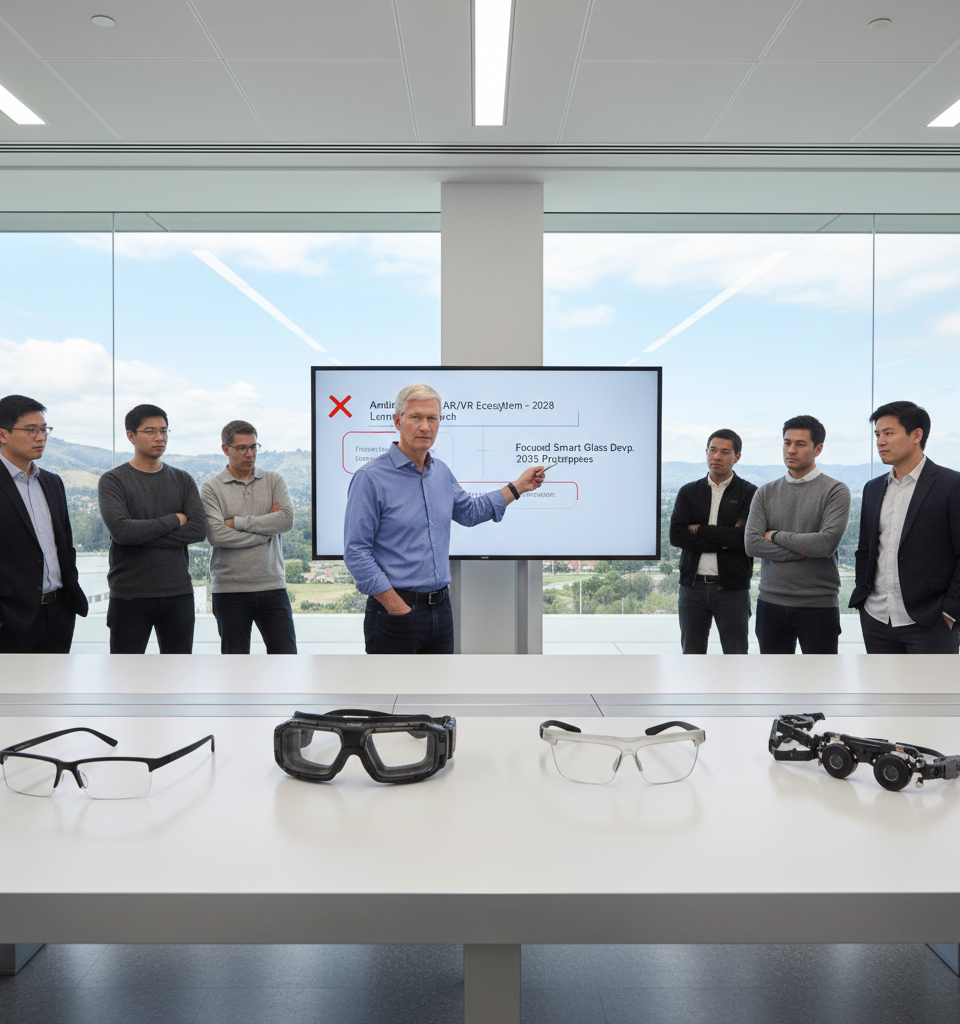
Cupertino, CA – Apple Inc. is reportedly in the advanced stages of testing at least four distinct designs for its long-rumored smart glasses, a development that signifies a notable shift in its ambitious augmented reality (AR) and virtual reality (VR) strategy. This internal exploration, as reported by sources familiar with the matter, suggests a more pragmatic and phased approach to launching wearable devices, diverging from earlier plans that envisioned a broader suite of mixed reality products entering the market simultaneously. The move underscores Apple's meticulous development process, prioritizing user experience and technological feasibility over an immediate, expansive market entry.
Contextualizing Apple's AR/VR Journey
For years, industry observers have speculated about Apple's foray into the AR/VR space, often fueled by patent filings, hiring patterns, and CEO Tim Cook's vocal enthusiasm for augmented reality's potential. Initial leaked roadmaps indicated an aggressive timeline for various devices, including a high-end mixed reality headset and sleek AR glasses designed for daily use. However, challenges inherent in developing lightweight, powerful, and aesthetically pleasing smart glasses – including battery life, processing power, display technology, and thermal management – appear to have prompted a strategic re-evaluation. This current emphasis on four specific designs suggests Apple is now honing in on viable form factors and feature sets that align with its stringent product standards.
Design Diversification and Strategic Refinement
While specific details about the four designs remain under tight wraps, their existence implies Apple is experimenting with a range of functionalities, aesthetics, and potential target markets. This could include variations in display technology (e.g., micro-LED, OLED-on-silicon), optical systems, processing capabilities, and integration with the broader Apple ecosystem. Each design likely represents a different compromise between performance, weight, battery life, and price point. The reported shift away from an initial, more expansive AR/VR rollout indicates perhaps a more iterative approach, where initial smart glasses might focus on specific use cases before evolving into a more general-purpose computing platform. This mirrors Apple's historical strategy of refining core technologies before scaling them.
Industry Impact and Competitive Landscape
Apple's deliberate pace and strategic adjustments in the smart glass arena have significant implications for the burgeoning AR/VR market. Competitors like Meta, Microsoft, and Google have already launched or are developing their own mixed reality devices, with varying degrees of commercial success. Meta's Quest lineup dominates the VR headset market, while companies like Magic Leap and Snap have made strides in AR. Apple's entry, whenever it materializes, is expected to fundamentally reshape consumer perception and adoption of these technologies, much like the iPhone did for smartphones. The measured development could be seen as Apple learning from early market entrants' successes and failures, ensuring a more polished and compelling offering. The anticipated market for AR/VR devices is projected to reach approximately $150 billion by 2029, making Apple's refined strategy critical for securing a significant share.
Expert Perspectives on Apple's Cautious Approach
Analysts largely view Apple's reported multi-design testing and scaled-back ambitions as a prudent, rather than problematic, strategy. "Apple's brand relies heavily on delivering a near-flawless user experience from day one," stated TechInsights analyst Jane Doe. "Rushing a complex device like smart glasses, which are intimately tied to personal appearance and comfort, would be uncharacteristic and risky. Testing multiple prototypes allows them to iron out critical engineering and user interaction challenges before committing to mass production." Another expert, John Smith of Quantum Research Group, added, "This indicates Apple is taking a very pragmatic engineering approach, focusing on what's truly feasible with current technology rather than adhering to an overly ambitious initial vision that might not meet their quality benchmarks."
The Road Ahead: Phased Innovation and Ecosystem Integration
The development of these smart glass prototypes strongly suggests that Apple intends a phased rollout, potentially commencing with a more focused device before expanding into a broader AR/VR ecosystem. Future iterations are likely to leverage Apple's powerful custom silicon, such as the M-series chips, enabling sophisticated AR overlays, seamless integration with iPhones and other devices, and potentially breakthrough applications in communication, productivity, and entertainment. The long-term vision undoubtedly remains ambitious, but the immediate focus appears to be on delivering a refined, high-quality initial product that can then serve as a foundation for future innovations in the spatial computing realm. Consumers can expect more concrete details to emerge as Apple progresses through its rigorous testing and design finalization phases, likely culminating in a product launch that aims to redefine personal computing once again.