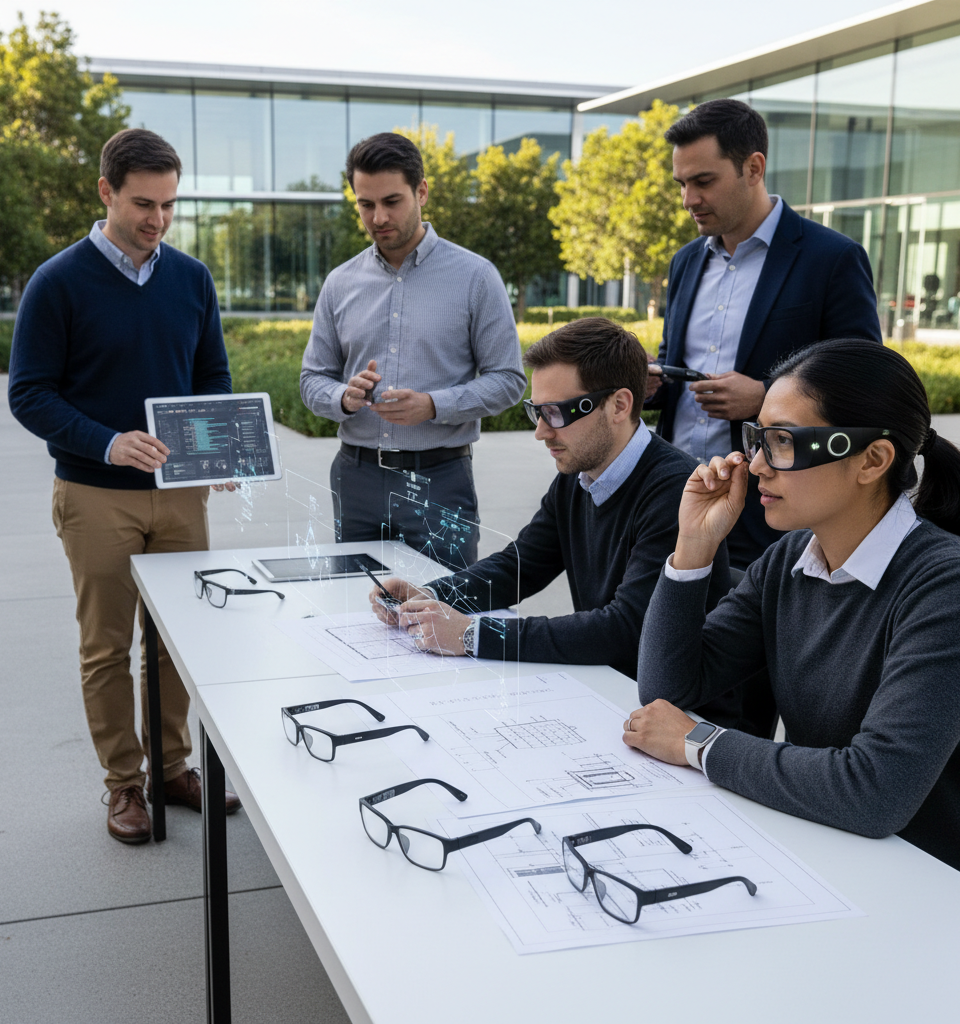
Cupertino, CA – Apple Inc. is reportedly making significant strides in its pursuit of AI-powered smart glasses, with internal testing underway across an array of distinct frame styles, according to a recent report by Bloomberg's Mark Gurman. This development signals a deliberate and robust expansion into the nascent augmented reality (AR) wearables market, underscoring Apple's long-term strategic vision to integrate advanced artificial intelligence capabilities into a new generation of consumer devices. The rigorous evaluation of multiple design prototypes, including a peculiar vertically oriented oval lens camera setup flanked by surrounding lights, indicates a cautious yet ambitious approach to product design and user experience.
Contextualizing Apple's AR Ambition
This renewed focus on smart glasses comes amidst Apple's ongoing efforts to establish a dominant position in the spatial computing era, following the launch of the Vision Pro headset earlier this year. While Vision Pro targets early adopters and enterprise users with its premium pricing starting at $3,499, the smart glasses project appears to aim at a broader, potentially mass-market consumer base. Historically, Apple has been deliberate in its product launches, often waiting for technology to mature and user experiences to be refined before entering a new category. The exploration of diverse form factors and AI integration now suggests the company believes the underlying technology for practical, stylish smart glasses is nearing readiness.
Unpacking the Design Prototypes and AI Integration
The most intriguing detail emerging from Gurman's report is the varied design philosophies being tested. Beyond standard frame styles, Apple is reportedly experimenting with a distinct camera array featuring vertically oriented oval lenses. This unconventional design, accentuated by integrated lights, could serve multiple purposes, from advanced environmental sensing and object recognition for AR overlays to enhanced photography and video capabilities. The integration of AI is paramount; these glasses are envisioned to leverage on-device intelligence for tasks such as real-time information display, contextual assistance, and seamless interaction with Apple's ecosystem, potentially becoming a primary interface for Siri and other services without requiring a separate iPhone. Such a device would represent a significant leap from existing smart glasses like Meta's Ray-Ban Stories, focusing on much deeper AI-driven utility.
Industry Ramifications and Market Dynamics
The entry of Apple into the smart glasses segment, even in its early development stages, would send ripples across the technology industry. It would intensify competition with current players like Meta, Google, and Snap, all of whom have explored or launched their versions of smart eyewear. Apple's notorious ability to redefine product categories and set new industry standards could accelerate mass adoption of AR glasses, potentially unlocking a market that analysts project to reach tens of billions of dollars within the next few years. Companies in component manufacturing, software development for AR, and even traditional eyewear industries would likely see significant shifts and new opportunities.
Expert Analysis: A Strategic Long Game
Technology analysts are interpreting these developments as a strategic long game by Apple. "Apple isn't just building a gadget; they're constructing the next computational platform," states industry veteran Carolina Milanesi of Creative Strategies. "The Vision Pro laid the groundwork for spatial computing, but smart glasses, if done right, are the true everyday interface that could replace the smartphone in certain contexts." Another analyst, Gene Munster of Loup Ventures, suggests, "Apple's careful attention to design and embedded AI functionality indicates they understand the critical balance between discreet wearability and powerful utility, a challenge that has plagued previous smart glass attempts." The emphasis on AI suggests a move beyond mere notification delivery to truly intelligent, context-aware assistance.
The Road Ahead: Potential Launch and Ecosystem Integration
While a public launch date remains highly speculative, based on Apple's typical product development cycles and the nascent stage of the technology, widespread availability is likely several years away, perhaps in the late 2020s. However, the current testing phase underscores Apple's sustained commitment to AR and AI. When launched, these smart glasses would undoubtedly integrate deeply with Apple's existing ecosystem, including the iPhone, Apple Watch, and potentially the Vision Pro, offering a fluid, interconnected user experience. Future iterations could see even more advanced sensor fusion, miniaturization, and significantly enhanced battery life, ultimately aiming to make digital information and AI assistance an ambient part of daily life. The success hinges on Apple's ability to deliver a compelling, unobtrusive, and genuinely useful device that overcomes past privacy and social acceptance hurdles faced by similar products.
Potential Challenges and User Acceptance
Despite the promising developments, Apple faces considerable challenges. Privacy concerns surrounding always-on cameras and microphones are paramount. The social acceptability of wearing smart glasses daily remains untested on a mass scale, and past attempts from other companies have faced resistance. Additionally, achieving sufficient battery life, performance, and a sleek form factor simultaneously requires significant engineering breakthroughs. Apple's reputation for design prowess and user experience will be put to the ultimate test in balancing these complex demands, aiming to prevent the potential consumer backlash that plagued products like Google Glass a decade ago. The diverse frame styles being tested are a direct acknowledgment of the importance of aesthetics and individual preference in this highly personal product category.