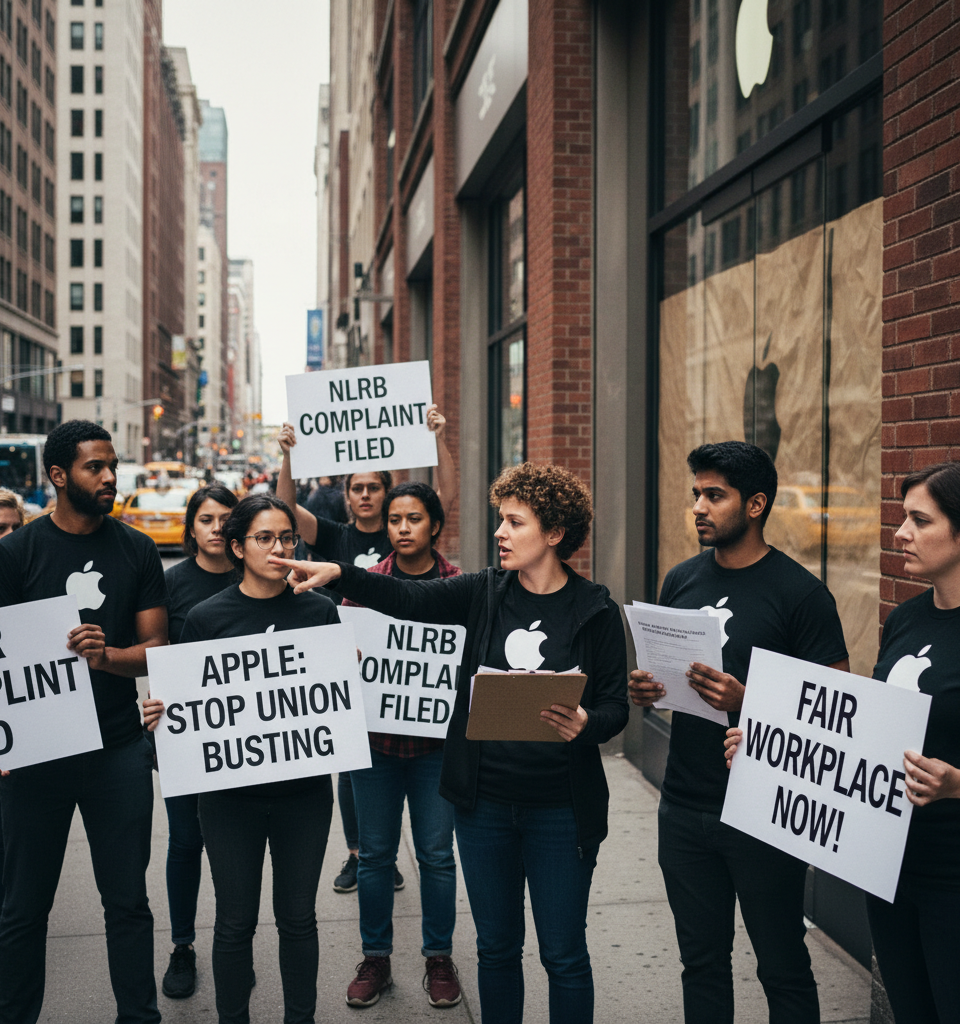
The International Association of Machinists and Aerospace Workers (IAM) has filed an unfair labor practice charge against Apple, accusing the technology behemoth of unlawfully discriminating against unionized employees at its Towson, Maryland retail store. S. S. to unionize, being a prominent casualty. The union contends that this closure is a retaliatory measure directly linked to the store's union activities, representing a significant challenge to organized labor within the retail tech sector.
Context and Background: A Brewing Labor Dispute
This incident is not an isolated event but rather the latest escalation in a growing tension between Apple and its workforce, particularly those seeking union representation. The Towson Apple Store made headlines in June 2022 when its employees successfully voted to unionize under the IAM, marking a pivotal moment in the tech industry's labor landscape. This move was met with resistance from Apple, which has historically maintained a non-unionized workforce. The unionization effort at Towson galvanized similar movements at other Apple locations and across the broader retail sector, underscoring a persistent demand for improved wages, benefits, and working conditions. The IAM's filing highlights the critical nature of these protections, especially in the face of what they perceive as corporate attempts to undermine unionization efforts.
Key Details: The Union's Allegations and Apple's Response
The core of the IAM's complaint centers on the timing and selective nature of the Towson store's closure. According to documents filed with the NLRB, the union alleges that Apple's decision to shutter the Towson location, less than two years after its employees voted to unionize, is not merely a business decision but a punitive action. The IAM points to the fact that other non-unionized stores within Apple's vast retail network that might be facing similar operational challenges were not selected for closure. While Apple has publicly stated that the closures are due to declining performance and were a difficult but necessary business decision, the union views this explanation with skepticism. While no direct quotes from Apple regarding the unfair labor practice charge were immediately available, the company has generally maintained its commitment to employee well-being, even as it has actively campaigned against unionization efforts within its stores.
Industry Impact: A Precedent for Tech and Retail
The outcome of this NLRB charge carries significant implications for both the technology retail industry and the broader labor movement. A finding in favor of the IAM could set a powerful precedent, reinforcing protections for unionizing workers and potentially deterring other companies from similar actions. Conversely, if Apple is not found to have engaged in unlawful discrimination, it could embolden corporations to take more aggressive stances against unionization, potentially chilling future organizing efforts. Analysts suggest that this case will be closely watched by major tech firms like Amazon and Google, which are also facing increasing pressure from their workforces to recognize and negotiate with unions. The shift in public sentiment towards labor rights, particularly among younger workers, adds another layer of complexity to these disputes.
Expert Perspective: Legal Challenges and Strategic Implications
Legal experts specializing in labor law indicate that the IAM faces a significant, yet not insurmountable, challenge. Proving discriminatory intent in such cases often requires substantial evidence beyond mere timing. "The union will need to demonstrate that the closure was motivated by anti-union animus, rather than legitimate business reasons," explained Rebecca Geller, a labor attorney. "This could involve showing a pattern of behavior, internal communications, or disparate treatment compared to similar non-unionized locations." Economists also weigh in, noting that while store performance typically drives closure decisions, the context of active union organizing introduces a critical layer of scrutiny. The potential financial penalties for Apple, should the NLRB rule against them, could include back pay for affected employees and mandates for reopening the store or offering significant severance packages, though the latter is less common.
What's Next: An Ongoing Legal Battle The
NLRB will now investigate the IAM's unfair labor practice charge. This process typically involves gathering evidence, interviewing witnesses, and potentially attempting to mediate a settlement between the two parties. If no settlement is reached, the NLRB's General Counsel may issue a formal complaint, leading to a hearing before an Administrative Law Judge. The legal battle could extend for months, if not longer, as appeals to the Board in Washington, D.C., and even federal courts are possible. In the interim, the fate of the nearly 90 employees from the Towson store remains uncertain, underscoring the human cost of these high-stakes labor disputes. The IAM has vowed to continue its fight for fair treatment and union recognition, signaling that the struggle for organized labor in the tech sector is far from over.