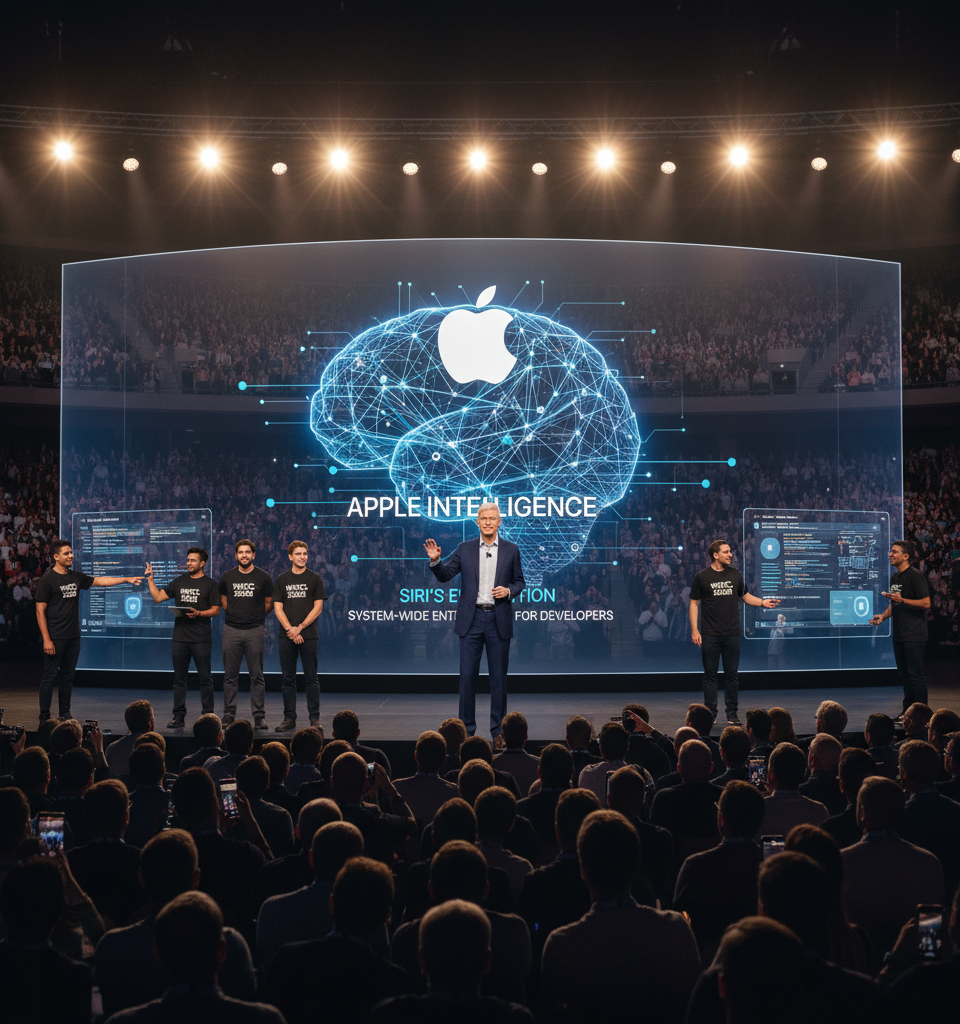
Cupertino, CA – Apple's annual Worldwide Developers Conference (WWDC 2026) has introduced a reimagined Siri, one that transcends its traditional role as a voice assistant. While its surface-level appeal may resonate with consumers, a deeper dive into the "WWDC26 Apple Intelligence developer guide" reveals a strategic move to establish Siri as a system-wide artificial intelligence interface. This transformation is set to permeate applications, data, and workplace actions across Apple's expansive hardware portfolio, including iPhone, iPad, Mac, Apple Watch, and Vision Pro. This development firmly positions the enhanced Siri as a pivotal new enterprise application layer.
The Strategic Shift: Siri as an Enterprise AI Platform
This evolution is not merely an incremental update but a fundamental re-architecture of how applications can interact with Apple's ecosystem. For years, Siri has been an integral, albeit often limited, part of the user experience. The current upgrade, however, proposes a paradigm shift, where Siri becomes the central nervous system for intelligent interactions within and between applications. This move could empower enterprise developers to imbue their applications with intelligent, context-aware capabilities, moving beyond simple voice commands to truly assistive and predictive functionalities that leverage users' data and workflows.
This development holds substantial implications for the enterprise software landscape. Companies that offer applications, regardless of their primary function, are now faced with the prospect of integrating with this system-wide AI interface. The core message from WWDC26 suggests that if an application wants to remain competitive and deeply integrated within the Apple ecosystem, it will need to leverage Siri's new capabilities. This could lead to a wave of innovation, as developers explore how to embed AI-driven automation and intelligent workflows directly into their enterprise solutions, accessible through a unified Apple interface.
Key Details from the Developer Guide
The "WWDC26 Apple Intelligence developer guide" outlines the technical framework enabling this transformation. While specific API details were not publicly released in the initial announcement, the guide reportedly emphasizes protocols for secure data access and intelligent action execution across devices. This suggests a focus on providing developers with robust tools to create sophisticated, AI-enhanced features that not only understand user intent but can also execute complex, multi-step actions within diverse applications. The emphasis on a system-wide interface means that a command given on an iPhone could potentially trigger an action or retrieve data from an enterprise application on a Mac or even Vision Pro, fostering unprecedented interoperability.
Industry Impact and Competitive Landscape
This strategic move by Apple is poised to significantly impact the enterprise software market. It could intensify competition among platform providers vying for developer mindshare and enterprise adoption. By offering a sophisticated AI layer directly integrated into its hardware and software stack, Apple could create a compelling proposition for businesses seeking to enhance productivity and streamline operations. Competitors in the AI and enterprise technology sectors will need to respond to this development, potentially by accelerating their own efforts to unify AI capabilities across their respective platforms and device ecosystems.
Future Implications for Businesses and Developers
Looking ahead, the implications for businesses and developers are profound. For developers, understanding and adopting Apple's new AI framework will become crucial for building next-generation enterprise applications. Companies will need to assess how their existing software can be enhanced or re-envisioned to leverage Siri's expanded capabilities, potentially leading to increased investment in AI research and development. For end-users in enterprises, this could translate into more intuitive, efficient, and intelligent tools that anticipate needs and automate routine tasks, ultimately boosting overall workplace productivity. The coming months will likely see more detailed documentation and developer resources emerge, guiding the integration of this new AI layer into myriad business applications across the Apple ecosystem.