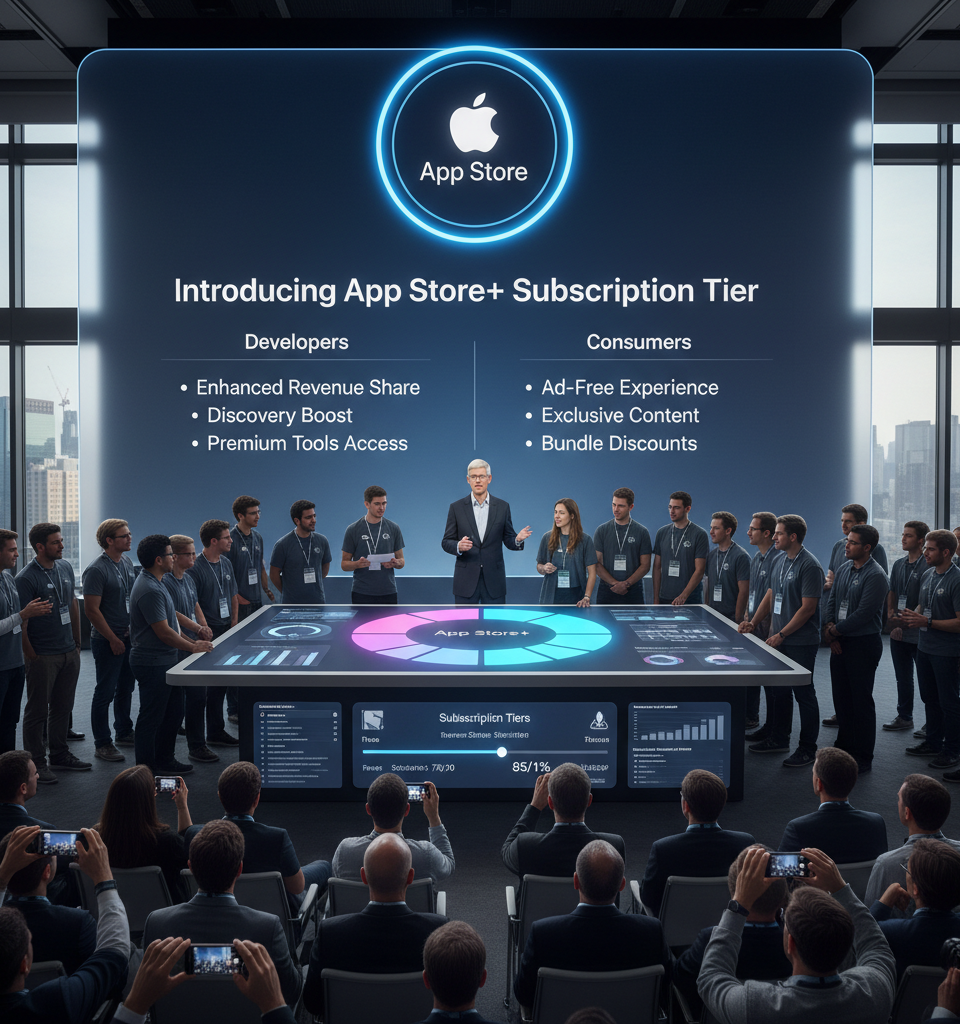
Cupertino, CA – Apple Inc. has announced a significant update to its App Store subscription framework, introducing a new tier that allows developers to offer users a discounted monthly rate in exchange for a full year's commitment. This policy change, effective immediately for eligible applications, represents a calculated effort by the tech giant to provide greater flexibility for developers in pricing their services while simultaneously stabilizing recurring revenue streams through longer-term user engagements.
The initiative is poised to impact a wide array of apps, from productivity tools to entertainment platforms, fundamentally altering how consumers access and pay for premium digital content within the Apple ecosystem.
Contextualizing an Evolving Digital Economy
This development comes at a time when the subscription economy is experiencing exponential growth, with consumers increasingly opting for recurring payment models across various digital services. For years, Apple's App Store, a cornerstone of its Services segment, has dictated strict guidelines for in-app purchases and subscriptions, often drawing criticism for its 15-30% commission rates. While the standard month-to-month subscription remains available, this new annual commitment option caters to a segment of consumers looking for cost savings and developers eager to secure more predictable income. It also builds upon existing annual subscription options by introducing a discounted monthly equivalent, a subtle yet important distinction that could influence user psychology and adoption.
Key Details and Developer Incentives Under the new pricing structure, developers can set a lower per-month cost for users who commit to a 12-month subscription period. While
Apple has yet to specify the exact discount percentages or guidelines, the underlying mechanism is designed to incentivize longer user tenure. For instance, a developer might offer a service for $9.99 per month on a standard rolling basis, but provide an annual commitment option at an effective rate of $7.99 per month, billed as an upfront annual fee of approximately $95.88. This provides substantial savings for the user while guaranteeing a year's revenue for the developer. Apple's standard commission rates will still apply to these new subscription tiers, meaning developers will receive 70% of the revenue for the first year of a subscription and 85% thereafter for qualifying subscriptions.
Broader Market and Industry Implications
This strategic pivot by Apple is anticipated to have ripple effects across the broader digital subscription market. For consumers, it introduces more diverse pricing options, potentially making premium app features more accessible for budget-conscious users willing to make a long-term commitment. For developers, especially smaller studios and independent creators, it offers a powerful tool for customer retention and revenue forecasting, mitigating the volatility often associated with month-to-month subscriptions. Competitors in the app store landscape, such as Google Play, may feel pressure to introduce similar flexible pricing models to remain competitive, potentially leading to a broader industry shift towards encouraging longer user commitments across platforms.
Expert Analysis on Apple's Strategy
Industry analysts view this move as a shrewd balancing act by Apple. "This isn't just about offering a discount; it's about optimizing the lifetime value of a customer," explains Sarah Chen, a senior analyst at Tech Insights. "By encouraging annual commitments, Apple and its developers can reduce churn rates and create a more predictable revenue pipeline, which is crucial for long-term project planning and investment." Chen also hypothesizes that this could subtly shift user behavior, normalizing longer commitment periods for digital services, much like how annual plans have become standard for software licenses and streaming services. "It's a win-win: consumers save money, and developers get more stable income, all while Apple maintains its significant cut of a larger, more consistent revenue pie."
The Road Ahead: Future Implications and Potential Developmenfs
Looking forward, this new subscription option could pave the way for further innovations in App Store monetization. We might see tiered annual plans, bundled services, or even personalized discounts based on user engagement history. The success of this new model will largely depend on developer adoption and consumer reception. Should it prove popular, it could solidify Apple's App Store as an even more dominant force in the subscription economy, reinforcing its walled-garden ecosystem. Conversely, if developers struggle to communicate the value proposition or if consumers show resistance to annual lock-ins, Apple may need to further refine its approach. The initial rollout will be closely watched by the industry, serving as a bellwether for the future of digital content consumption.