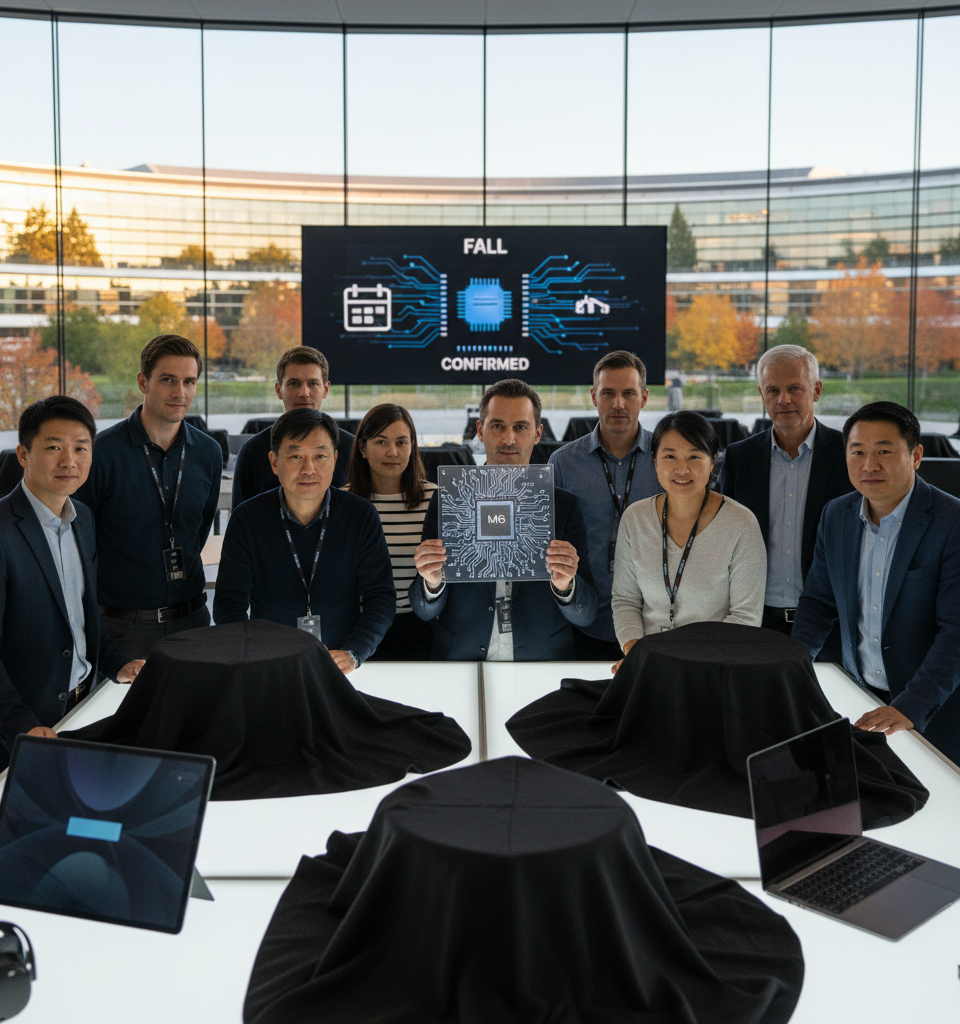
Cupertino tech giant Apple is reportedly gearing up to unveil its next-generation M6 system-on-a-chip (SoC) later this fall, a move poised to further solidify the company’s independent silicon strategy. The anticipated launch is expected to coincide with Apple's traditional autumn product announcements, potentially bringing significant performance and efficiency enhancements across its computing lineup. While Apple maintains its characteristic silence on future product plans, industry whispers and analyst predictions are painting a clear picture of what to expect from the new chip and the devices it will power.
Since the introduction of the M1 chip in late 2020, Apple has progressively transitioned away from Intel processors, a strategic pivot that has been widely lauded for its performance gains and integrated ecosystem benefits. Each subsequent generation – M2, M3, M4, and M5 – has built upon this foundation, delivering iterative yet substantial improvements in CPU, GPU, and neural engine capabilities. The M6, therefore, represents the continuation of this aggressive silicon roadmap, vital for maintaining Apple's competitive edge in the high-performance computing market and supporting its ambitious AI initiatives.
The most prominent rumors suggest that the MacBook Pro line, particularly the 14-inch and 16-inch models, will be among the first to feature the M6 chip. This follows prior patterns where Apple’s most demanding professional machines receive the latest silicon to cater to power users in creative and development fields. Additionally, the Mac Studio and potentially new configurations of the Mac mini are also rumored to be strong candidates for the M6, providing workstation-level performance in more compact form factors. Speculation also includes the possibility of the enhanced M6 Pro and M6 Max variants making their debut in these high-end machines, offering increased core counts and memory bandwidth.
This continued advancement in proprietary silicon is expected to send ripples across the PC industry. Competitors like Qualcomm, Intel, and AMD are constantly under pressure to match Apple's performance-per-watt efficiency, especially as the industry increasingly focuses on AI acceleration and battery life. The M6’s potential enhancements in neural engine performance, in particular, could set new benchmarks for on-device AI processing, impacting applications ranging from image recognition and natural language processing to advanced video editing and 3D rendering. This could further entice developers to optimize their software for Apple’s unified memory architecture, deepening the company's ecosystem advantage.
While Apple has yet to confirm any details, analysts frequently point to several key product cycles that align with a fall M6 launch. The company typically updates its professional Mac lineup on an 18-month to 2-year cadence, and based on past releases, the timing for the M6 aligns well with this schedule. Experts like Ming-Chi Kuo have often provided accurate insights into Apple's supply chain and product roadmap, and current sentiment among these observers strongly suggests a significant hardware refresh later this year, headlined by the M6.
The implications extend beyond just raw performance. Enhanced power efficiency from the M6 could translate to even longer battery life for portable Macs, a perpetually desirable feature for consumers. Furthermore, the tightly integrated hardware and software environment, a hallmark of Apple's strategy, will likely see macOS optimized to fully leverage the M6's unique capabilities, potentially enabling new features or significantly improving existing ones. Looking ahead, the M6’s architecture will undoubtedly inform the development of future iterations, laying the groundwork for even more powerful and efficient chips in the years to come, and potentially expanding into Apple's other nascent product categories like its mixed-reality headset or future automotive ventures.