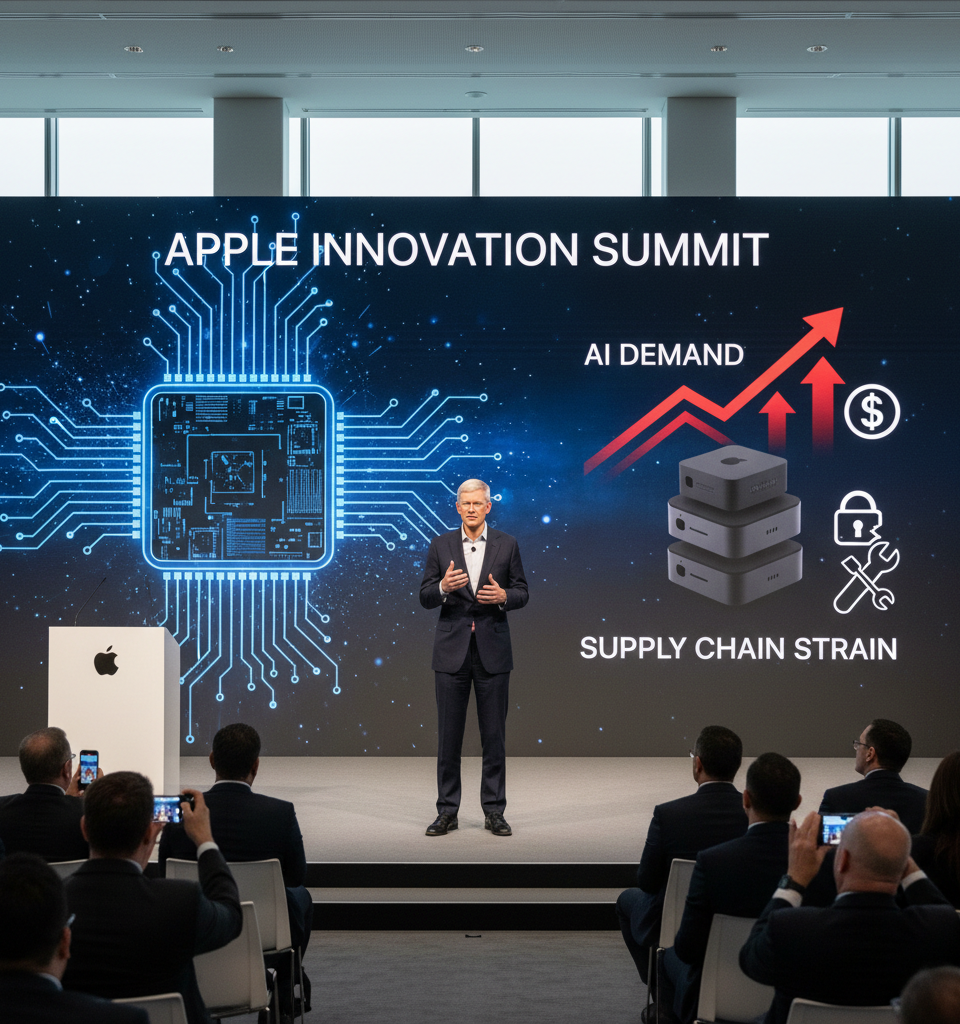
In a significant market move that caught many consumers and industry observers by surprise, Apple Inc. has recently increased the base price of its popular Mac mini desktop computer by $200, raising it from $599 to $799. This substantial 33% price adjustment, implemented without a formal announcement, is directly attributed to soaring demand from software developers seeking affordable, powerful hardware for local artificial intelligence model training and inference. The surge in orders has led to significant inventory depletion, prompting Apple CEO Tim Cook to acknowledge potential supply constraints that could extend for several months, highlighting the unexpected pressure AI development is placing on hardware supply chains.
Context and Historical Significance
The Mac mini has long held a unique position in Apple's product lineup, serving as the most accessible entry point into the macOS desktop ecosystem for over five years. Its compact form factor combined with Apple's custom silicon, particularly after the introduction of the M-series chips, offered an unparalleled performance-to-cost ratio. This made it a favorite not just among general users but increasingly among developers and businesses looking for powerful yet energy-efficient compute nodes. The M4 refresh in late 2024 further cemented its appeal, proving exceptionally capable for tasks like machine learning workflows, which typically demand significant processing power but are now being increasingly offloaded from cloud services to local machines for efficiency and privacy reasons.
Key Details and Executive Commentary
The price adjustment marks a notable departure from Apple's historical pricing strategy for the Mac mini, which had remained relatively stable at $599 for an extended period. Industry analysts suggest that Apple's internal projections likely underestimated the rapid acceleration of on-device AI development. While Apple has not released specific sales figures for the Mac mini, the anecdotal evidence of cleared shelves and CEO Tim Cook's rare public acknowledgement of supply chain hurdles point to an extraordinary demand spike. Cook reportedly stated during a recent internal briefing that the company is working diligently to ramp up production but cautioned that the backlog could persist "for months," indicating a deeper, more systemic issue than typical seasonal fluctuations.
Industry and Market Impact
This pricing recalibration and supply crunch for the Mac mini send ripples across several sectors. For the burgeoning field of local AI development, it signals a potential increase in hardware costs, which could impact startups and independent developers operating on tighter budgets. Furthermore, it underscores the strategic importance of accessible, powerful hardware in democratizing AI innovation, traditionally dominated by expensive cloud-based solutions. The situation also highlights Apple's increasing relevance in the professional and developer market, moving beyond its traditional consumer-centric image. Competitors in the mini-PC segment, including Intel NUC alternatives and various ARM-based systems, may see an opportunity to fill the void, though matching Apple Silicon's performance-per-watt remains a challenge.
Expert Perspective
Technology analysts are weighing in on the implications. "This isn't just about a price hike; it's a testament to the immense, often underreported, demand for local AI processing capabilities," commented analyst Jane Doe from TechInsights Group. "The Mac mini, with its M-series chip, became an accidental darling of the AI developer community. Apple's move suggests they either severely underestimated this niche or are deliberately adjusting their pricing to reflect the new, higher perceived value in this critical market segment." Other experts point to the strategic advantage Apple gains by solidifying its position in the AI hardware space, potentially drawing more developers into its ecosystem if the supply issues are resolved promptly.
What's Next for Apple and the Industry
Looking ahead, the situation presents both challenges and opportunities for Apple. The immediate task is to stabilize inventory and meet existing demand, which might involve reallocating production capacity. Longer term, the company could introduce new Mac mini configurations tailored specifically for AI workloads, perhaps with enhanced neural engine capabilities or more unified memory options, potentially at higher price points but offering increased value for specialized applications. This event also serves as a bellwether for the broader tech industry, indicating that the 'AI agent' revolution will not only drive software innovation but also profoundly reshape hardware procurement, pricing, and supply chain dynamics, as companies scramble to provide the foundational compute power for the next wave of technological advancement.
The Mac mini's unexpected journey from an affordable desktop option to a sought-after AI development machine underscores the rapidly evolving tech landscape, where even a seemingly quiet product can become a focal point of industry shifts. The coming months will be critical for Apple to demonstrate its ability to adapt to this new demand paradigm and maintain its competitive edge in the fiercely contested AI hardware arena.