Apple Patches iOS Flaw Exploited by Law Enforcement to Access Deleted Push Notifications
Ian Carlos Campbell•April 22, 2026•4 min read
Key Takeaways
Read this first — then go as deep as you need.
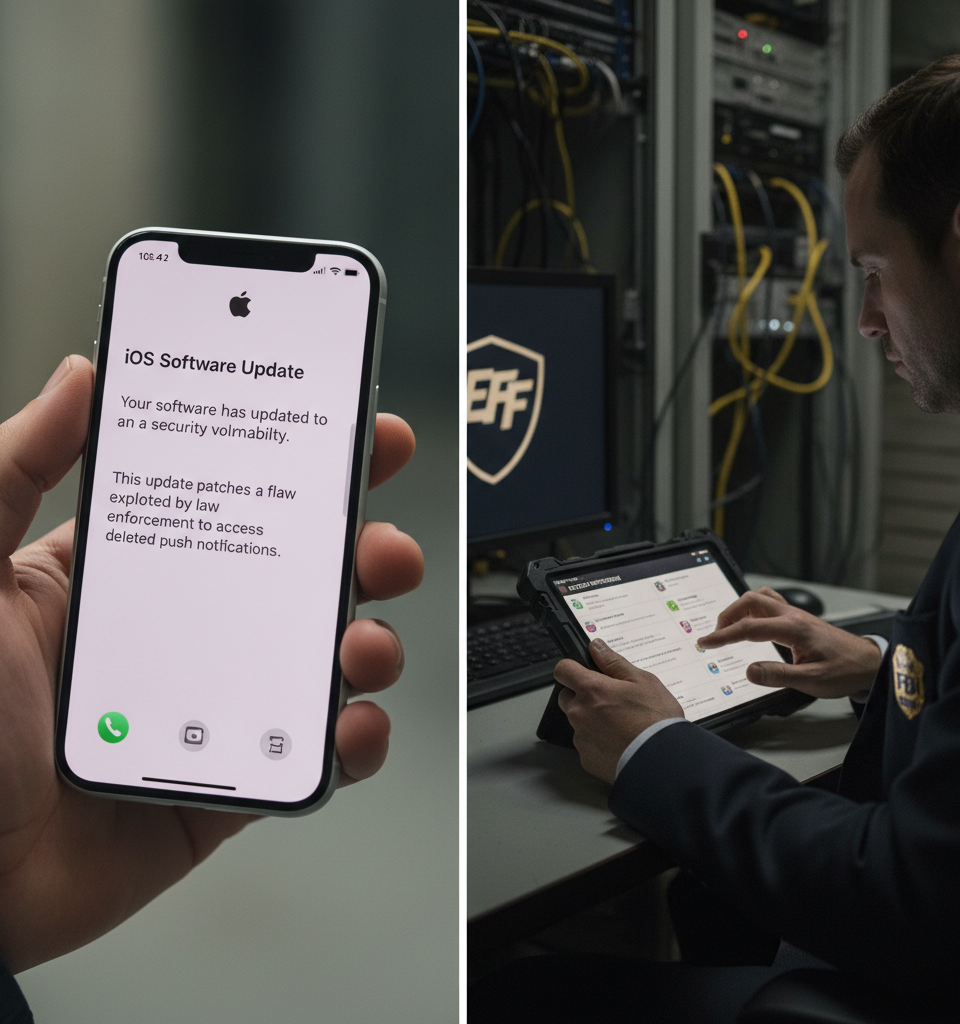
Apple Rectifies Critical iOS Vulnerability Exploited By Law Enforcement Cupertino, California – Apple Inc. has swiftly released iOS 26.4.2, an emergency software update designed to patch a critical security vulnerability that reportedly permitted law enforcement agencies, most notably the Federal Bureau of Investigation (FBI), to access deleted push notifications on iPhones and iPads. The update, rolled out to users globally, aims to reinforce the company's steadfast commitment to user privacy, which has been a cornerstone of its brand identity amidst ongoing debates over digital surveillance. This revelation underscores the persistent tension between tech giants' privacy assurances and government agencies' intelligence-gathering efforts. For years, Apple has championed end-to-end encryption and a strict stance against backdoor access, often clashing with authorities seeking data access for national security and criminal investigations. The exposure of this flaw highlights how sophisticated agencies may exploit even seemingly minor technical vulnerabilities to circumvent established privacy protocols, particularly since Apple began requiring court orders for notification data sharing in 2023. The vulnerability, described in Apple's update notes simply as a fix for an issue related to its notification database, was detailed by organizations like the Electronic Frontier Foundation (EFF). According to EFF, the flaw created a pathway through which deleted push notifications, even those no longer visible to the user, could be retrieved and analyzed by law enforcement. This access effectively bypassed Apple's public position on data sharing, providing agencies with a window into user communications that would otherwise require significant legal hurdles or a direct compromise of the device itself. While the exact duration of this vulnerability's exploitability remains undisclosed, its existence has sparked renewed debate over digital forensics and user rights. From an industry perspective, this incident could have ripple effects across the tech landscape. Other smartphone manufacturers and app developers may face increased scrutiny regarding their own notification systems and data retention policies. The incident reinforces the competitive advantage Apple aims to maintain through its privacy-centric marketing, yet simultaneously exposes the immense challenges inherent in securing complex software ecosystems against determined adversaries. It also raises questions about the scope of information law enforcement can covertly obtain, potentially impacting consumer trust in other digital services. Cybersecurity experts and privacy advocates have been quick to weigh in. "This flaw served as a de facto backdoor, regardless of Apple's intent," stated Dr. Aris Thorne, a senior cybersecurity analyst at Veriscan Labs. "While Apple has consistently fought against mandated backdoors, the technical reality of software development means vulnerabilities will always exist. The critical issue here is that this particular vulnerability provided a method for surveillance that circumvented legal transparency and user consent." Other experts predict that this incident will drive further investment in proactive vulnerability research and bug bounty programs within large tech firms. Looking ahead, expect intensified discussions between tech companies, privacy advocates, and government bodies on the balance between national security and individual privacy rights. Apple will undoubtedly leverage this fix to reiterate its commitment to user security, potentially enhancing its transparency reports about government data requests. However, the revelation will likely fuel calls for greater oversight on how law enforcement accesses digital data, potentially leading to new legislative proposals aimed at clarifying or restricting such surveillance methods. Meanwhile, users are strongly advised to update their devices to iOS 26.4.2 immediately to ensure their vulnerability is patched and their privacy is maximally protected. The incident serves as a stark reminder that even with robust security architectures, no system is entirely impervious to exploitation. Apple's rapid response underscores the critical importance of continuous software maintenance and the vigilance required to protect user data in an increasingly complex digital frontier. The coming months will likely see a renewed focus on secure by design principles and enhanced legal frameworks to govern digital access.
Discussion
Join the discussion
Sign in to leave a comment on this article.
Loading comments...
Enjoying this article?
Get more like it delivered to your inbox — free.
This article was compiled by GlobalSell News from publicly available reporting and has been edited for clarity and length. For full details, read the original source.