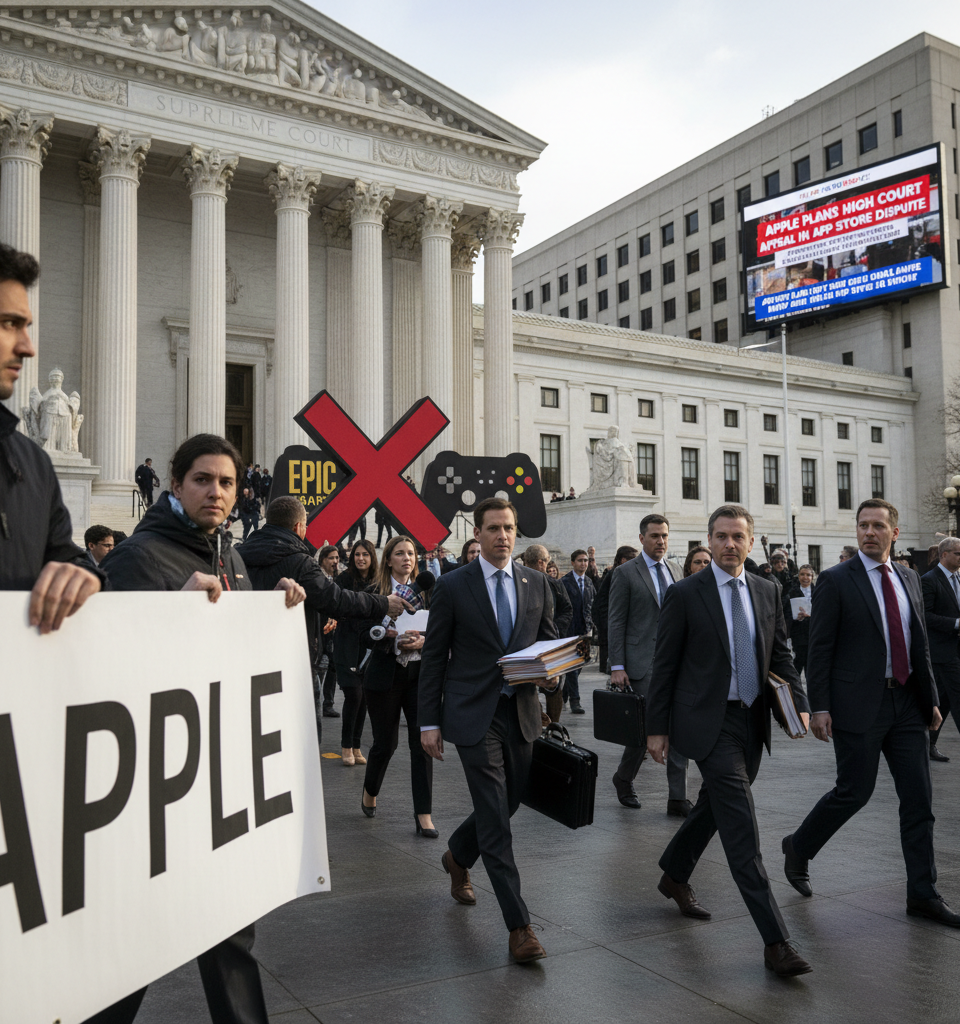
Cupertino, CA – May 19, 2026 – Apple Inc. is poised to escalate its long-running legal confrontation with Epic Games to the highest court in the United States, as it prepares to file an appeal with the Supreme Court. The impending petition seeks to challenge an appellate court's decision that could fundamentally alter Apple's control over its App Store payment mechanisms. This development suggests a renewed push by Apple to protect its established revenue model against judicial mandates favoring alternative payment options.
The dispute, which originated in 2020 when Epic Games sought to bypass Apple's payment system in its popular game Fortnite, has evolved into a landmark case scrutinizing the dominant market power of digital platform operators. At stake for Apple is its ability to enforce a commission on all transactions conducted through the App Store, a cornerstone of its services revenue. The current appellate ruling, which Apple intends to contest, has been interpreted as potentially limiting the company's long-standing policy of requiring developers to use its proprietary in-app purchase system for digital goods and services, thereby enabling developers to direct users to external payment methods without incurring Apple's standard fees.
The Heart of the App Store Battle
Central to Apple's planned appeal is the interpretation of antitrust laws and the definition of a relevant market within the digital app economy. Apple has consistently argued that its App Store operates within a fiercely competitive software distribution landscape, justifying its commission structure as a necessary component for funding platform security, innovation, and developer tools. Conversely, Epic Games and its supporters have asserted that Apple exercises a monopolistic grip over the iOS app distribution market, leveraging its position to impose anti-competitive terms on developers and consumers alike.
The federal appeals court's decision, which Apple now seeks to challenge, affirmed some aspects of the lower court's ruling while also introducing nuances that Apple finds problematic. Specifically, the ruling stipulated that Apple could not prohibit developers from including 'buttons, external links, or other calls to action that direct customers to purchasing mechanisms, in addition to Apple’s in-app purchasing.' This particular injunction is believed to be the primary target of Apple's intended Supreme Court appeal, as it directly impacts the company's ability to maintain its lucrative 15-30% commission on digital transactions.
Broader Industry Implications
Should the Supreme Court agree to hear the case, its eventual decision could send seismic waves throughout the entire technology industry, affecting not only Apple but also other major platform holders like Google, Microsoft, and Amazon. A ruling favorable to Epic Games could embolden regulators globally and encourage further antitrust scrutiny of platform ecosystems, potentially leading to widespread changes in how digital marketplaces operate. Conversely, a victory for Apple could reinforce the existing platform-centric models and limit the avenues for developers seeking more flexible payment options.
The ongoing legal tussle has already spurred legislative efforts in various jurisdictions to regulate app store practices. Lawmakers in the United States and the European Union have been closely monitoring the case, with some proposing legislation aimed at opening up app ecosystems and fostering greater competition. The Supreme Court's involvement would undoubtedly intensify these debates and could influence the trajectory of future digital market regulations.
What Lies Ahead
Apple's decision to pursue a Supreme Court appeal signals its unwavering commitment to defending its App Store business model, which has been a significant driver of its services revenue growth. The legal process for a Supreme Court review is often lengthy, with the Court first deciding whether to grant 'certiorari' – agreeing to hear the case. If the appeal is accepted, the case would then proceed to a full briefing and oral arguments, a process that could unfold over many months, if not more than a year.
The immediate future holds a period of anticipation as legal experts and industry observers await the formal filing of Apple's petition and the Supreme Court's subsequent decision on whether to take up the complex case. Regardless of the ultimate outcome, the continued legal battle underscores the profound challenges and evolving regulatory landscape facing dominant technology companies in the highly interconnected digital age. The ramifications of this legal saga are expected to resonate for years to come, shaping developer-platform relationships and consumer choices in the digital marketplace.