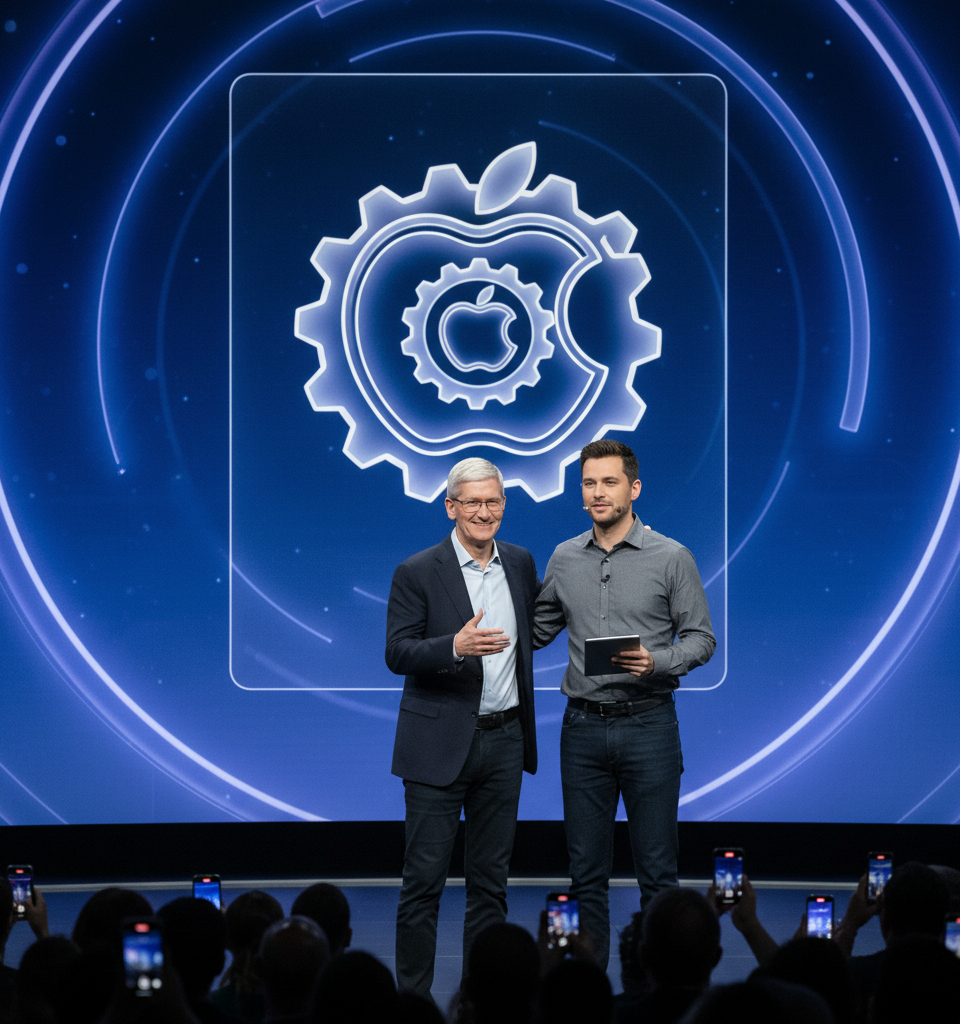
Cupertino, CA – In a move that surprised few but profoundly impacts the global technology landscape, Apple Inc. officially announced earlier this week that its revered Chief Executive Officer, Tim Cook, will retire from his position in September. His successor will be John Ternus, Apple's current Senior Vice President of Hardware Engineering, signaling a carefully managed transition at the helm of the world’s most valuable company.
While the exact timing of Monday's disclosure was unexpected, the broader strategic shift has been a subject of internal preparation and external speculation for years, positioning this corporate succession as one of the most meticulously choreographed in modern business history.
Context and Strategic Significance
This leadership change extends beyond a simple executive reshuffle; it represents a strategic evolution for Apple as it navigates an increasingly complex technological and geopolitical environment. Tim Cook, who took over from co-founder Steve Jobs in 2011, has overseen a period of unprecedented growth, quadrupling the company's valuation to over $3 trillion and diversifying its revenue streams significantly into services. His tenure has been characterized by operational excellence, supply chain mastery, and robust financial performance. The decision to appoint Ternus, a long-time Apple veteran known for his engineering prowess and deep understanding of product development, underscores a potential renewed emphasis on hardware innovation and integrated product experiences, even as Apple continues to expand its services ecosystem, which now accounts for nearly 20% of its total revenue.
Key Details and Executive Profiles
The announcement confirmed that Cook, 63, will transition to an advisory role on Apple's board of directors until 2026, ensuring a smooth handover and continuity of institutional knowledge. John Ternus, 49, who joined Apple in 2001, has been instrumental in the development of critical products including the iPhone, iPad, and the M1 chip family. His promotion to Senior Vice President of Hardware Engineering in 2021 was widely seen as a grooming step for future leadership. Sources close to the company indicate that Ternus has earned the trust of Cook and the board through his calm leadership, technical expertise, and unwavering commitment to Apple's exacting standards. The transition is scheduled for September 2024, coinciding with Apple’s traditional major product launch event.
Industry and Market Impact
The financial markets have reacted with a measured response, reflecting confidence in Apple's robust leadership pipeline and strong corporate governance. Apple’s stock (NASDAQ: AAPL) saw only minor fluctuations following the news, largely maintaining its impressive year-to-date gains of approximately 15%. Analysts suggest that the orderly nature of the transition mitigates much of the uncertainty typically associated with a CEO change at a company of Apple's magnitude. Competitors will be closely watching for any shifts in product strategy or market focus, particularly as Apple deepens its foray into new categories like spatial computing with the Apple Vision Pro, where Ternus has played a significant role.
Expert Perspectives Industry analysts have largely praised the orderly succession plan.
"This isn't a hasty decision; it's the culmination of years of strategic planning," commented Gene Munster, Managing Partner at Deepwater Asset Management. "Cook has set the table for a seamless transition, and Ternus represents the blend of engineering excellence and product vision that Apple needs for its next chapter." Others, like Toni Sacconaghi of Bernstein Research, highlighted Ternus's reputation for humility and deep technical acumen. "Ternus is a product person through and through, and that bodes well for Apple's core innovation engine at a time when AI integration and new product categories are paramount." The consensus is that Ternus’s appointment signals Apple’s continued commitment to hardware and integrated services as differentiators.
The Road Ahead
Looking forward, Ternus is expected to inherit a company facing both immense opportunities and significant challenges. These include navigating evolving regulatory pressures worldwide, sustaining growth in saturated smartphone markets, and aggressively competing in emerging technologies like artificial intelligence and augmented reality. The immediate focus will likely be on maintaining Apple’s innovation cadence and driving adoption of its newest platforms. Investors and consumers alike will be eager to see how Ternus puts his stamp on Apple’s product roadmap, whether he continues Cook's strategy of incremental innovation and services growth, or if he ushers in a new era of more disruptive product development. The September handover will not just be a ceremonial event, but the commencement of a new strategic chapter for the global tech behemoth.