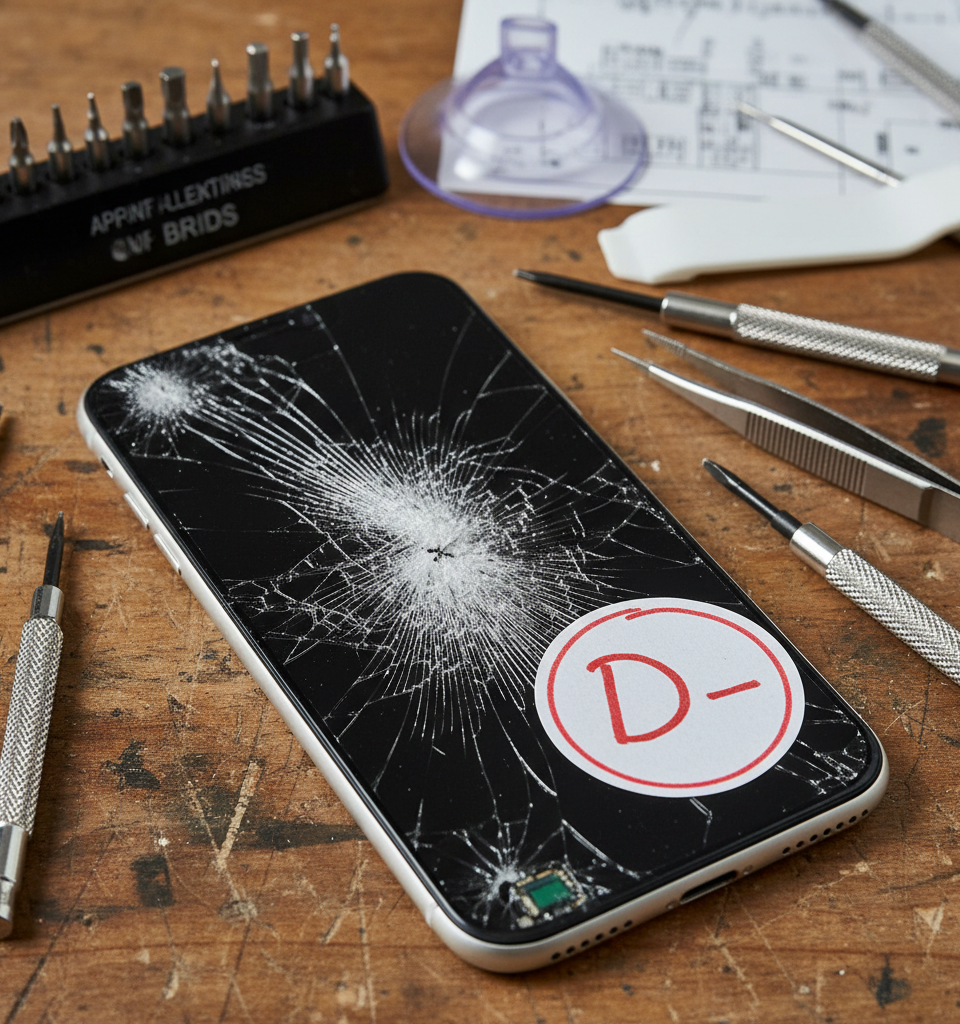
CUPERTINO, CA – Apple Inc.'s latest iteration of its flagship iPhone has been awarded a dismal D– grade for repairability by an influential independent assessment organization, a marginal improvement from its historical performance but still placing it firmly at the bottom of the consumer electronics spectrum. This assessment, released this week, highlights ongoing frustrations for consumers and the burgeoning 'right to repair' movement, which advocates for easier and more affordable product maintenance. The report also singled out Samsung, classifying its devices with a similarly poor D grade, underscoring a systemic issue within the smartphone industry regarding product design and longevity.
This recurring low score for Apple's devices is not merely an academic exercise; it carries significant implications for environmental sustainability, consumer rights, and economic policy. For years, critics have accused tech giants like Apple of designing products that are intentionally difficult to repair, thereby encouraging premature upgrades and contributing to electronic waste. The 'right to repair' movement, gaining traction globally, seeks to empower consumers and independent repair technicians with access to necessary tools, parts, and schematics to extend product lifespans. This latest grading serves as a stark reminder of the uphill battle faced by advocates against the entrenched business models of leading manufacturers.
The detailed assessment points to several critical factors contributing to the iPhone's low repairability score. These include the extensive use of proprietary screws and adhesives, tightly integrated components that make modular replacement challenging, and software locks that can brick a device if non-OEM parts are detected. While Apple has recently introduced a self-service repair program, critics argue its scope is limited and processes remain overly complex for the average consumer. For instance, replacing an iPhone screen often requires specialized tools and a pairing process with Apple's servers, tasks that are prohibitive for most users and many independent repair shops. These design choices contrast sharply with the principles of easy disassembly and component interchangeability that define highly repairable devices.
The implications of these low repairability scores ripple across the entire technology market. For consumers, it translates into higher repair costs, often forcing them to opt for expensive manufacturer-approved services or purchasing new devices prematurely. This fuels a cycle of planned obsolescence, impacting household budgets and exacerbating the global electronic waste crisis. Environmentally, the short lifespan of these devices contributes significantly to landfill accumulation and the depletion of finite resources required for manufacturing. Economically, restrictive repair policies stifle independent repair businesses, creating a near-monopoly for manufacturers on post-sales service and support, a market estimated to be worth billions annually.
Industry experts and consumer advocates have weighed in on these persistent issues. Kyle Wiens, CEO of iFixit, a prominent voice in the repairability debate, stated, "While a D– might be a slight improvement for Apple, it's still a failing grade. It shows that despite public pressure and legislative action, the core design philosophy prioritizing sleekness over repairability remains largely unchanged." He further noted that without substantial design overhauls and a commitment to making parts and manuals widely available, these low scores will continue. Analysts suggest that regulatory bodies, particularly in Europe and parts of the United States, are increasingly paying attention to these metrics as they formulate 'right to repair' legislation, which could soon mandate minimum repairability standards.
Looking ahead, the pressure on Apple and other tech giants is only expected to intensify. Several jurisdictions are actively debating comprehensive 'right to repair' laws that could fundamentally alter how electronics are designed, sold, and serviced. California, for example, passed a significant 'right to repair' bill in 2023, while the European Union has been a frontrunner in enacting similar legislation. These impending regulations could force manufacturers to provide access to diagnostic tools, genuine parts, and repair manuals without onerous restrictions. Companies that fail to adapt risk not only regulatory penalties but also reputational damage among a growing segment of environmentally conscious consumers and a potential loss of market share to more repair-friendly alternatives.
Furthermore, the long-term trend points towards greater standardization and modularity in consumer electronics. As sustainability concerns become paramount, companies that embrace design for repairability could gain a competitive edge. This would involve a shift from integrated, glued components to more easily swappable modules, utilizing readily available fasteners, and providing clear, public documentation for repairs. The current D– for the iPhone, while a slight uptick, underscores that Apple still has a considerable journey ahead to align with evolving consumer expectations and impending global regulations concerning product longevity and repairability.
Ultimately, the ongoing debate around device repairability is a microcosm of a larger discussion about corporate responsibility, sustainable consumption, and the balance of power between manufacturers and consumers. The consistent low scores for leading devices may just be the catalyst needed to spur a fundamental transformation in how technology products are conceived, built, and maintained for a more sustainable future.