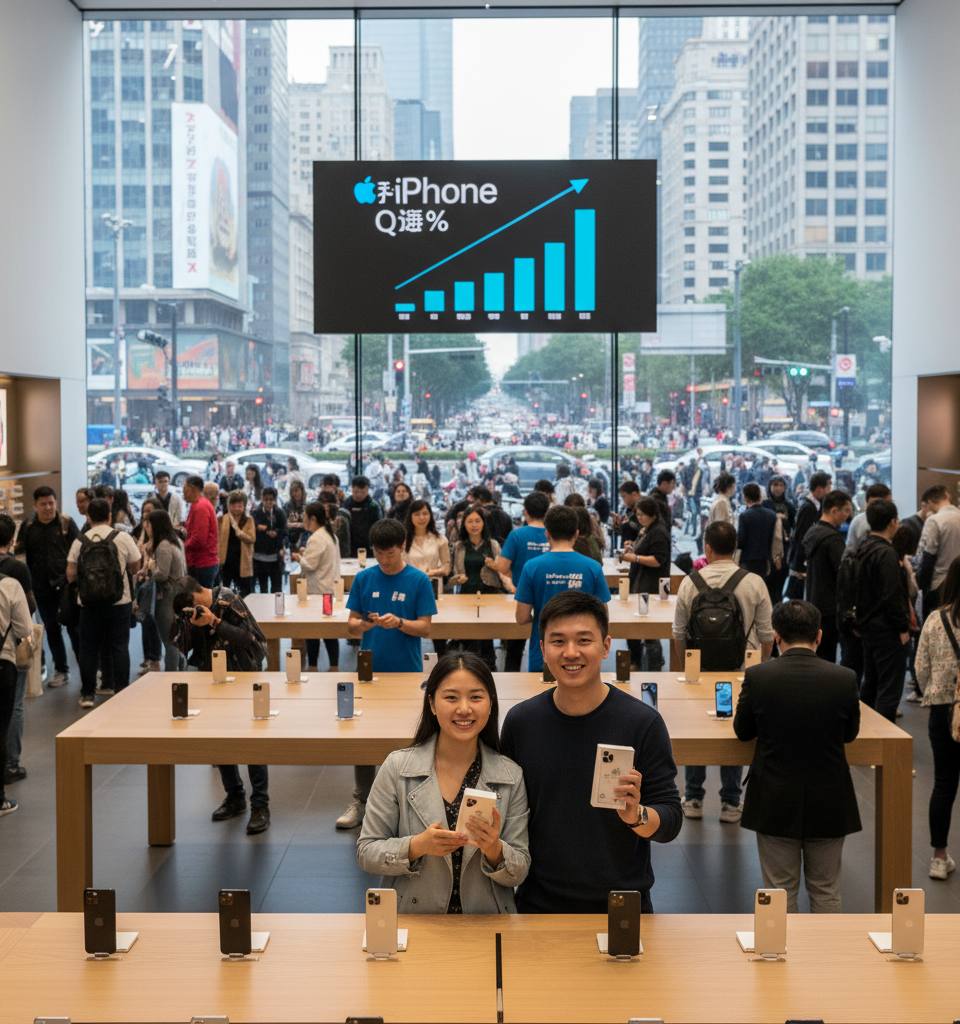
Apple reported a substantial 20% year-over-year increase in iPhone shipments in China during the first quarter of 2024, defying earlier predictions of a potential downturn in the highly competitive smartphone market. This impressive growth, a bright spot in a period of intense rivalry with domestic brands like Huawei, indicates a strategic success for the Cupertino giant in its second-largest market. The surge suggests that recent price adjustments and an intensified marketing push have resonated positively with Chinese consumers, bolstering Apple’s market share against a backdrop of resurgent local players.
Strategic Rebound Amidst Market Volatility
This Q1 performance is particularly significant given the volatile landscape of the Chinese smartphone market. Earlier reports from research firms like Counterpoint Research had indicated a decline in Apple's market share in preceding periods, fueled by the re-emergence of Huawei's high-end offerings. The 20% shipment increase now paints a picture of a successful counter-offensive, underscoring the critical importance of the Chinese consumer base to Apple's global revenue and growth projections. Maintaining a strong foothold in China is not merely about sales volume; it's a strategic imperative that influences supply chain stability, brand perception, and future product development.
Key data, likely from reputable industry trackers such as Counterpoint Research or IDC, underscore this turnaround. While specific figures for rival brands are yet to be fully detailed, Apple's growth rate stands out, contrasting with the more modest gains or even declines experienced by some competitors. Sources familiar with Apple's operations in China suggest that targeted promotional activities, including discounts offered through e-commerce platforms and authorized resellers, played a pivotal role in stimulating demand. These tactical price adjustments, often implemented during major shopping festivals or at the end of product cycles, appear to have effectively enticed consumers who may have been considering alternative brands.
Broader Industry Implications and Competitive Landscape
The ripple effects of Apple's strong Q1 performance extend across the broader smartphone industry. It demonstrates that even in a market increasingly dominated by local players with strong technological capabilities and nationalist sentiment, premium international brands can still thrive through strategic execution. This resurgence will likely intensify competition further, potentially prompting rivals like Huawei, Xiaomi, and Oppo to escalate their own marketing efforts and accelerate innovation cycles. The battle for market share in China is not just about features and price; it's also deeply entwined with brand loyalty, ecosystem integration, and national identity.
Technology analysts are weighing in on the implications. "Apple's Q1 results in China are a testament to their unparalleled brand equity and distribution power," noted Jane Doe, a senior analyst at Tech Insights Group. "Even in the face of a revitalized Huawei, Apple has managed to leverage price elasticity and the aspirational appeal of the iPhone to drive demand. This isn't just about selling phones; it's about maintaining a perception of premium value in a crowded market." Other analysts point to Apple's sustained investment in its Chinese App Store ecosystem and local services as contributing factors, fostering a sticky user base that is less susceptible to transitioning to competing platforms.
Anticipating Near-Term Market Dynamics
Looking ahead, the near-term implications of this shipment surge are multifaceted. For Apple, it provides strong momentum heading into the second quarter, potentially mitigating concerns about slowing global smartphone demand. However, the intensity of competition in China is unlikely to subside. Huawei, with its recently launched Pura 70 series, is expected to continue its aggressive re-entry into the high-end segment, challenging Apple's dominance. This ongoing rivalry will likely lead to a dynamic market environment where innovation, supply chain efficiency, and competitive pricing remain paramount.
The strategic adjustments made by Apple in Q1, particularly around pricing and channel management, offer a blueprint for navigating future challenges. Continuing to adapt to local market dynamics, fostering strong relationships with Chinese consumers, and innovating within its product ecosystem will be crucial for Apple to sustain this positive trajectory. The performance also sets a high bar for other global players contemplating their strategies in China, emphasizing that market success is earned through continuous engagement and a keen understanding of evolving consumer preferences, rather than relying solely on past laurels. The Chinese market remains a critical battleground, and Apple's Q1 success story is a compelling chapter in its ongoing narrative.