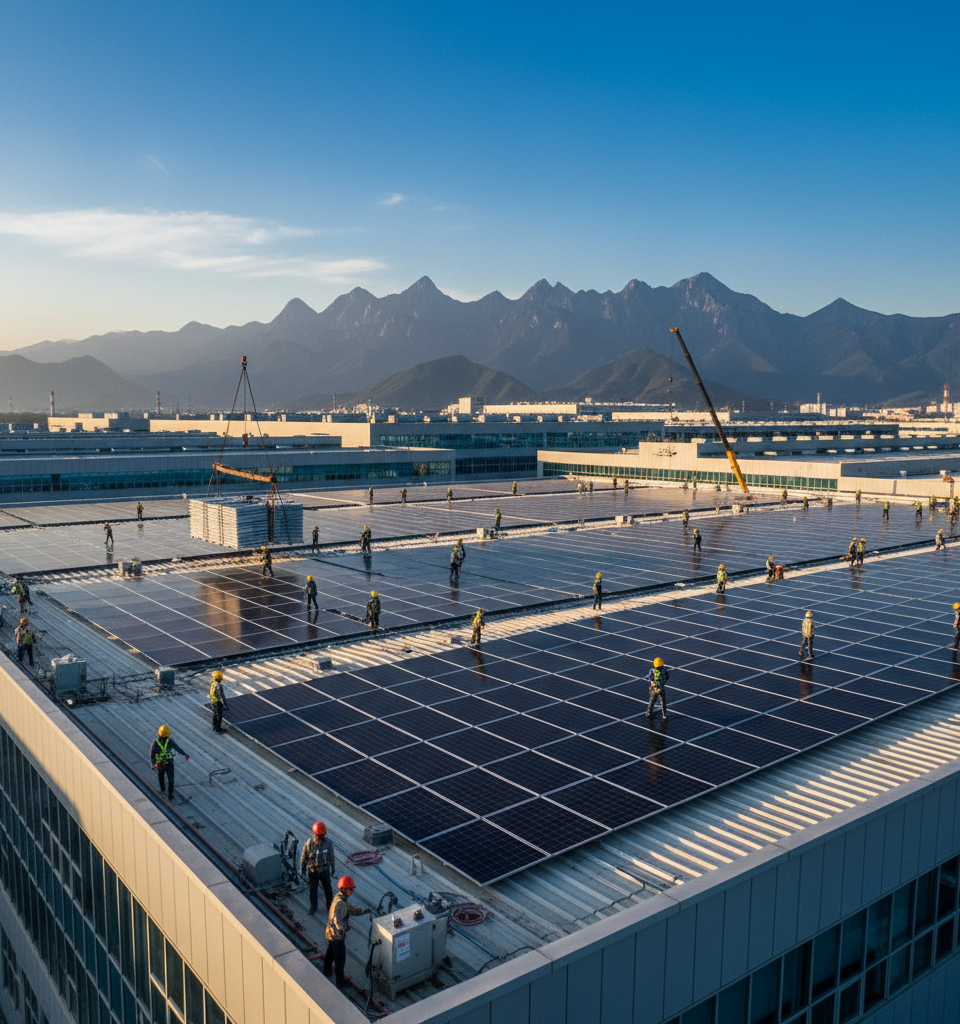
Cupertino, CA – Apple's global manufacturing supply chain is making demonstrable progress in shifting to green energy sources, yet an underlying challenge persists: a stagnation in overall emissions reductions despite these efforts. Since 2021, the iPhone maker has annually reported a decrease in manufacturing emissions, signaling a positive trend in its direct oversight, but a broader analysis indicates that its vast network of suppliers is struggling to keep pace on the emissions front even as their renewable energy use climbs. This nuanced situation underscores the formidable task of decarbonizing an industrial ecosystem of immense scale and complexity.
Apple, a company synonymous with innovation and environmental commitments, has aggressively pushed its suppliers to adopt 100% renewable energy for all Apple-related production. This initiative, dubbed the "Supplier Clean Energy Program," has seen significant buy-in, with hundreds of suppliers pledging to meet this target. The current trajectory suggests a decoupling of renewable energy adoption from immediate, parallel reductions in total greenhouse gas emissions, a critical disconnect that warrants deeper examination.
Supplier Progress on Renewables According to
Apple's latest environmental progress report, an impressive 250 suppliers, representing over 90% of the company's direct manufacturing spend, have now committed to 100% renewable energy for their Apple-related production. This marks a substantial increase from just a few years ago and positions Apple as a leader in corporate renewable energy procurement within its supply chain. These commitments encompass over 42 gigawatts of clean energy globally, ranging from onsite solar installations to power purchase agreements. The company asserts that its suppliers brought over 13.7 gigawatts of new renewable energy online in 2023 alone. Such aggressive targets and commitments are designed to influence suppliers not just for Apple's production, but for their entire operational footprint, ideally creating a ripple effect across the industry.
Emissions Reduction Stagnation Despite the robust embrace of renewable energy by its supplier base, total manufacturing emissions for
Apple's products have not seen a proportional decline in recent years. While Apple itself has reduced its direct operational emissions by 55% since 2015 and achieved carbon neutrality for its corporate operations in 2020, achieving similar swift reductions across its vast, intricate supply chain remains a significant hurdle. Emissions related to product manufacturing, a Scope 3 category, are notoriously difficult to control due to the sheer number of facilities, diverse energy grids, and varying levels of technological maturity among suppliers. The increase in production volume for new or expanding product lines, coupled with embedded carbon in raw materials and logistics, often offsets gains made through renewable energy adoption, creating a net-zero or even slight increase in overall emissions.
Industry Impact and Challenges
This dynamic is not unique to Apple. Many global corporations with ambitious climate goals face similar challenges in their Scope 3 emissions. The capital expenditure required for suppliers to transition to renewable energy, improve energy efficiency, and adopt lower-carbon manufacturing processes can be substantial. For smaller or less profitable suppliers, the investment can be prohibitive without significant financial incentives or direct support from their enterprise customers. Furthermore, the availability of reliable and economically viable renewable energy in certain manufacturing hubs, particularly in parts of Asia, can be limited, forcing a reliance on still carbon-intensive regional grids or expensive off-site solutions.
Expert Perspectives Environmental sustainability experts and supply chain analysts highlight that achieving absolute emissions reductions in complex global supply chains requires more than just a switch to renewable energy. "While the shift to renewable energy is crucial, it's only one piece of the puzzle," comments Dr. Anya Sharma, a senior analyst specializing in industrial decarbonization.
"Companies like Apple also need to focus heavily on material efficiency, circular economy principles, and process innovation within their supply chain. Without addressing the embedded carbon in raw materials and the energy intensity of manufacturing processes, renewable energy alone can only go so far." Dr. Sharma further suggests that strong data collection and verification mechanisms are essential to ensure the authenticity and impact of reported reductions, avoiding scenarios where progress in one area is negated by increases elsewhere.
The Path Forward
Looking ahead, Apple's strategy will likely intensify its focus on innovation within its supply chain to achieve its goal of carbon neutrality across its entire value chain by 2030. This commitment will necessitate not only continued pressure on suppliers to adopt clean energy but also significant investment in new materials, manufacturing techniques, and end-of-life product solutions. This includes developing novel recycling technologies, exploring low-carbon aluminum and other materials, and designing products for greater repairability and longevity. The company's recent ventures into using recycled cobalt and rare earth elements, alongside initiatives like the 'Daisy' and 'Dave' disassembly robots, are indicative of this broader, multi-faceted approach. Success in this ambitious endeavor will depend on sustained innovation, deep collaboration with suppliers, and overcoming significant technological and logistical hurdles across a vast global footprint.