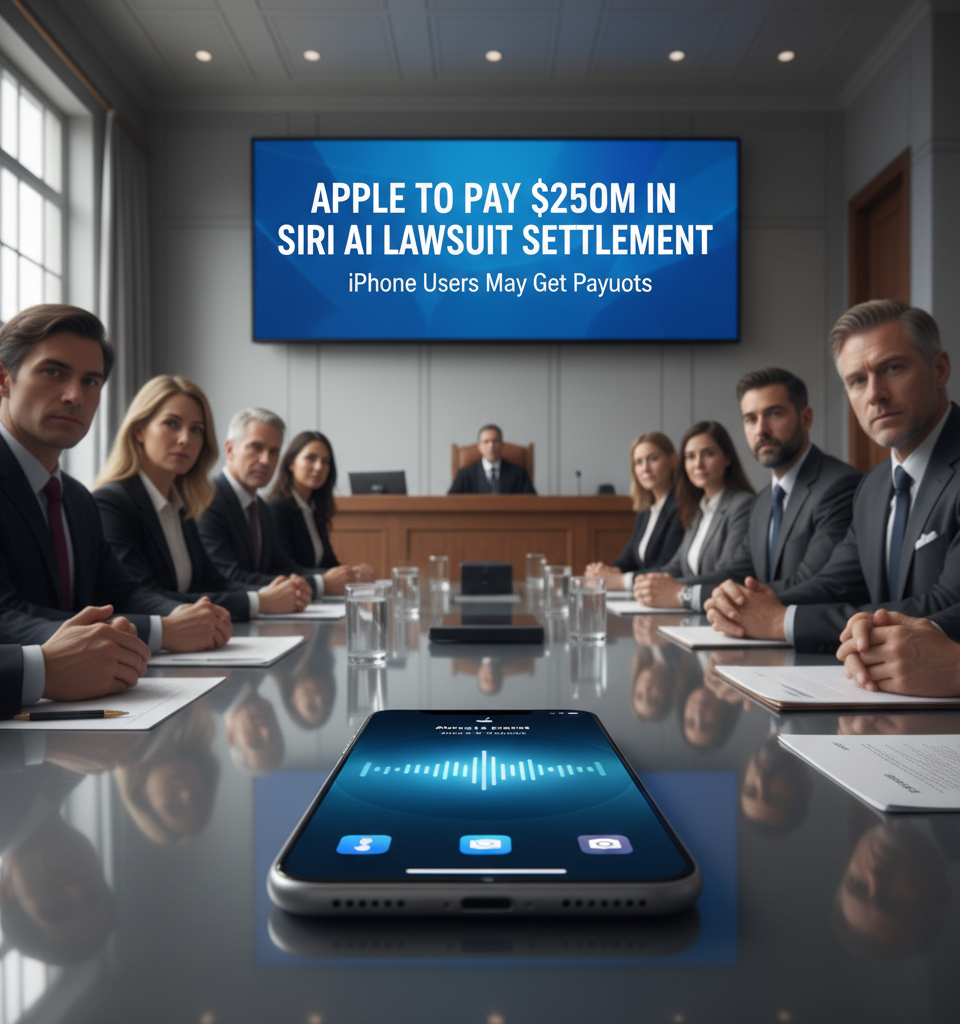
Apple Inc. is reportedly poised to pay a quarter of a billion dollars to settle a class-action lawsuit alleging misrepresentations about the capabilities of its Siri artificial intelligence. The proposed settlement, valued at $250 million, is expected to benefit U.S. consumers who purchased iPhone 15 or iPhone 16 models, potentially offering individual compensation of up to $95 per eligible device.
Context and Background
This legal development underscores the increasing scrutiny faced by tech giants over the marketing and performance of their AI features. The lawsuit, initially filed by consumers, centered on claims that Apple overstated Siri’s ability to understand natural language and perform complex tasks, leading to disappointment and a perception of false advertising. In an era where AI is central to product differentiation, the accuracy of such claims has become a critical battleground for consumer trust and corporate liability. The resolution highlights a growing trend of consumers challenging perceived discrepancies between advertised AI functionality and real-world user experience.
Key Details of the Settlement
The $250 million payout is intended to cover legal fees, administrative costs, and direct compensation to eligible consumers. According to sources familiar with the agreement, individuals who purchased an iPhone 15 or iPhone 16 in the United States may be eligible to claim a payment of up to $95 per device. The settlement terms are currently awaiting final court approval, and further details regarding the claims process are expected to be announced following judicial endorsement. Apple has not publicly admitted wrongdoing as part of the settlement, maintaining its stance that Siri continues to be a leading virtual assistant technology.
Industry and Market Impact
The settlement sends a clear message across the technology industry: the burgeoning field of artificial intelligence is not immune to consumer protection laws and truth-in-advertising standards. Companies extensively marketing AI-powered features will likely face increased pressure to ensure their promotional materials accurately reflect the technology’s current capabilities. This could lead to more cautious language in marketing campaigns and a greater emphasis on rigorous internal testing of AI functionalities before launch. Competitors in the voice assistant market, such as Amazon's Alexa and Google's Assistant, will undoubtedly be observing the fallout, potentially refining their own marketing strategies to avoid similar legal challenges.
Expert Perspective
Legal and technology analysts view this settlement as a significant moment for consumer rights in the AI landscape. "This quarter-billion-dollar settlement is a strong indicator that courts and consumers are becoming less tolerant of hyperbolic AI marketing," noted Dr. Emily Chen, a professor of technology law at a prominent university. "Companies like Apple, which set industry benchmarks, will now be under even greater pressure to ensure their AI promises align with reality. It sets a precedent that could impact how every tech company promotes its AI offerings, from conversational agents to predictive analytics platforms." Analysts also suggest that such high-profile cases could spur more transparent disclosures about AI limitations.
What's Next
Following the court's final approval, a claims administration process will be initiated, likely involving a dedicated website and notification campaigns to inform eligible consumers. Those who qualify will need to submit proof of purchase and other required documentation to receive their share of the settlement fund. This resolution also arrives as Apple intensifies its efforts to integrate more sophisticated generative AI features across its ecosystem, with recent announcements highlighting significant investments in this area. The outcome of this lawsuit might influence how Apple, and indeed the broader tech sector, frames its future AI innovations to the public, prioritizing accuracy and managed expectations alongside groundbreaking capabilities.