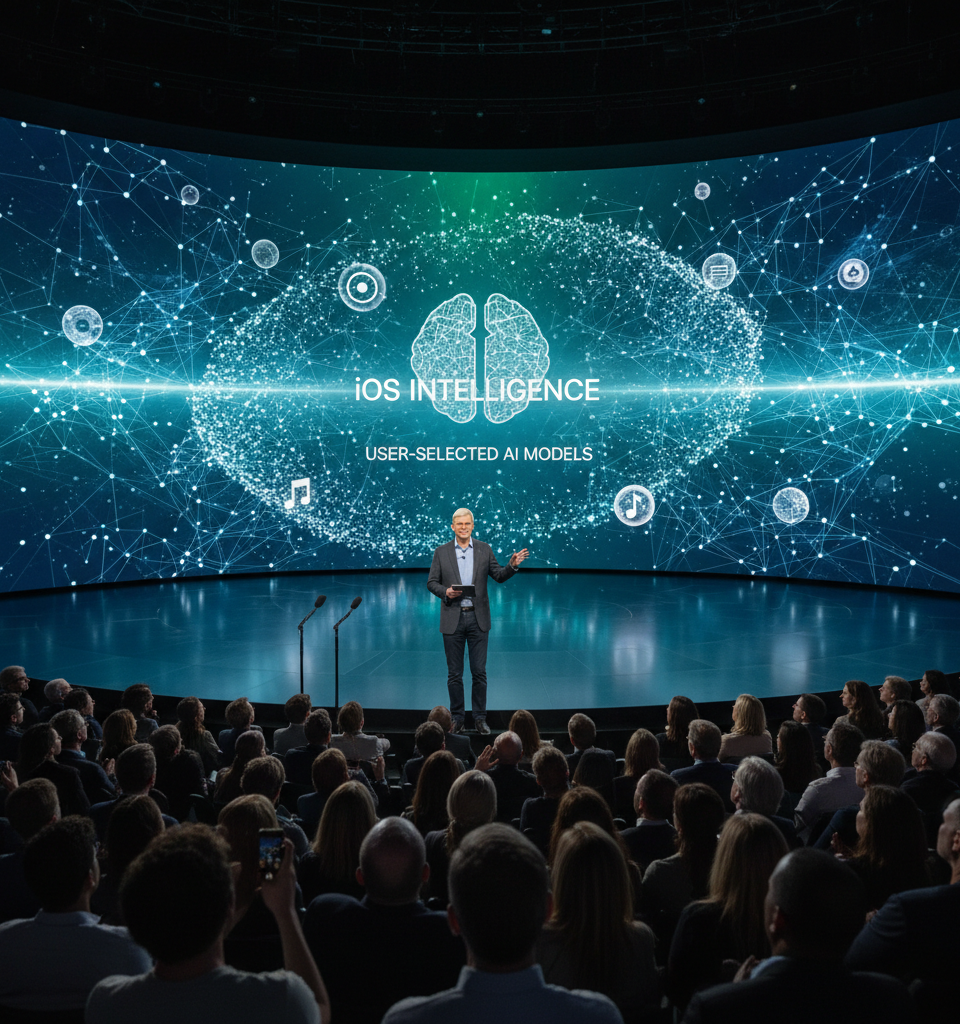
Cupertino, California – Apple is poised to revolutionize its mobile operating system, iOS, with an anticipated update for iOS 27 that grants users unprecedented control over integrated artificial intelligence functionalities. Sources close to the company indicate that future iPhone and iPad users will have the flexibility to select from a variety of third-party AI models to power a host of services and applications, moving away from a singular, proprietary AI solution. This strategic pivot, expected to be formally announced in the coming months, marks a significant philosophical shift for the tech giant, which has historically maintained tight control over its ecosystem's core components.
Contextualizing Apple's AI Strategy
For years, Apple has been perceived as lagging behind competitors like Google and Microsoft in the generative AI race. While Siri has been a ubiquitous presence since 2011, its capabilities have often been criticized for not keeping pace with advancements seen in other AI assistants and large language models (LLMs). This rumored change signals Apple's intent to rapidly close that gap, not by building every best-in-class AI model in-house, but by leveraging the innovations of the broader AI industry. It represents a pragmatic approach to integrate cutting-edge AI without necessarily owning every underlying technology, aligning with recent rumors of partnerships with companies like OpenAI and Google for specific AI features.
Key Details and Potential Implementations
While specific partners have not been officially confirmed, industry observers suggest that leading AI developers like OpenAI, Google, and possibly even Meta could see their models integrated into the iOS framework. This would reportedly allow users to designate a preferred AI for tasks ranging from advanced natural language processing in messaging to sophisticated image generation within photo applications, or even more nuanced contextual understanding across the operating system. For instance, a user might choose Google's Gemini for enhanced search capabilities and information synthesis, while opting for an OpenAI model for creative writing or code generation. The interface for this selection is expected to be deeply integrated into iOS settings, offering a seamless user experience reminiscent of default browser or email application choices.
Industry and Market Implications
This move has profound implications for the AI industry and the broader technology market. It could dismantle the "walled garden" perception of Apple's ecosystem, fostering a more open and competitive environment for AI developers. Companies specializing in AI models will suddenly have a direct conduit to Apple's massive install base of over 1.5 billion active devices, presenting an unprecedented opportunity for distribution and user engagement. Conversely, it puts pressure on Apple to ensure robust security and privacy protocols, as giving third-party AI models deeper access to user data will be a paramount concern for consumers and regulators alike. This also validates the business models of independent AI innovators, potentially leading to increased investment and accelerated development across the sector.
Expert Perspectives
Industry analysts are largely optimistic about Apple's potential strategy. "This isn't just about catching up; it's about redefining the platform strategy for AI," noted Dr. Eleanor Vance, a lead tech analyst at Quantum Insights. "By becoming an orchestrator of AI rather than solely a creator, Apple can provide best-in-class solutions to its users without the astronomical R&D costs and time associated with developing every leading model. It's a pragmatic and powerful play." Other experts, however, caution about potential fragmentation in the user experience and the complexities of managing multiple AI backends for security, performance, and data governance. "The user experience will be key," stated tech columnist Marcus Chen. "If it's clunky or confusing, even the most powerful AI models won't save it."
The Road Ahead: Future Implications
The introduction of user-selectable AI models in iOS 27 would set a new precedent for mobile operating systems, potentially influencing competitors to adopt similar open AI frameworks. Looking ahead, this strategy could unlock a new wave of innovation within the Apple ecosystem, allowing third-party developers to integrate powerful AI capabilities directly into their apps, knowing users can bring their preferred models. The success of this model will heavily depend on Apple's ability to maintain a high standard of privacy and security while offering a diverse and high-performing selection of AI choices. The next Apple Worldwide Developers Conference (WWDC) is expected to shed more light on these transformative plans, which stand to significantly reshape the future of intelligent personal computing.