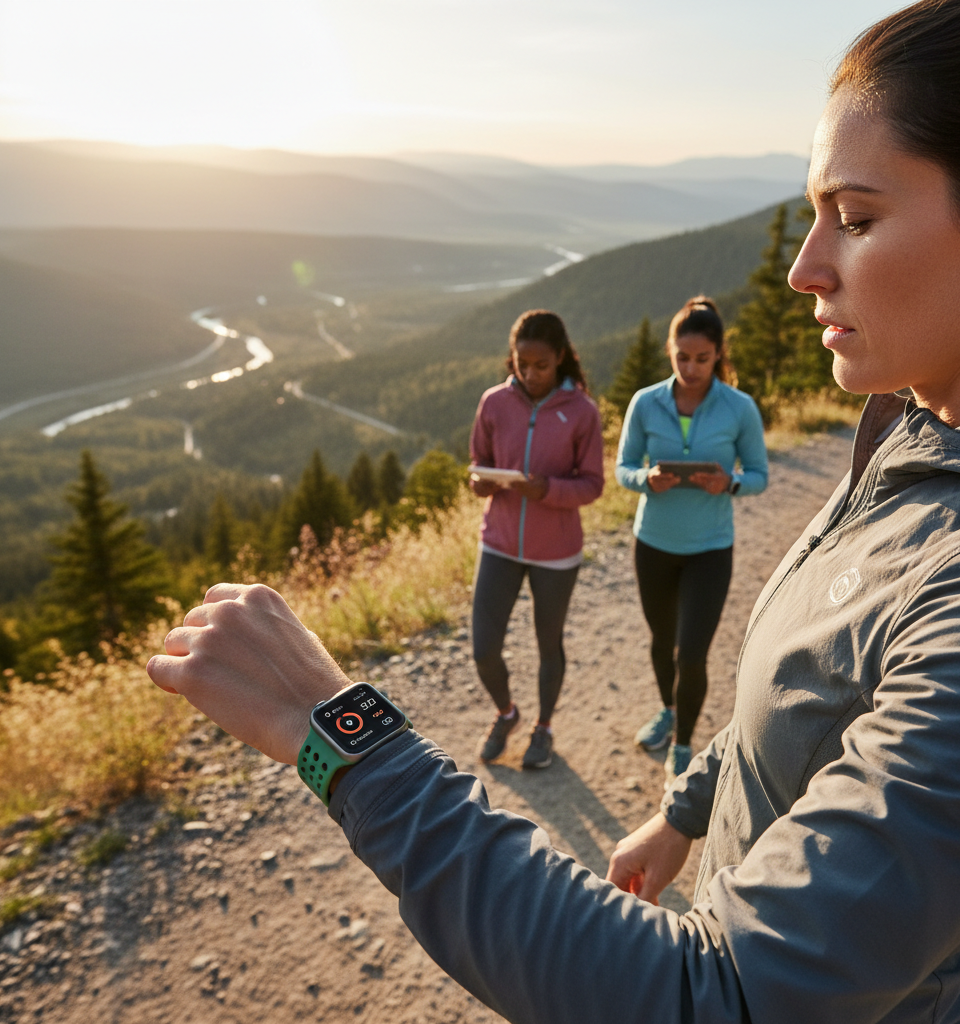
In a significant development for wearable technology users seeking enhanced data fidelity, a practical demonstration of the Apple Watch's 20-minute calibration process has confirmed its efficacy in delivering more accurate and personalized health and fitness metrics. This calibration, easily accessible to all Apple Watch owners, involves a guided outdoor walk or run that allows the device to fine-tune its accelerometers and GPS data specifically to an individual's gait and stride, ultimately leading to more precise readings for activity, distance, and calorie expenditure during workouts and daily movement.
The Evolving Landscape of Wearable Accuracy
The pursuit of accuracy in wearable technology has long been a critical factor in user adoption and trust. Early fitness trackers often faced criticism for inconsistent data, particularly concerning distance and calorie burn. The Apple Watch, since its inception, has continuously sought to refine its algorithms and sensory input to provide increasingly reliable health insights. This calibration feature stands as a testament to Apple's ongoing commitment to user-specific data integrity, moving beyond generic factory settings to offer a truly personalized experience. The importance of this precision extends beyond casual fitness tracking, influencing medical and wellness applications that increasingly rely on data from such devices.
The Calibration Process: A Deep Dive
The calibration process itself is straightforward, requiring users to initiate an outdoor walk or run for at least 20 minutes while wearing their Apple Watch. During this period, the watch leverages its GPS capabilities simultaneously with its accelerometer data to establish a baseline for the user's stride length at various speeds. This simultaneous data capture is crucial, as it allows the device to learn the unique biomechanics of each individual. For instance, if a user's stride length varies significantly from the average, the calibrated data will reflect this, offering a more accurate representation of distance covered when GPS isn't available, such as on a treadmill or indoors. This direct correlation between personal movement patterns and algorithmic adjustments is the cornerstone of its enhanced accuracy, leading to more reliable estimations of metrics like VO2 Max and active calories burned.
Impact on the Wearable Tech Market
This emphasis on user-specific calibration highlights a broader trend within the wearable technology market: the shift towards hyper-personalization. As competition intensifies among tech giants like Apple, Samsung, and Google (with Fitbit), differentiation often comes down to the quality and reliability of the data provided. Features like the Apple Watch's calibration not only enhance the user experience but also set a higher standard for data accuracy across the industry. This could pressure other manufacturers to develop similar calibration mechanisms or risk falling behind in the increasingly sophisticated health and fitness tracking arena. The global wearable technology market was valued at an estimated $61.30 billion in 2023 and is projected to reach $290 billion by 2030, underscoring the growing demand for precision.
Expert Insights on Data Fidelity
Industry analysts and health experts commend Apple's approach to data calibration. Dr. Emily Carter, a biomedical engineer specializing in sensor technology, noted, "The ability for a consumer device to adapt its algorithms to individual gait patterns represents a significant leap forward. Generic algorithms can have a variance of up to 20% in distance and calorie tracking for certain individuals. A successful 20-minute calibration can reduce that error margin drastically, often down to under 5% for key metrics." This level of precision is becoming increasingly vital as wearables transcend basic fitness tracking to become integral tools for managing chronic conditions and supporting preventative health.
The Horizon of Personalized Health Tracking
Looking ahead, the success of individual calibration points to a future where wearable devices are not just tracking tools but active participants in personal health management. Future iterations of devices like the Apple Watch could see more sophisticated calibration methods, perhaps even incorporating machine learning to continuously adapt to changes in a user's health or fitness level without requiring explicit recalibration. This could include real-time adjustments based on fatigue, injury recovery, or even subtle changes in gait indicative of impending health issues. The continued refinement of such technologies promises to make personal health data not only more accurate but also more actionable, driving a new era of proactive wellness management among consumers globally.