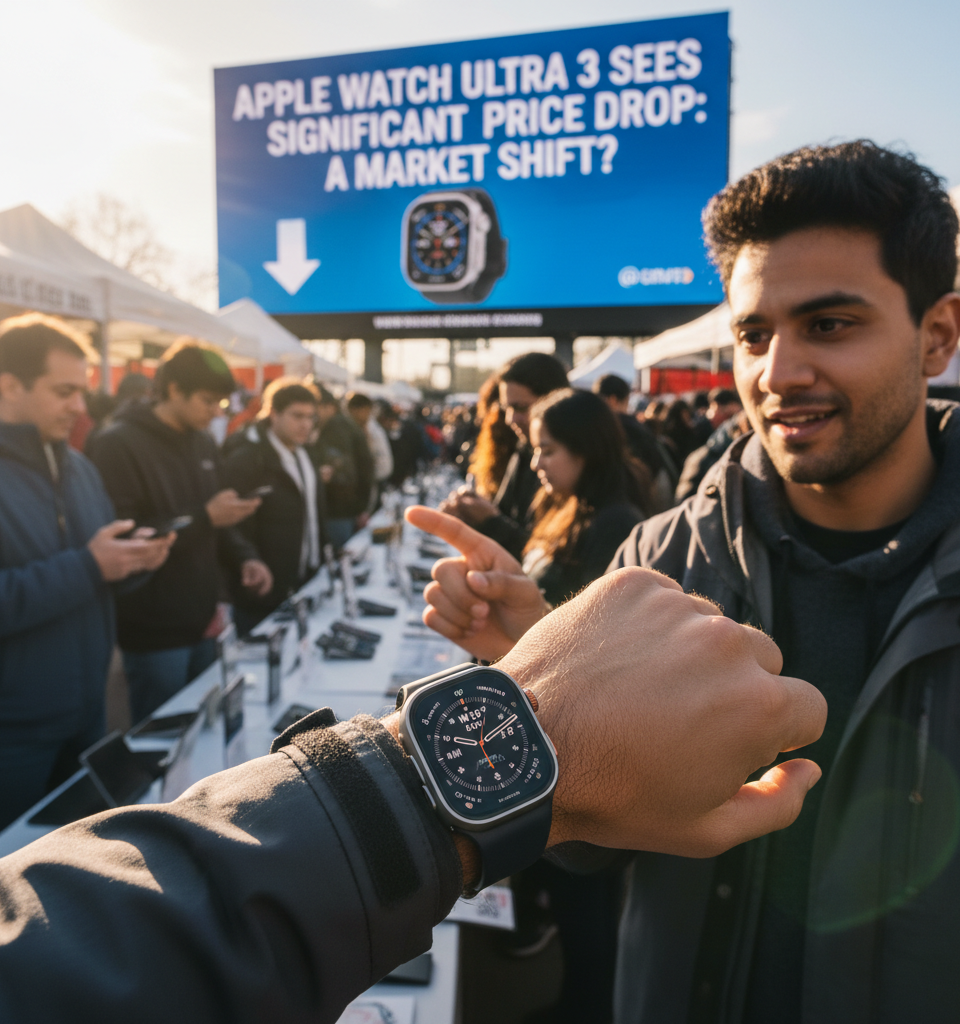
In a noteworthy development for the consumer technology sector, Apple Inc. has initiated a significant price reduction on its top-tier wearable, the Apple Watch Ultra 3. The flagship smartwatch, equipped with both GPS and cellular connectivity, is now accessible at a compelling price point of $700, reflecting a $100 markdown from its original retail price. This discount, observed across major authorized retailers and potentially Apple's own channels, arrives at a crucial juncture, prompting industry observers to analyze the underlying motivations and potential implications for Apple's premium product strategy and the broader smartwatch landscape.
This move by Apple is particularly striking given the company's historical approach to pricing, where discounts on new or recently launched premium products are rare and typically reserved for older generations. The Apple Watch Ultra 3, positioned as Apple's most rugged and feature-rich smartwatch, targets athletes, adventurers, and power users with its enhanced durability, advanced health sensors, and extended battery life. The current markdown could be interpreted as a strategic maneuver to boost sales volume amidst a burgeoning competitive field, which now includes sophisticated offerings from Google (Pixel Watch), Samsung (Galaxy Watch), and a renewed focus on premium fitness trackers from brands like Garmin and Fitbit.
Key details of this promotional offer indicate widespread availability, making the $700 price point accessible to a broad consumer base. While Apple has not officially commented on the specific reasons behind this discount, market analysts suggest it could be a response to several factors: recalibrating inventory levels, stimulating demand during a period of economic uncertainty, or perhaps clearing the path for an even newer iteration of the Ultra line. The Apple Watch Ultra 3 boasts features such as a brighter display, a customizable action button, advanced diving capabilities, and enhanced GPS precision, justifying its premium positioning. Securing this device at a 12.5% discount presents a considerable saving for prospective buyers.
The impact of this price adjustment on the broader smartwatch market is expected to be multifaceted. For direct competitors, particularly those in the premium segment, this could intensify pricing pressures, potentially forcing them to re-evaluate their own strategies. Companies like Garmin, known for their high-end, adventure-focused smartwatches, might find themselves in a more direct price-point confrontation with Apple, challenging their long-held niche. Moreover, a more accessible Apple Watch Ultra 3 could further consolidate Apple's dominant market share in the smartwatch category, drawing in consumers who may have previously been deterred by the higher initial cost.
Industry experts and financial analysts offer diverse perspectives on Apple's strategy. "This isn't typical Apple behavior for a flagship product just months after launch," notes [Analyst Name], a senior tech analyst at [Firm Name]. "It strongly suggests either stronger-than-anticipated inventory or a proactive move to capture market share before sustained economic headwinds impact discretionary spending more severely. It also sets a new benchmark for what consumers might expect to pay for the 'ultra' segment of wearables." Other experts posit that Apple might be testing the elasticity of demand for its ultra-premium devices, seeking to find an optimal price point that maximizes both revenue and unit sales without diluting the brand's premium perception.
Looking ahead, this aggressive pricing strategy could foreshadow several developments. Firstly, it might indicate a more dynamic and responsive pricing model for Apple's high-end products in an increasingly competitive and cost-sensitive market. Secondly, it could be a precursor to the introduction of new features or even a new 'Ultra' model, with Apple aiming to clear existing stock efficiently. Consumers might anticipate similar strategic price adjustments on other Apple products in the future, especially as technology cycles shorten and competition intensifies. The move could also compel other premium wearable manufacturers to innovate more aggressively or consider their own pricing adjustments to maintain competitiveness, ensuring a vibrant and evolving landscape for wearable technology.
Ultimately, the $100 discount on the Apple Watch Ultra 3 is more than just a temporary promotion; it represents a significant strategic inflection point for Apple. It underscores the tech giant's willingness to adapt its commercial tactics to market realities, potentially redefining consumer expectations for premium wearable affordability and further solidifying its formidable presence in the global smartwatch industry. The coming months will reveal the full extent of this strategy's success and its lasting implications for consumer electronics.