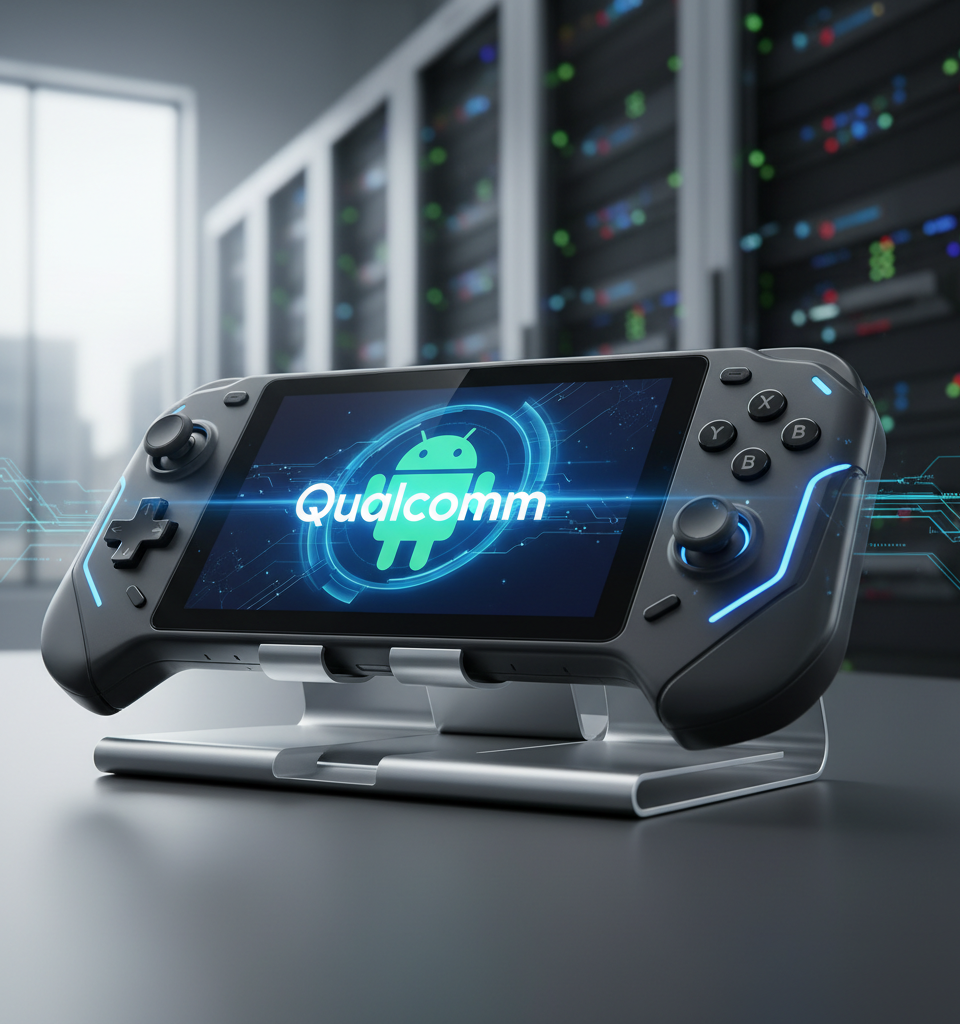
The entry of a new Indian-developed handheld into the global gaming hardware market, underpinned by a major semiconductor partnership, signals evolving supply chain dynamics and rising consumer tech ambitions from non-traditional hubs. Investors will closely watch how this collaboration impacts market share in the competitive portable gaming sector.
Arc X1, an Android-powered handheld gaming console under development by an Indian company, has formally announced a strategic partnership with Qualcomm. This collaboration is designed to integrate key technologies from the American semiconductor giant into the new gaming device. The agreement underscores Qualcomm’s ongoing efforts to expand its presence in the burgeoning mobile and portable gaming hardware sectors.
Technology Integration and Strategic Rationale
The partnership will see Qualcomm provide a suite of its solutions, including advanced compute capabilities, artificial intelligence (AI) processing, and comprehensive wireless connectivity, for the Arc X1 console. While the specific chip models or detailed technical specifications of the integration have not yet been disclosed, the involvement of these core Qualcomm technologies suggests a focus on high performance, efficient power consumption, and robust online gaming experiences. For Arc X1, securing Qualcomm as a technology partner could lend significant credibility and technical foundation to its console, a critical factor for new entrants in a market dominated by established players.
Market Context and Competitive Landscape
The portable gaming market is experiencing a significant resurgence, driven by innovations in cloud gaming, high-performance mobile chipsets, and the growing demand for gaming on the go. Devices like Valve’s Steam Deck and Lenovo’s Legion Go have reignited interest in dedicated handheld systems, moving beyond traditional mobile phone gaming. The Arc X1’s entry, particularly with an Android operating system, positions it to leverage a vast ecosystem of existing mobile games and applications, potentially offering a different value proposition compared to PC-centric handhelds. This partnership could provide Arc X1 with the necessary technological muscle to compete effectively in this increasingly crowded space, especially in emerging markets where Android is widely adopted.
Implications for the Indian Tech Sector
This collaboration is noteworthy for the Indian technology landscape. It highlights the growing capabilities and ambitions of Indian companies in hardware development and design, moving beyond software services into more complex product manufacturing. A successful launch and market penetration for the Arc X1, supported by Qualcomm's technology, could inspire further investment and innovation in India's consumer electronics sector. It also demonstrates how global semiconductor leaders are increasingly looking to partner with regional players to tap into new markets and foster localized product development.
Unanswered Questions and Future Outlook
Key details, such as the specific Qualcomm System-on-Chip (SoC) that will power the Arc X1, the device's targeted price point, and its projected release date, remain undisclosed. These specifics will be crucial in determining the console’s competitive positioning and market reception. The success of the partnership will also depend on the Indian company’s ability to optimize the integrated hardware and software, deliver a compelling user experience, and establish effective distribution channels in a global market. Industry analysts will be watching closely for further announcements regarding the console's features and its go-to-market strategy.
Looking ahead, the Arc X1-Qualcomm alliance could serve as a blueprint for similar partnerships between established component suppliers and emerging hardware developers globally. Its performance will be a significant indicator of the potential for new entrants to carve out a niche in the high-stakes portable gaming hardware segment.