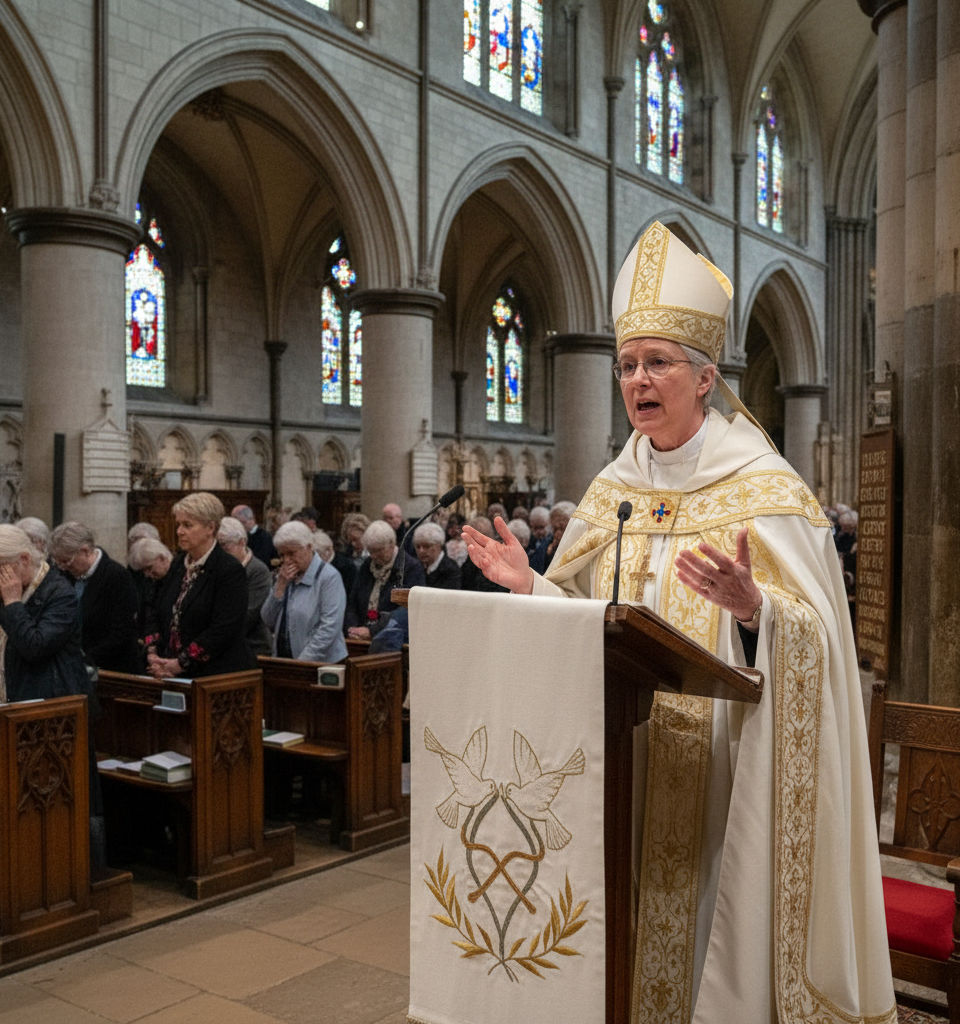
Canterbury, UK – April 7, 2024 – Archbishop Sarah Mullally, a prominent figure within the Church of England, is poised to deliver her inaugural Easter sermon this Sunday, focusing on an urgent appeal for peace in the Middle East. Speaking before a congregational assembly at Canterbury Cathedral, Mullally is expected to decry the "violence and destruction" that continues to plague the region, signaling a pivotal moment for interfaith dialogue and humanitarian advocacy from the ecclesiastical leadership.
The Gravity of the Moment: A Historical Context
Archbishop Mullally's decision to dedicate her seminal Easter address to the ongoing conflicts in the Middle East underscores the profound humanitarian crisis and geopolitical instability gripping the region. This move reflects a growing sentiment within global religious institutions that spiritual leadership must actively engage with contemporary world issues, extending beyond traditional ecumenical concerns. Historically, Easter sermons have served as platforms for calls to peace, forgiveness, and renewal, making Mullally's choice particularly poignant given the current geopolitical landscape marked by escalating tensions, widespread displacement, and significant loss of life in areas such as Gaza, Ukraine, and other conflict zones. Her address will resonate within a historical tradition where religious leaders have frequently adopted roles as moral voices for global justice.
Key Details and Calls to Action
Sources close to the Archbishop's office indicate that Mullally's sermon will not only lament the current state of affairs but also offer specific prayers and calls for international cooperation. While specific policy recommendations are typically outside the scope of such addresses, the sermon is expected to emphasize the shared humanity of all peoples in the Middle East and advocate for diplomatic solutions that prioritize civilian protection and sustainable peace. Anticipated themes include the sanctity of life, the imperative of humanitarian aid, and the role of faith communities in fostering reconciliation. The Archbishop is also expected to acknowledge the suffering of all affected communities, without political or sectarian bias, reinforcing the Church's universal message of compassion.
Broader Implications for Global Diplomacy and Faith Leadership
Archbishop Mullally's powerful statement is not merely a religious pronouncement; it carries significant weight in the broader diplomatic arena. Coming from a senior leader of the Church of England, a body with historic ties and influence across the Commonwealth and within international institutions, her remarks could help galvanize awareness and put pressure on political leaders to intensify peace efforts. This intervention positions the Church of England firmly within the global advocacy for conflict resolution, aligning it with other faith-based organizations and NGOs that have long campaigned for peace and human rights in the Middle East. It could also encourage other religious leaders worldwide to speak out more forcefully, creating a unified interfaith front for peace.
Expert Perspectives on Religious Engagement in Conflict
Analysts specializing in international relations and religious studies view Archbishop Mullally's initiative as a critical development. Dr. Eleanor Vance, a professor of Religious Diplomacy at the London School of Economics, notes, "In an era where traditional diplomatic channels often struggle, the moral authority wielded by figures like Archbishop Mullally can be surprisingly effective. Her sermon transcends political partisanship, appealing to a common ethical framework that many find compelling." Dr. Vance suggests that such high-profile interventions can create an environment conducive to dialogue by underscoring the human cost of conflict, which sometimes gets lost in geopolitical strategizing. "Religious leaders often connect with communities at a grassroots level, and their messages can fuel grassroots movements for peace," she adds.
Looking Ahead: Future Implications and Follow-up Actions
The impact of Archbishop Mullally's Easter sermon is expected to extend beyond a single address. It is anticipated that her office will follow up with tangible actions, potentially including increased support for humanitarian initiatives in the Middle East, calls for broader ecumenical dialogues focused on conflict resolution, and engagements with intergovernmental bodies. The Church of England may also leverage its extensive network to foster grassroots peacebuilding efforts and advocate for policies that promote justice and stability in the region. This sermon could mark the beginning of an intensified period of advocacy on this critical issue, potentially influencing international policy discussions and fostering greater understanding between diverse communities.