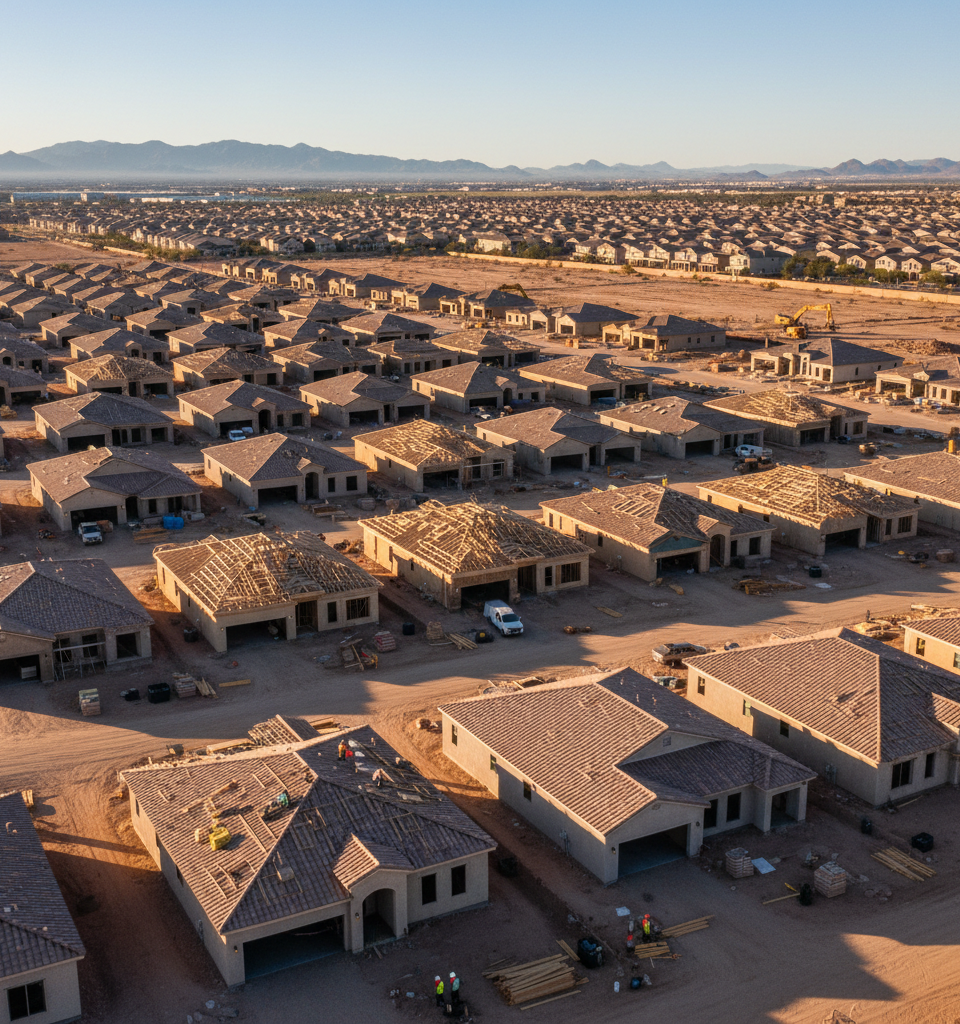
Arizona's housing market is grappling with a severe supply shortage, a problem increasingly attributed not to the state's substantial 57,000 short-term rental properties, but rather to a prolonged and significant decline in residential construction following the 2008 financial crisis. This crucial shift in understanding the root cause of the current affordability crunch was highlighted by recent analyses, underscoring a systemic issue that has festered for over a decade and now profoundly impacts Arizona’s economic landscape and resident well-being.
The Real Culprit: A Decade of Underbuilding
The prevailing narrative often points to platforms like Airbnb and VRBO as primary drivers of housing scarcity, converting long-term rentals into lucrative tourist accommodations. However, new research challenges this popular perception, suggesting that while short-term rentals play a role, they are a secondary factor compared to a fundamental shortfall in new housing stock. The critical period in question dates back to the aftermath of the 2008 recession, when homebuilding activity in Arizona plummeted to historic lows and has struggled to rebound to pre-crisis levels, even as the state's population has continued its robust growth trajectory.
Stark Numbers: Construction Lag and Population Growth During the housing boom preceding the 2008 crash,
Arizona saw an average of approximately 50,000 new housing permits issued annually. Post-recession, this number steeply declined, hovering between 15,000 and 25,000 units per year for over a decade. This substantial drop has created a structural deficit. Concurrently, Arizona's population has grown by over 1.2 million people since 2010, exacerbating the disparity between available housing and demand. While there are roughly 57,000 short-term rental units in Arizona, amounting to about 2% of the state's total housing stock, experts argue this figure is dwarfed by the hundreds of thousands of new homes that were simply never built.
Impact on the Broader Market
This chronic underbuilding has profound implications for the broader housing market. The scarcity of new homes drives up prices for existing properties, pushing homeownership further out of reach for many Arizona families. Rental markets are similarly affected, with fierce competition leading to escalating rents and lower vacancy rates. This environment disproportionately impacts low-to-moderate income households, who find themselves increasingly priced out of their communities. Businesses also suffer, as the high cost of living makes it challenging to attract and retain workers, threatening Arizona's economic competitiveness.
Expert Insights and Policy Implications Economists and housing policy experts are increasingly converging on the view that supply-side constraints are the primary challenge. Dr. Mark Stapp, a real estate professor at Arizona State
University, emphasized that "we've been building at half the rate we need to for over a decade." He argues that until the state addresses fundamental issues like land availability, zoning restrictions, and the rising costs of construction materials and labor, the affordability crisis will persist. Policymakers are now urged to shift their focus from solely regulating short-term rentals to implementing comprehensive strategies that incentivize and accelerate new home construction across all price points.
The Path Forward: Addressing Supply Shortages
Moving forward, addressing Arizona’s housing crisis will necessitate a multi-faceted approach. This includes re-evaluating burdensome zoning regulations that limit density, streamlining permitting processes to reduce construction timelines, and exploring innovative financing mechanisms to support affordable housing development. Furthermore, investing in infrastructure to support new communities and addressing labor shortages in the construction industry are crucial steps. Without a significant uptick in housing starts—potentially requiring tens of thousands of new units constructed annually beyond current rates—Arizona residents will continue to face an uphill battle in securing affordable and adequate housing for the foreseeable future.