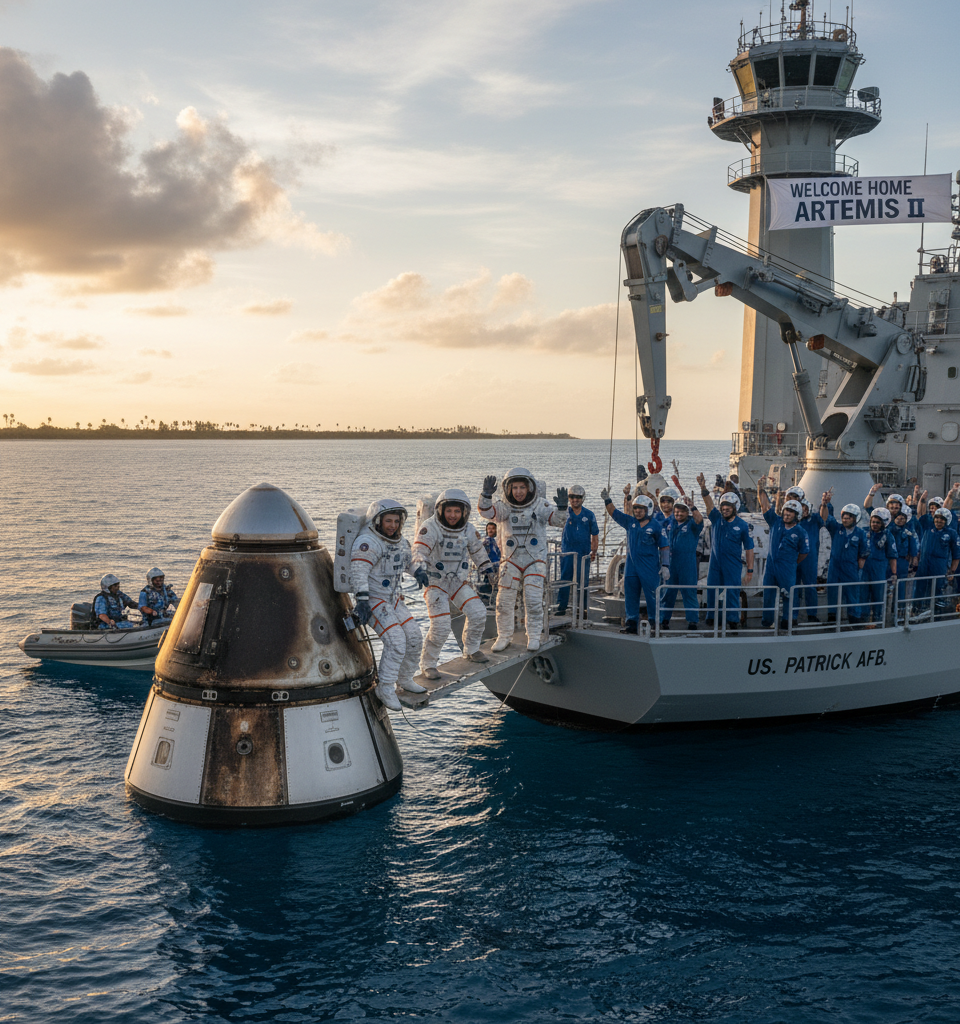
As Friday draws to a close, attention is sharply focused on two significant global developments: the imminent return of the Artemis II astronauts and intricate geopolitical negotiations. The successful completion of the Artemis II mission signifies a major milestone in human space exploration, bringing its crew back to Earth after what is understood to be a highly successful journey. This aerospace achievement unfolds concurrently with delicate diplomatic maneuvers, as Senator JD Vance embarks on peace talks, with Iran introducing new conditions that could significantly alter the trajectory of these crucial discussions.
The Return of Artemis II
The Artemis II mission represents a pivotal step in NASA's ambitious plan to return humans to the Moon and eventually journey to Mars. This mission, which involved a crewed test flight around the Moon, served as a critical evaluation of the Orion spacecraft and Space Launch System (SLS) rocket in deep space. The anticipated arrival of the astronauts marks the culmination of extensive preparation and execution, providing invaluable data and experience for future lunar missions, including the planned Artemis III lunar landing. The safe return of the crew will undoubtedly be heralded as a triumph for international space cooperation and technological advancement, reinforcing humanity's capability for sustained exploration beyond low Earth orbit.
The mission's conclusion will trigger a comprehensive post-flight analysis, scrutinizing every aspect of the journey from launch to splashdown. This review will be instrumental in refining spacecraft designs, operational procedures, and astronaut training protocols for subsequent missions. The data collected on the physiological and psychological impacts of deep-space travel on the crew will also be vital for long-duration spaceflight planning. The successful completion without major incidents underscores the robustness of modern space engineering and the dedication of the teams involved.
Geopolitical Tensions and Peace Talks
Simultaneously, the global diplomatic stage is bustling with activity as Senator JD Vance is slated to engage in critical peace talks. These discussions are intended to address escalating regional tensions and seek resolution to ongoing conflicts. However, the complexity of these negotiations has been significantly heightened by new conditions introduced by Iran. These undisclosed conditions are expected to demand careful consideration and could present substantial hurdles to achieving a breakthrough in the peace process. The inclusion of new demands from a key regional player often reflects shifting power dynamics or a desire to leverage current circumstances to their advantage.
Analysts are closely watching how these new Iranian conditions will be received by other parties at the negotiation table and what implications they will have for the talks' framework. The success or failure of these discussions could have far-reaching consequences, potentially impacting regional stability, energy markets, and international alliances. The stakes are exceptionally high, with a delicate balance between diplomatic flexibility and adherence to national interests. Senator Vance's role will be crucial in navigating these intricate demands and attempting to forge a path toward a sustainable resolution.
Market and Industry Repercussions
The juxtaposition of these two events—a monumental achievement in space exploration and a fraught diplomatic undertaking—presents a complex tableau of global affairs. In the aerospace sector, the successful return of Artemis II astronauts is expected to inject renewed vigor and confidence, potentially stimulating further investment in space technologies and exploration initiatives. Companies involved in space launch services, spacecraft manufacturing, and satellite technologies could see enhanced interest and opportunities. The public enthusiasm generated by such high-profile missions often translates into increased governmental and private funding for future ventures.
Conversely, the geopolitical landscape surrounding the peace talks carries significant implications for global markets, particularly in the energy sector. Any outcome, positive or negative, from the negotiations could lead to volatility in oil prices and impact supply chains. Iran's role as a major oil producer means that its diplomatic posture directly affects global energy security. Furthermore, defense industries and international trade relations could also experience significant shifts depending on the progression and outcome of these discussions. The interconnectedness of global finance means that political stability, or the lack thereof, can ripple through various economic sectors.
Looking Ahead: Immediate Implications
In the immediate aftermath, the focus will be on the post-landing procedures for the Artemis II crew, including medical evaluations and debriefings that will shape future spaceflight protocols. For the diplomatic front, the initial reactions to Iran's new conditions will be paramount. Senator Vance and his delegation face the immediate challenge of assessing these demands and formulating a response that maintains equilibrium while still pursuing the overarching goal of peace. The coming days will be critical in determining whether these new conditions become a severe impediment or an unconventional pathway to negotiation. The outcomes of both these narratives will set the tone for their respective domains for the foreseeable future, shaping everything from technological advancement to international relations.