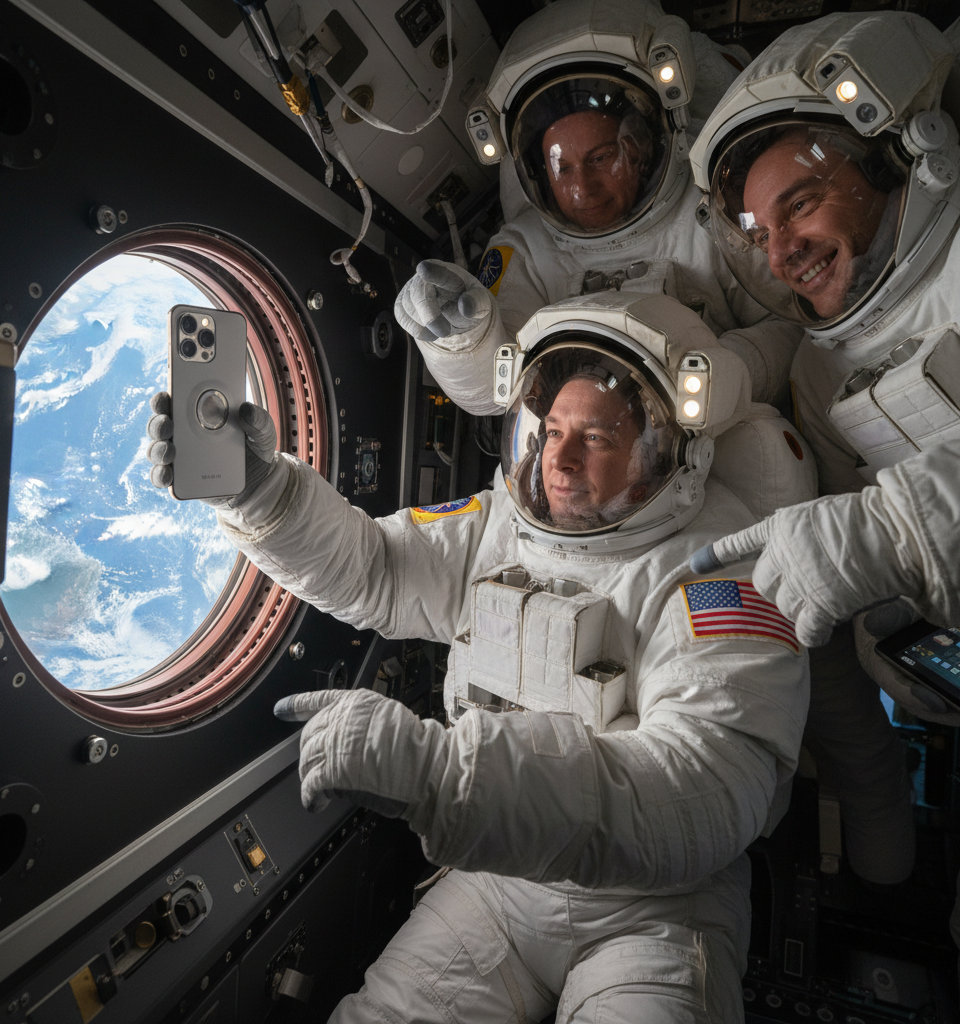
ORION SPACECRAFT ORBIT, LUNAR TRAJECTORY – [DATE, e.g., October 26, 2024] – In a landmark moment that blurs the lines between advanced space exploration and everyday consumer technology, astronauts aboard NASA's Artemis II mission are capturing breathtaking images of Earth from the Orion spacecraft using an iPhone 17 Pro Max. This groundbreaking use of a commercial smartphone for official mission photography, confirmed via NASA's official Flickr page, showcases three astonishing images of Earth seen through the capsule's window, marking a significant first for both NASA and Apple.
A New Frontier for Space Photography
The integration of a high-end commercial smartphone like the iPhone 17 Pro Max into a critical space mission like Artemis II is a testament to the ever-evolving capabilities of consumer electronics and NASA's willingness to embrace innovative solutions. Historically, NASA missions have relied on highly specialized, ruggedized camera equipment, often costing hundreds of thousands or even millions of dollars per unit. The decision to equip astronauts with a device readily available to the public underscores a potential shift towards more accessible and cost-effective photographic tools for future space endeavors, including long-duration missions to Mars.
The Genesis of a Partnership
While NASA has yet to officially elaborate on the full scope of Apple's involvement or the specific modifications made to the iPhone 17 Pro Max for spaceflight, its presence on the Artemis II mission signifies a strategic partnership. The iPhone 17 Pro Max, renowned for its advanced computational photography, triple-lens camera system, and robust A17 Bionic chip, offers an unparalleled combination of image quality, video capabilities, and user-friendliness. Its ability to perform in extreme conditions, albeit within the controlled environment of the Orion capsule, speaks volumes about its engineering and reliability. This initiative could potentially pave the way for future collaborations, extending beyond photography to communication, data management, and even augmented reality applications for astronauts.
Industry Implications and Market Impact
The 'Shot on iPhone' campaign has long been a cornerstone of Apple's marketing strategy, showcasing the photographic prowess of its devices in diverse and often challenging environments. The inclusion of space-shot images featuring Earth, taken by astronauts on a mission to the Moon, represents an unparalleled marketing coup. This exposure could significantly boost the iPhone 17 Pro Max's sales and further solidify Apple's premium brand image. Beyond Apple, this development could catalyze a broader trend within the space industry, encouraging other tech giants to explore partnerships with space agencies and offer their innovative products for space-related applications, fostering a new niche market for space-grade consumer electronics.
Expert Perspectives on Technology in Space
Aerospace analysts and technology experts are closely monitoring this development. Dr. Elaine Chen, a leading expert in space hardware integration, commented, "This isn't just about taking pretty pictures. It's about demonstrating the resilience and capability of commercial off-the-shelf technology in a harsh environment. If an iPhone can perform reliably in space, it opens doors for myriad other applications, potentially reducing mission costs and increasing payload efficiency." Others suggest that the data gathered from the iPhone's performance—including battery life, thermal management, and sensor integrity in microgravity and high-radiation environments—will be invaluable for future mission planning and system design.
The Future of Space Exploration and Consumer Tech
The Artemis II mission, slated to orbit the Moon, is a critical precursor to the crewed lunar landing of Artemis III. The successful deployment and performance of the iPhone 17 Pro Max on Artemis II will undoubtedly influence future equipment choices for subsequent missions. Upcoming developments could include the introduction of other commercial devices for medical monitoring, communication relays, or even robotic control. NASA's embrace of agile technology integration, moving away from exclusively bespoke solutions, points to a future where consumer tech plays an increasingly vital role in pushing the boundaries of human space exploration, making the cosmos more accessible and relatable for humanity back on Earth. The next 'Shot on iPhone' ad campaign, showcasing these lunar-bound masterpieces, practically writes itself.