Artemis II Crew Details Historic Far Side Lunar Traversal
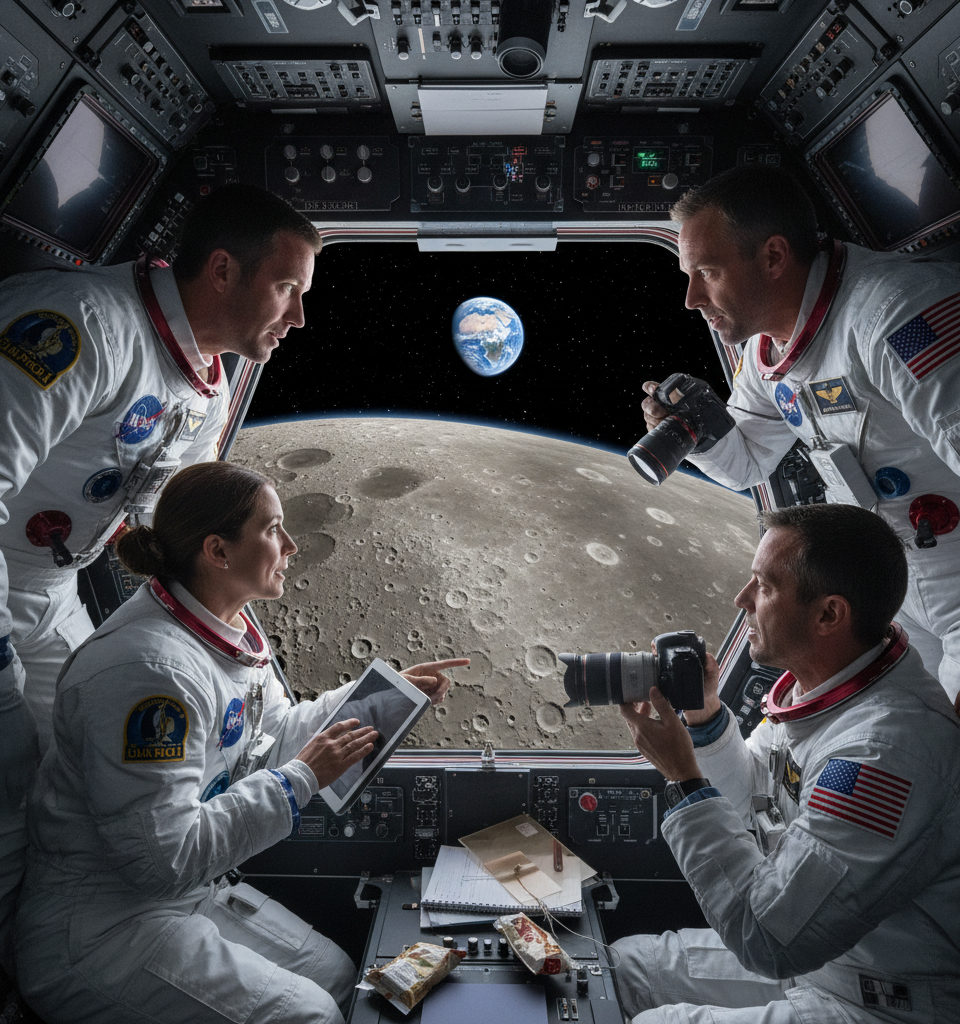
In a landmark achievement for human spaceflight, the Artemis II crew, comprising NASA astronauts Reid Wiseman, Victor Glover, Christina Koch, and Canadian Space Agency astronaut Jeremy Hansen, has successfully completed their traverse around the Moon's enigmatic far side. Now on the third day of their ambitious mission, the astronauts have relayed unprecedented visual and experiential details from a region of the Moon largely unseen by human eyes, marking a significant milestone in preparation for future lunar landings.
This mission transcends mere orbital mechanics; it represents a critical step in NASA's long-term strategy for sustained lunar presence and eventually, human missions to Mars. The far side of the Moon, perpetually hidden from Earth due to tidal locking, remains one of the solar system's least-explored territories. Its unique geological features and potential for scientific discovery, such as shielding from terrestrial radio noise, make it an invaluable target for research. The last human mission to orbit the Moon was Apollo 17 in 1972, making the Artemis II journey a powerful resurgence of human deep-space exploration after over half a century.
Astronauts on board reported awe-inspiring views, with one crew member reportedly stating, "It's something we have never seen before." Details emerging from mission control indicate the crew meticulously documented their observations, including views of ancient crater formations and the stark contrast between the illuminated limb and the shadowed far side. The successful execution of the outbound powered flyby and subsequent return trajectory around the lunar sphere validates complex navigation and propulsion systems crucial for future deep-space endeavors. Data collected on radiation levels, spacecraft performance, and human physiological responses during this extended lunar orbit will be critical for risk mitigation in forthcoming Artemis missions.
Beyond the scientific gains, the Artemis II mission carries substantial geopolitical and economic implications. It solidifies the United States' leadership in space exploration, fostering international partnerships like that with the Canadian Space Agency. The success of Artemis ignites a new era of lunar commerce, potentially involving resource extraction, space tourism, and the development of lunar infrastructure. Industry experts project that the global space economy, currently valued at over $500 billion, could significantly expand with sustained lunar exploration, creating new markets for specialized technologies, services, and materials.
Dr. Elena Petrova, a renowned astrophysicist and expert on lunar geology from the International Space University, commented on the significance: "The human perspective from Artemis II is invaluable. While robotic missions provide data, the nuances of human observation and real-time decision-making in such a complex environment are unparalleled. It’s not just about looking at the Moon; it’s about understanding our capabilities and limitations in deep space." She further emphasized the psychological impact of witnessing such a vista firsthand, calling it a powerful motivator for the next generation of scientists and engineers.
The successful orbital testing and human observations from Artemis II directly pave the way for Artemis III, which aims to land humans on the Moon as early as 2025. Future missions anticipate establishing a lunar base, Gateway, an orbiting outpost around the Moon, and developing advanced in-situ resource utilization (ISRU) technologies. The insights gained from this current mission will refine mission profiles, enhance safety protocols, and optimize equipment for extended human stays on the lunar surface, marking a definitive shift from short-duration visits to sustained lunar habitation and research.
This journey around the far side of the Moon is not merely a technical achievement; it represents a profound human endeavor, expanding our understanding of the cosmos and our place within it. The detailed accounts from the Artemis II crew will undoubtedly inspire future generations and provide the foundational knowledge for humanity's continued push deeper into the solar system.