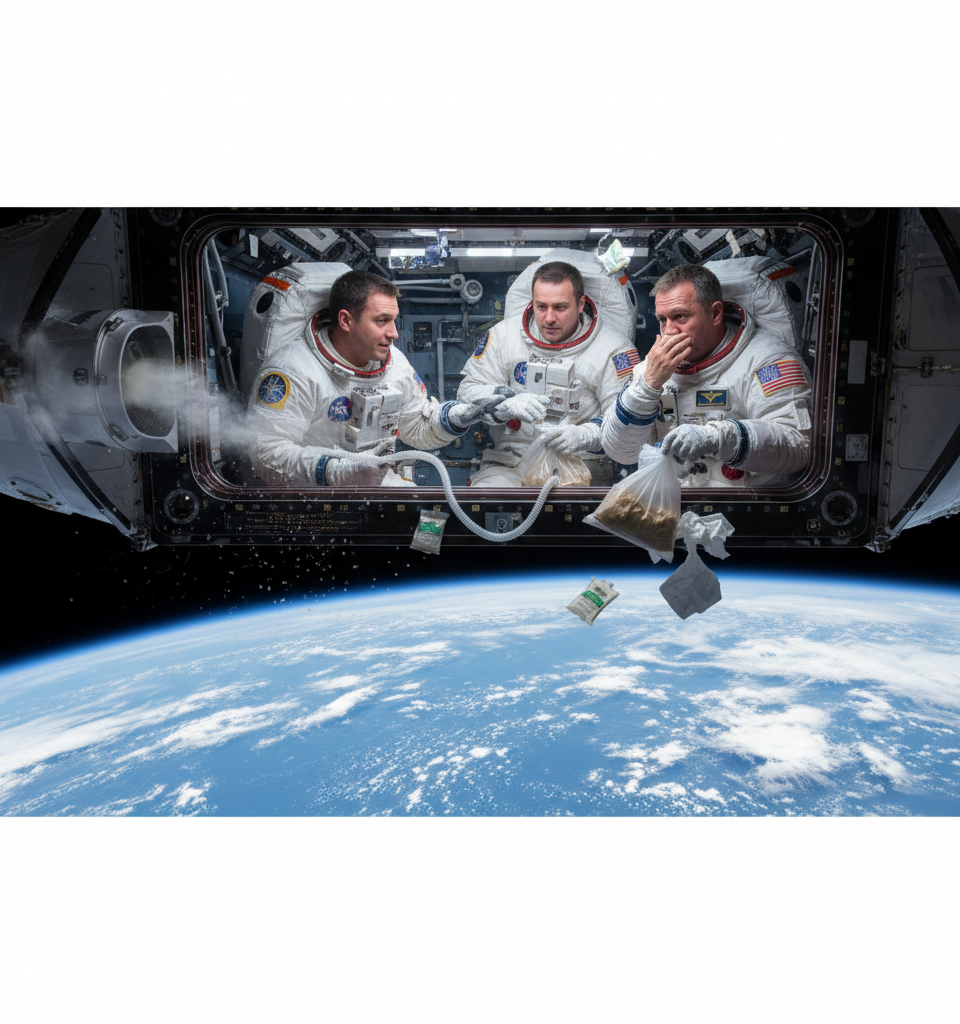
CAPE CANAVERAL, FL – The momentous Artemis II lunar flyby mission, poised to return humans to the vicinity of the Moon, is facing an unexpected and pressing hurdle: a recurring malfunction in its highly engineered waste management system. Astronauts aboard the Orion spacecraft are now compelled to rely on backup collection bags for urine disposal, as engineers on Earth grapple with a persistent blockage suspected to be ice, leading to an increasing and palpable odor concern within the crew capsule. This in-flight plumbing crisis, emerging just weeks into the planned 10-day mission, presents a significant operational challenge for NASA and its international partners.
The Gravity of a Minor Malfunction on a Major Mission
While seemingly a minor technical glitch, a fully functional waste management system is paramount for long-duration space missions. The inability to efficiently process human waste impacts not only crew comfort and morale but also carries potential health implications and logistical burdens. This incident echoes historical challenges faced by space programs, from the rudimentary waste collection methods of early Apollo missions to the complex, closed-loop systems employed on the International Space Station, underscoring the enduring difficulty of managing human biology in a zero-gravity environment. The Artemis II mission is a critical precursor to future lunar landings, and successful resolution of such issues is vital for the long-term viability of sustained human presence beyond Earth.
Technical Hurdles and Operational Adjustments
According to sources within NASA's flight control team, the primary issue lies within the urine transfer line designed to flush waste overboard. Initial telemetry and diagnostic checks suggest an ice blockage is preventing the complete expulsion of liquid waste, leading to its accumulation and the subsequent odor. "We are actively reviewing all data and implementing sequential troubleshooting steps," stated a NASA spokesperson, emphasizing the agency's commitment to crew safety and mission success. The design of the Orion capsule's waste system is a sophisticated piece of engineering, integrating various pumps, filters, and collection mechanisms to handle solid and liquid waste efficiently. The current workaround involves the increased use of disposable urine collection bags, which, while effective as a temporary solution, necessitate more frequent manual handling and storage within the confined capsule, contributing to the reported odor.
Broader Implications for Sustained Space Exploration
This incident, though contained, carries broader implications for the future of deep-space exploration. Missions to Mars, for instance, will require even more robust and self-sustaining life support and waste management systems, given the extended transits and limited resupply opportunities. The Artemis program aims to establish a sustainable human presence on the Moon, and reliable infrastructure, including waste processing, is foundational to that goal. Every kilogram of waste that cannot be efficiently disposed of adds to the spacecraft's mass, impacting fuel consumption and payload capacity – critical considerations for cost-effective space travel. Failures like this prompt renewed scrutiny into hardware redundancy and in-situ resource utilization for future lunar and Martian outposts.
Expert Commentary on Engineering and Crew Well-being
Aerospace engineering experts have weighed in on the challenges. Dr. Elena Petrova, a professor of aerospace engineering at MIT, noted, "Waste management in space is an incredibly complex problem. The interplay of microgravity, temperature gradients, and human biology creates unique engineering hurdles. An ice blockage, while frustrating, is a known potential issue in these systems, particularly when dealing with water recycling and overboard dumping." Psychologists specializing in isolated environments also highlight the impact on crew well-being. "Odor and hygiene issues, even minor ones, can significantly affect crew morale and performance over extended periods," commented Dr. Samuel Hayes, a space psychology consultant. "Maintaining a pristine living environment is crucial for psychological resilience during high-stakes missions."
Immediate Focus and Future Contingencies
NASA engineers are working diligently around the clock to understand the exact nature and extent of the blockage, exploring various remedies from targeted heating to pressure adjustments. "Our immediate priority is to ensure the health and comfort of our crew," affirmed mission control. Looking ahead, this incident will undoubtedly trigger a thorough review of the Orion capsule's waste management system design for future Artemis missions. Lessons learned here could inform modifications to hardware, operational protocols, and even crew training for waste management in deep space. Furthermore, it may accelerate research into more advanced, regenerative life support systems that minimize waste and maximize resource recovery, essential for long-duration missions.
The Path Forward for Artemis
Despite the plumbing predicament, the Artemis II mission continues its ambitious journey, with the crew demonstrating remarkable professionalism and adaptability. While the toilet issue adds an unexpected wrinkle to the mission's narrative, it underscores the inherent challenges and ingenuity required for human spaceflight. The successful resolution of this problem will not only ensure the well-being of the current crew but also provide invaluable data and experience for the progression of the entire Artemis program, paving the way for humanity's sustained return to the Moon and beyond. The insights gained from overcoming such operational challenges are as critical to mission success as the scientific objectives themselves.