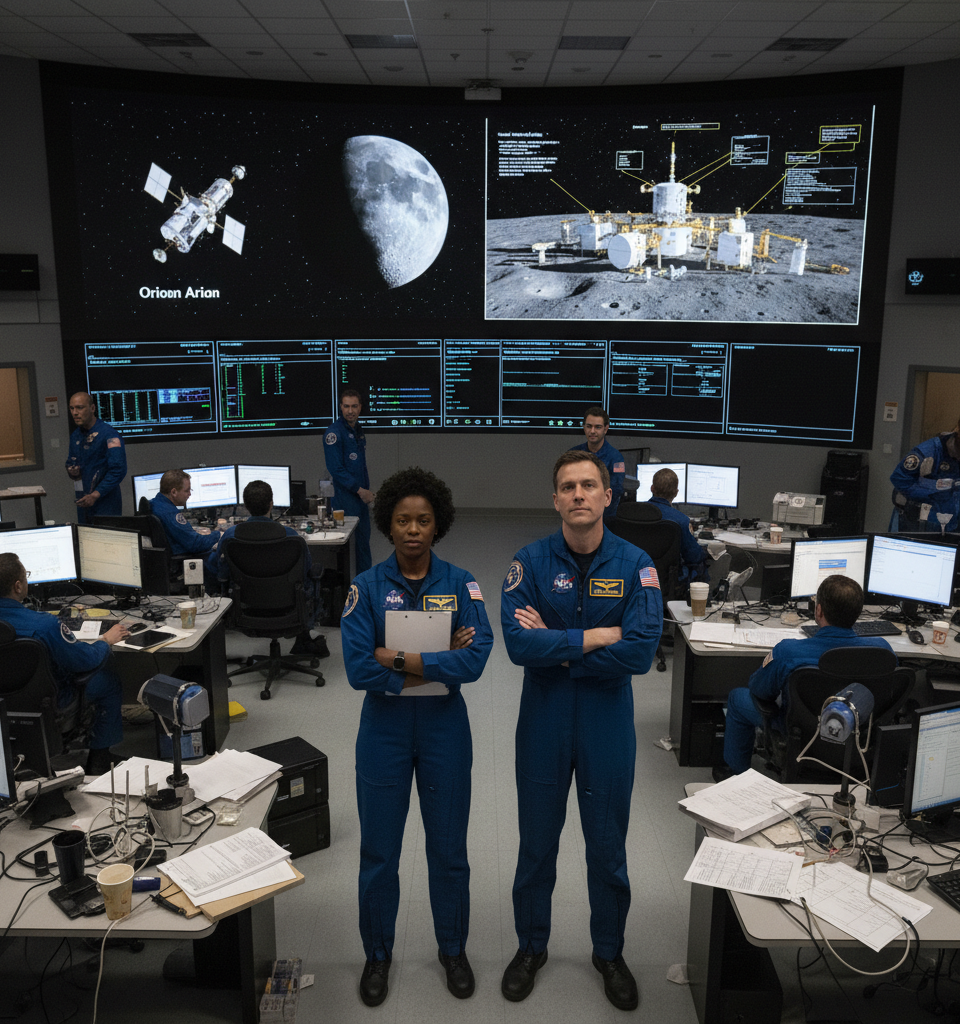
The Artemis II mission, hailed as an exceptional achievement, has successfully concluded, marking a pivotal moment in the ambitious endeavor to return humans to the lunar surface. While the mission itself unfolded with remarkable precision, demonstrating the capabilities of the Orion spacecraft and its ground systems, the journey toward a crewed Moon landing now confronts a formidable array of challenges that will test the resolve and ingenuity of the international space community.
This mission served as a critical dress rehearsal, validating key technologies and operational procedures for future lunar expeditions. Its success underscores the significant progress made since the initial Artemis I uncrewed flight, bolstering confidence in the program's overall trajectory. However, the complexities inherent in sending astronauts to the Moon's surface, establishing a sustainable presence, and eventually venturing to Mars, are far from resolved.
Overcoming Engineering and Logistical Barriers
The immediate focus shifts to the development and integration of the Human Landing System (HLS), a crucial component for touching down on the lunar surface. While contracts have been awarded, the sheer scale and complexity of building a reliable, safe, and capable lander present substantial engineering hurdles. Integrating this new system with the existing Space Launch System (SLS) rocket and Orion capsule, while ensuring seamless operability in the harsh lunar environment, demands exhaustive testing and validation.
Funding remains a persistent concern. Large-scale space programs like Artemis require consistent and substantial financial backing. Fluctuations in political priorities or economic conditions could impact the schedule and scope of future missions. Maintaining congressional support and international partnerships will be vital to ensure the necessary resources are allocated for the program's continued advancement and to mitigate potential budget shortfalls.
The Geopolitical Landscape and International Collaboration
The geopolitical landscape also plays a significant role. The Moon is once again becoming a focal point for international competition and collaboration. Ensuring access to critical resources, establishing norms for lunar operations, and navigating potential tensions with other spacefaring nations will be paramount. International partners, while contributing significantly, also introduce additional layers of coordination and agreement that can sometimes slow progress.
Operational readiness for sustained lunar presence involves more than just landing; it encompasses developing technologies for in-situ resource utilization (ISRU), building habitats, and managing the long-term health and safety of astronauts in a radiation-rich environment. These are monumental undertakings that require breakthroughs in various scientific and engineering disciplines, not all of which are fully matured today.
The Road to Artemis III and Beyond
Looking ahead to Artemis III, the mission slated to return humans to the Moon, the clock is ticking. The successful execution of Artemis II has bought valuable data and confidence, but the program now faces the intensified challenge of integrating all the necessary elements for a crewed lunar landing. This includes refining extravehicular activity (EVA) procedures for the lunar surface, ensuring robust communication networks, and establishing contingency plans for every conceivable scenario.
Beyond Artemis III, the vision extends to constructing the Lunar Gateway, a small space station orbiting the Moon that would serve as a staging point for lunar and deep-space missions. The development and deployment of the Gateway, with its international contributions, add another layer of complexity to the overall program. Each of these subsequent steps builds upon the successes and lessons learned from preceding missions, but also introduces new, untried elements that must perform flawlessly.
Ultimately, while the Artemis II mission stands as a testament to human ingenuity and perseverance, it also serves as a stark reminder that the journey to establishing a sustained human presence on the Moon and beyond is an undertaking of epic proportions, fraught with scientific, engineering, financial, and political challenges that demand continuous innovation and unwavering commitment.