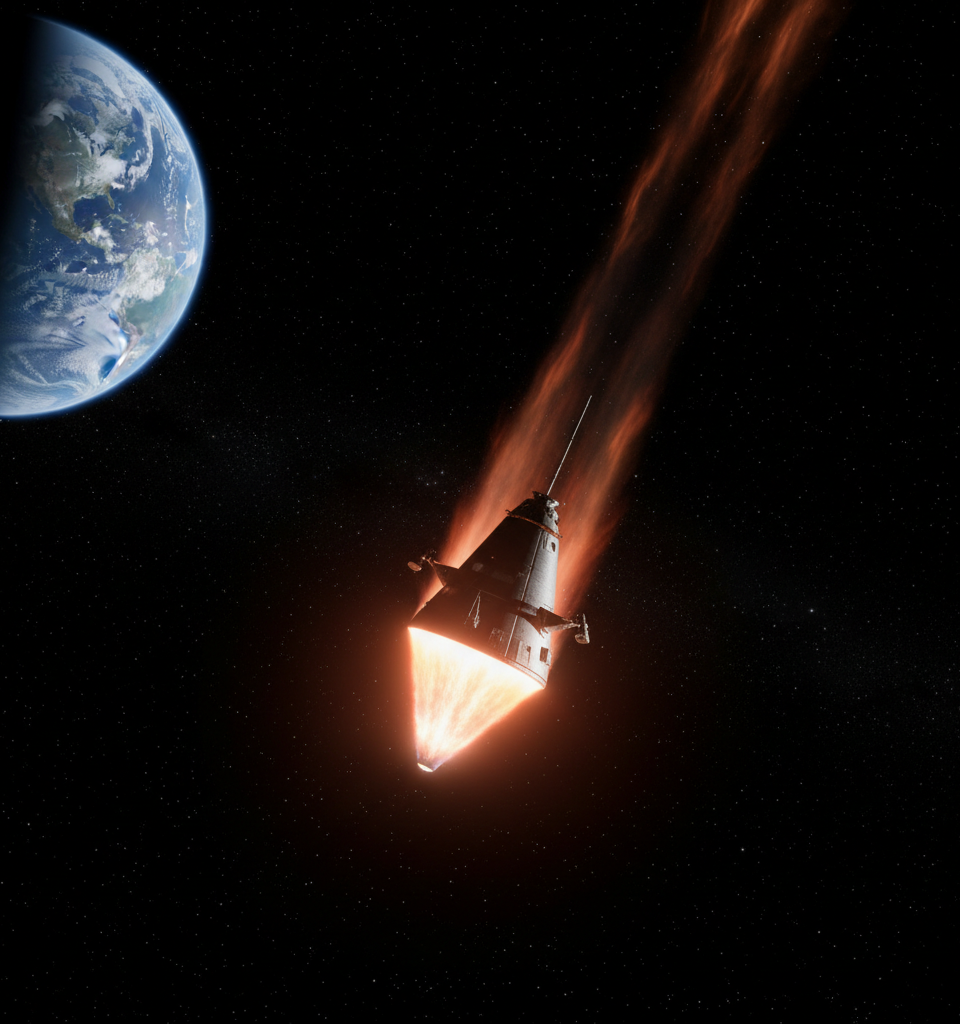
Artemis II: A Perilous Re-entry Looms for America's Lunar Pioneers
CAPE CANAVERAL, FL – The audacious goals of NASA's Artemis II mission, set to propel humanity's first crewed lunar flyby in over five decades, are now overshadowed by a critical engineering concern: the integrity of the Orion spacecraft's heat shield during its high-velocity return to Earth. While the launch and lunar insertion phases garner significant attention, experts and mission personnel are increasingly vocal about the inherent risks associated with re-entry, particularly given known manufacturing irregularities in the ablative material designed to protect the four-person crew from the scorching temperatures of atmospheric friction. This unexpected vulnerability places the mission's most dangerous phase at its conclusion, rather than its commencement, demanding rigorous pre-flight analysis and potential mitigation strategies.
Historical Echoes and Contemporary Challenges
The apprehension surrounding Artemis II's re-entry is deeply rooted in the history of human spaceflight, where the delicate balance between engineering excellence and the unforgiving laws of physics has often been tested. From the harrowing re-entries of early Mercury capsules to the tragic loss of Space Shuttle Columbia, atmospheric interface has consistently presented the highest risk profile for returning spacecraft. For Artemis II, the stakes are exceptionally high. The Orion capsule, designed to endure temperatures soaring up to 5,000 degrees Fahrenheit during its 25,000 mph descent, relies critically on a heat shield constructed from Avcoat, an ablative material. However, post-flight analysis of the uncrewed Artemis I mission revealed concerning erosion patterns and unexpected charring on thousands of small divots, or "undercut regions," between the hexagonal blocks of Avcoat. These anomalies, though not catastrophic for the uncrewed test flight, raise serious questions about the material's performance under the more extreme conditions of a crewed mission, where human lives are at stake.
Technical Hurdles and Remediation Efforts
The specific flaw identified relates to how the Avcoat blocks, which comprise the shell of the heat shield, are bonded together. During the manufacturing process, small gaps or voids inadvertently formed between these blocks. While engineers anticipated some level of erosion, the extent and pattern observed on Artemis I exceeded predictions. Lockheed Martin, the prime contractor for Orion, and NASA are reportedly exploring several mitigation strategies. These include a potential redesign of the bonding process for future missions, meticulous manual inspection and repair of existing flawed sections, and intensive computational modeling to predict performance under varying re-entry angles and speeds. While the exact financial implications of these remediation efforts have not been publicly detailed, addressing such a fundamental flaw at this late stage of development is undoubtedly injecting additional costs into the already multi-billion dollar Artemis program, which is projected to cost taxpayers approximately $93 billion by 2025.
Broader Implications for Deep Space Exploration
This heat shield predicament extends beyond the immediate concerns for Artemis II. It casts a shadow over the entire Artemis program and, by extension, the broader commercial and international initiatives targeting deep space exploration. The reliability of re-entry systems is foundational to mission success and astronaut safety. If a fundamental component like the heat shield proves to be less robust than designed, it necessitates a re-evaluation of current engineering assumptions and quality control protocols across the industry. Such an event could lead to increased scrutiny from regulatory bodies, potential delays in future missions, and a tempering of enthusiasm from private investors keen on the nascent space economy. The perception of risk is paramount in space exploration, and a compromised return system could significantly impact public and political support for ambitious lunar and Martian endeavors.
Expert Analysis: Balancing Risk and Ambition
Aerospace engineers and former astronauts have weighed in on the situation, uniformly emphasizing the critical nature of the heat shield. Dr. Mae Jemison, the first African American woman in space, recently remarked, "Every system on a spacecraft is vital, but the heat shield is your last line of defense in bringing humans home safely. There is no margin for error here." Dr. Jonathan McDowell, an astrophysicist at the Harvard-Smithsonian Center for Astrophysics, echoed these sentiments, stating, "NASA's engineers are some of the best in the world, but physics is impartial. They have to either prove the existing design is safe enough or implement a robust fix. The 'good enough' approach is not an option when lives are at stake." The consensus among experts is that while the issue is concerning, it is not insurmountable for an organization with NASA's problem-solving capabilities, provided they are given the necessary time and resources.
Looking Ahead: A Pivotal Test for NASA's Future
The coming months will be critical for NASA and its partners as they finalize their assessment and implement solutions for the Artemis II heat shield. The agency's decision – to proceed with the existing shield with identified repairs and enhanced monitoring, or to undertake more significant modifications – will undoubtedly be scrutinized. The success or failure of Orion's re-entry on Artemis II will not only determine the immediate fate of the mission and its crew but will also significantly influence the cadence and scope of subsequent Artemis missions, including the crewed lunar landing targeted for Artemis III. This single technological challenge underscores the profound complexities and inherent risks of venturing beyond Earth's protective atmosphere, serving as a powerful reminder that while reaching for the stars, humanity must always prioritize a safe journey home.