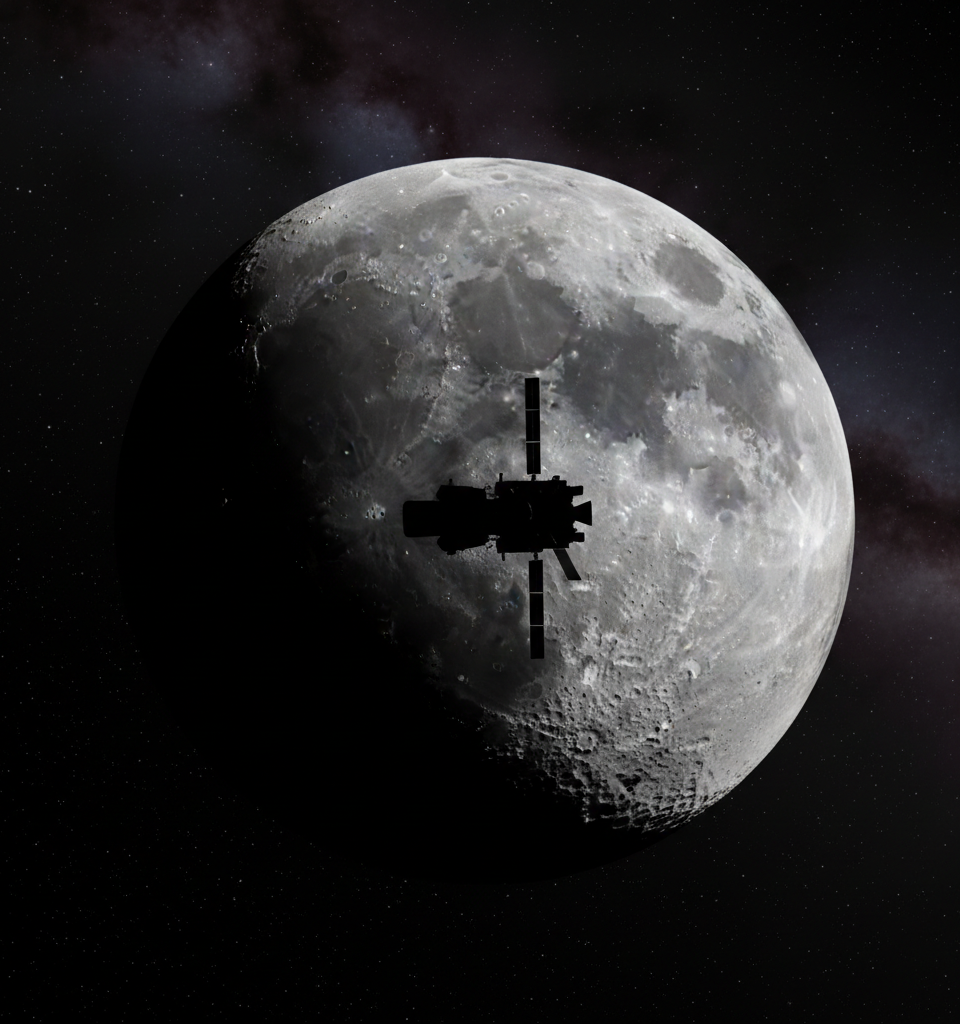
As NASA prepares for the ambitious Artemis III mission, slated to return humans to the lunar surface, a critical phase of the journey will involve an unavoidable 40-minute communications blackout. During this period, the Orion spacecraft, carrying its crew, will pass directly behind the Moon, severing all radio contact with Earth. This planned yet profound moment of silence represents not only a significant technical hurdle for mission controllers but also a unique psychological experience for the astronauts, isolating them from humanity while orbiting an alien world.
Historical Context and Significance
This phenomenon is not new to lunar exploration; every mission orbiting the Moon has faced similar communication interruptions. The Apollo missions, for instance, routinely endured periods of radio silence, albeit for shorter durations due to their lower orbital altitudes. For Artemis III, however, the extended blackout emphasizes the complexities of operating beyond Earth's immediate influence and highlights advancements in on-board autonomy. This deliberate design choice acknowledges the limitations of current communication infrastructure around the Moon and underscores the need for robust self-reliance from the crew.
Operational Challenges and Contingencies
The 40-minute silence is a direct consequence of the Moon's solid mass blocking direct line-of-sight radio signals between Orion and Earth. During this critical window, onboard systems must operate autonomously, handling routine maneuvers and unexpected anomalies without real-time guidance. NASA has meticulously planned for this, implementing sophisticated redundant systems and comprehensive pre-programmed protocols. The crew will rely on advanced on-board computing for navigation, life support monitoring, and system diagnostics. While future missions aim to deploy lunar communication relays—such as the Lunar Gateway in a halo orbit or surface infrastructure—Artemis III will navigate this period solely on the spacecraft's inherent capabilities.
Impact on Deep Space Exploration
Beyond Artemis III, this communication gap underscores a broader challenge for future deep space missions to Mars and beyond. The further humanity travels, the longer and more frequent these communication lags and blackouts become. Developing highly autonomous spacecraft capable of operating for extended periods without Earth's intervention is paramount. This includes advanced AI for fault detection and repair, robust on-board decision-making algorithms, and sophisticated data compression techniques to maximize communication windows when available. The lessons learned from managing Artemis III's blackout will be instrumental in shaping these long-duration expeditions.
Expert Perspectives
Dr. Anya Sharma, a senior aerospace engineer specializing in lunar missions, notes, "The Artemis III blackout isn't just a technical challenge; it's a profound psychological experience. While we've meticulously planned for every operational contingency, the isolation felt by the crew, knowing they are beyond immediate reach, adds another layer of human factor complexity. It's a testament to their training and resilience." Professor Thomas Vance, an expert in deep space communications at MIT, adds, "This 40-minute window highlights the clear need for advanced lunar communication infrastructure. While Orion is highly capable, sustained human presence on the Moon and ultimately Mars demands a robust relay network to enable constant connectivity and enhanced safety margins. Investments in technologies like laser communication and orbital relay satellites are critical for the long term."
The Path Forward: Lunar Communications Infrastructure
Looking ahead, NASA and its international partners are developing solutions to mitigate such communication gaps. The Lunar Gateway, a planned space station in orbit around the Moon, will serve as a crucial communications relay for future missions, offering continuous contact for surface expeditions and orbital endeavors. Furthermore, the deployment of dedicated communication satellites around the Moon, much like those in Earth orbit, is being actively explored. These advancements are vital for establishing a permanent human presence on the Moon and facilitating more complex scientific research without the constraint of periodic radio silence.
The 40-minute blackout on Artemis III serves as a poignant reminder of the vast distances and formidable challenges inherent in space exploration. It is a moment that will test the mettle of both machine and human, ultimately pushing the boundaries of what is possible as humanity ventures further into the cosmos.