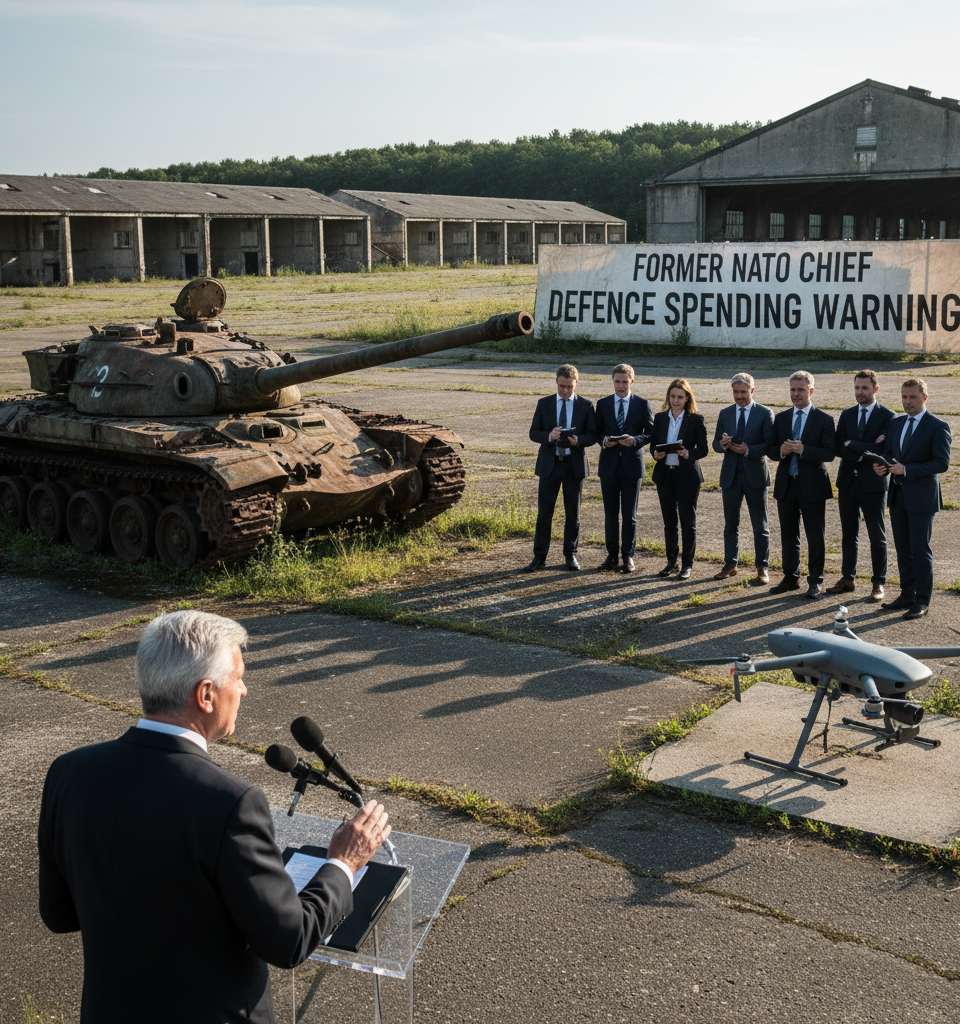
The state of the United Kingdom's military readiness and its defence budget have been thrust into the spotlight, with former NATO Secretary General Lord Robertson issuing a stark warning about the government's spending priorities. His intervention comes as BBC Verify initiates a detailed examination into the scale of the UK military's contraction over time, a subject of increasing public and political debate.
Lord Robertson's criticisms underscore long-standing concerns within defence circles about the adequacy of funding for the armed forces. His remarks are particularly significant given his previous high-level international defence role, lending considerable weight to the argument that current expenditure levels may be insufficient to meet contemporary geopolitical challenges. The issue of defence spending has been a recurring point of contention, with successive governments facing scrutiny over resource allocation for national security.
Historical Context of Defence Cuts
The current debate is not new; the UK armed forces have undergone significant restructuring and reductions in personnel and equipment over several decades, particularly since the end of the Cold War. These measures were often justified by a perceived shift in global threats and a drive for efficiency. However, in an increasingly volatile international landscape, with resurgent state-level threats and ongoing regional conflicts, the cumulative effect of these reductions is now being re-evaluated.
The decline in military strength is often measured by various metrics, including troop numbers, the size of the naval fleet, the air force's aircraft inventory, and the overall defence budget as a percentage of GDP. Defence analysts frequently point to these figures as indicators of the nation's capacity to project power and defend its interests. Lord Robertson's recent comments suggest that, in his view, these metrics have fallen below a critical threshold required for effective defence and international commitments.
Impact on Operational Capability
Experts suggest that continued underinvestment could have profound implications for the UK's operational capability and its standing within international alliances like NATO. A smaller, less well-equipped military could find it challenging to fulfil its obligations to collective security, participate effectively in multinational operations, or respond robustly to emerging crises. This could inevitably diminish the UK's diplomatic influence and its ability to act as a significant global player.
The discussion around defence spending transcends mere financial figures; it concerns the nation's ability to protect its citizens, safeguard its economic interests, and uphold its values on the world stage. The balance between fiscal prudence and strategic necessity is a delicate one, and Lord Robertson's intervention serves as a high-profile reminder of the potential consequences of misjudging this balance. The government's defence review processes often aim to strike this balance, but critics frequently argue that short-term budgetary pressures too often outweigh long-term strategic needs.
Future Implications and Scrutiny
BBC Verify's ongoing analysis will likely delve into specific areas of military contraction, providing data on personnel numbers across the Army, Royal Navy, and Royal Air Force, as well as examining trends in major equipment procurement and strategic capabilities. Such a granular examination is crucial for understanding the true extent of the changes and informing the public debate.
The scrutiny generated by Lord Robertson's critique adds pressure on the government to justify its defence spending policies and potentially revisit its long-term strategic defence and security review outcomes. As global security challenges continue to evolve, the question of how much is enough for national defence remains a central and highly charged issue, with significant ramifications for the UK's future role and security. The outcome of this debate will undoubtedly shape the future trajectory of the UK's armed forces for decades to come, impacting both domestic policy and international relations.