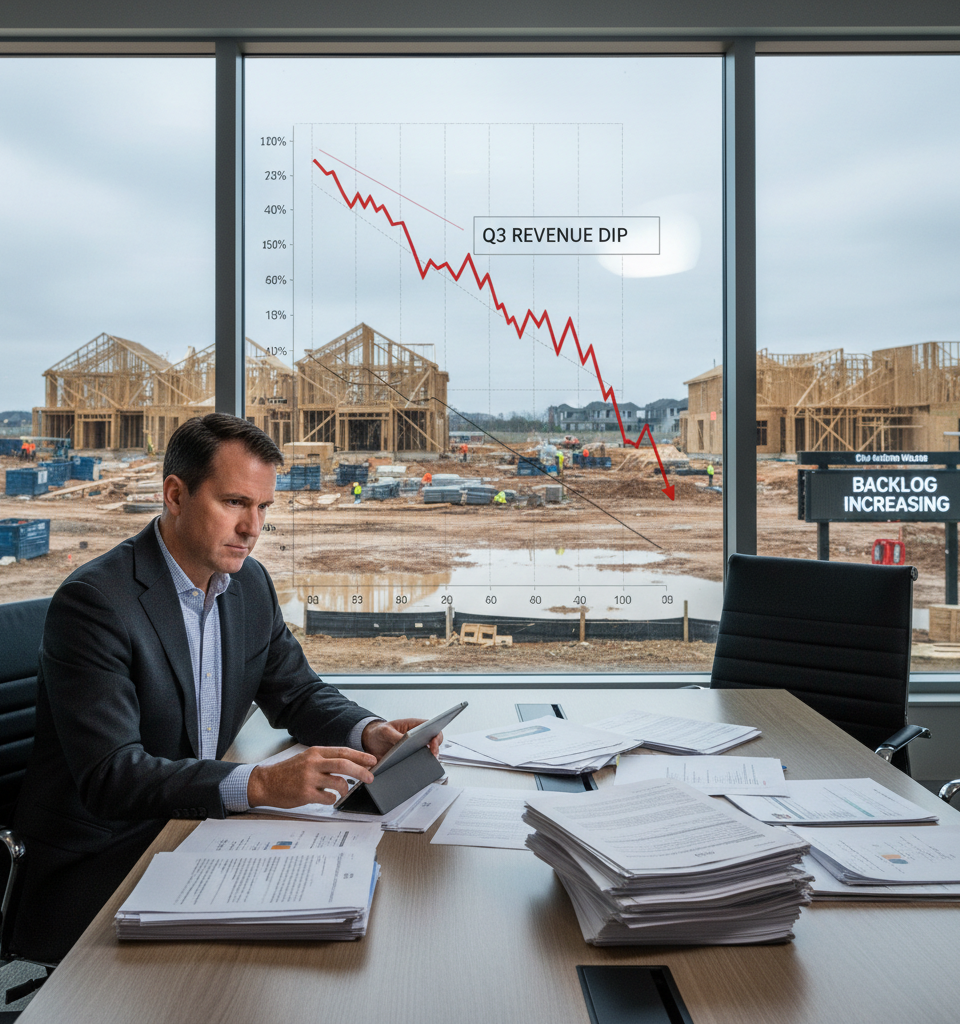
Atlanta, GA – October 26, 2026 – Ashton Woods Homes, a prominent player in the U.S. homebuilding sector, announced a significant dip in its third-quarter 2026 financial performance, with revenue falling 6% year-over-year to $79.27 million. This came alongside a notable contraction in gross margin, which slipped to 16.6% from previous periods. Despite these pressures, the company reported an increase in its backlog to 1,945 homes, suggesting a deliberate strategy to maintain sales velocity and market share even at the expense of immediate profit margins in a highly competitive and interest-rate-sensitive housing landscape.
Shifting Sands in the Housing Market
This quarter's results underscore the current complexities facing the homebuilding industry. Rising interest rates have significantly impacted buyer affordability, leading many builders to offer incentives or adjust pricing strategies to stimulate demand. For Ashton Woods, the decision to prioritize the pace of sales, evidenced by the growing backlog, indicates an adaptation to these market realities. Rather than holding firm on higher price points and risking inventory stagnation, the company appears to be opting for a strategy that keeps construction pipelines active and cash flow consistent, even if it means thinner profit margins per unit.
Q3 Specifics: Revenue Downturn and Margin Erosion
The 6% decrease in revenue to $79.27 million reflects a challenging sales environment, likely exacerbated by higher mortgage rates. The more concerning metric for investors, however, is the gross margin contraction to 16.6%. This reduction suggests increased concessions to homebuyers, higher material or labor costs, or a combination of factors. In a sector where margin health is a key indicator of pricing power and operational efficiency, this slip warrants close scrutiny. Counterbalancing these figures, the rise in backlog to 1,945 units indicates a robust order book, promising future revenue, albeit potentially at similar reduced margins if current market conditions persist.
Broader Market Implications: A Trend Among Builders?
Ashton Woods' Q3 performance is not an isolated incident but rather indicative of broader trends within the homebuilding industry. Many national and regional builders are grappling with the delicate balance between maintaining sales volume and preserving profitability in a softening market. The strategy of reducing prices or offering incentives to move inventory and secure new orders can compress margins across the board, potentially leading to a competitive race to the bottom if not managed carefully. This trend could result in a more affordable market for buyers in the short term, but may also signal consolidation or increased pressure on less capitalized builders in the long run.
Expert Perspectives: Analysts Weigh In
Industry analysts are keenly watching these developments. "Ashton Woods' decision to accept lower margins for higher volume is a pragmatic response to current market conditions," commented Sarah Jenkins, Senior Housing Analyst at Realty Insights Group. "In an environment where buyer confidence is fragile, keeping the sales pipeline robust can be more strategically valuable than chasing aspirational margins. Longer-term, they will need to demonstrate an ability to expand margins as market conditions stabilize, or risk being perceived as a high-volume, low-profit builder." Other analysts suggest this could be a calculated risk to maintain market footprint and operational fluidity during a downturn.
The Road Ahead: Navigating Uncertainty
Looking forward, Ashton Woods will undoubtedly focus on optimizing its operational efficiency and supply chain management to arrest the margin erosion. The sizeable backlog provides a degree of revenue visibility for upcoming quarters, but the quality of that backlog – in terms of attainable margins – will be critical. The company's ability to adapt to fluctuating interest rates, manage construction costs, and tailor its product offerings to address evolving buyer demands will dictate its success. Investors will be closely monitoring how Ashton Woods balances growth ambitions with profitability goals in the face of continued economic uncertainty and the evolving dynamics of the housing market.