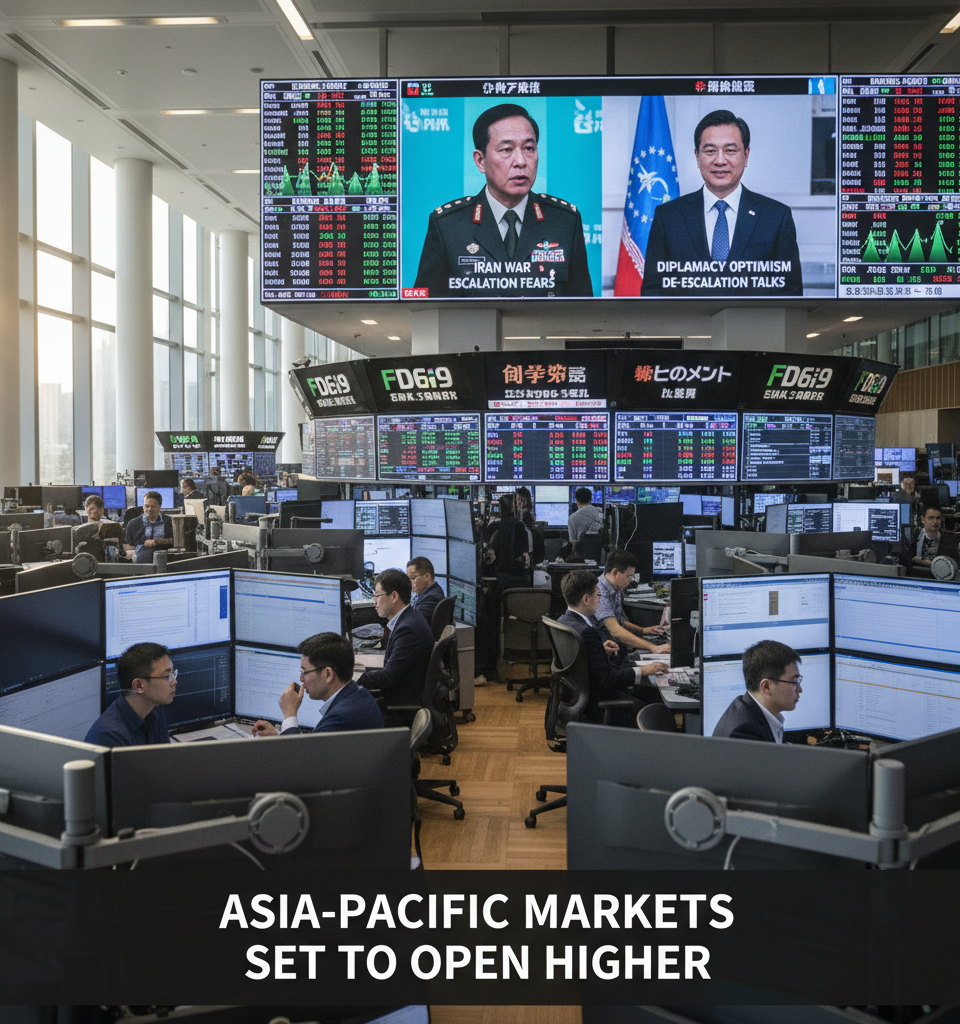
Asia-Pacific markets are projected to commence trading with gains today, May 19, 2026, as investors grapple with a complex and evolving geopolitical landscape centered around Iran. The cautiously optimistic outlook comes despite – or perhaps because of – recent mixed signals emanating from former President Donald Trump regarding the potential for military action versus a diplomatic resolution in the region. The statements have injected a significant degree of volatility into global risk assessments, influencing market sentiment across the board.
The immediate impetus for this market reaction stems from Trump’s latest communication, delivered less than 24 hours ago, which simultaneously escalated threats and offered an olive branch. He explicitly renewed his warning that the United States would target Iran's civilian infrastructure should a comprehensive peace deal not be finalized within the specified timeframe. This stern ultimatum harks back to previous periods of heightened tension and reflects a continuing hardline stance on Iranian nuclear or regional activities. Such pronouncements typically send jitters through global commodity markets, particularly oil, given the Persian Gulf's critical role in energy supply chains. However, the accompanying signal of earnest negotiations appears to have tempered the most severe interpretations.
Diplomacy and Deterrence on the Brink
Crucially, Trump also signaled that Iranian leadership is negotiating in earnest currently. This unexpected acknowledgment of genuine diplomatic engagement offers a stark contrast to the preceding threat, suggesting a dual track of pressure tactics running parallel with active dialogue. The combination of saber-rattling and acknowledgment of serious talks presents a challenging calculus for investors, who must weigh the potential for a sudden military escalation against the prospects of a de-escalation through diplomatic channels. This delicate balance is a primary driver behind the anticipated mixed market movements, as different sectors and asset classes react to diverging probabilities.
Market analysts are closely monitoring these developments, observing that the ambiguity itself is breeding a form of guarded optimism. While the specter of conflict casts a long shadow, the notion of active negotiation injects some hope into what could otherwise be perceived as an intractable crisis. The Asia-Pacific region, with its heavy reliance on stable global trade routes and energy prices, is particularly sensitive to these geopolitical shifts. Any disruption in the Strait of Hormuz, for instance, would have immediate and severe repercussions for regional economies, impacting everything from manufacturing supply chains to consumer prices.
Broader Economic Ripple Effects
The potential for military action against civilian infrastructure, even as a threat, presents a significant risk premium for regional operations. International shipping, insurance costs, and foreign direct investment are all subject to reassessment under such conditions. Conversely, an indication of true progress in peace talks could unlock significant economic opportunities, reduce uncertainty, and potentially lead to a resurgence in investment. The oscillating nature of rhetoric from high-profile figures creates a complex environment for long-term strategic planning, forcing businesses and governments to maintain flexible contingency plans.
The mixed messaging effectively places investors in a wait-and-see scenario, anticipating how the next 24 hours will unfold. This short-term horizon makes it challenging for sustained market trends to establish themselves, leading instead to reactive fluctuations based on the latest headlines. The oil market, in particular, will be under intense scrutiny, with any concrete signs of either escalation or de-escalation likely to trigger immediate price movements. Energy stocks in the Asia-Pacific region may see early gains on the back of rising geopolitical tension, while sectors reliant on stable trade could face headwinds until clearer diplomatic path emerges.
The Path Forward: Anticipating De-escalation or Confrontation
The immediate future hinges on the outcome of the intensified diplomatic efforts purportedly underway. Should a peace deal materialize, markets could experience a significant relief rally, reflecting a reduced risk premium. Conversely, failure to reach an agreement within Trump's stated deadline would likely trigger a sharp downturn, especially if the threats of targeting civilian infrastructure are perceived as credible and imminent. Financial institutions and international trade bodies are already stress-testing various scenarios, preparing for the full spectrum of potential outcomes.
The coming hours are critical for defining the short-term trajectory of global markets, particularly for countries within the Asia-Pacific region deeply intertwined with global commerce and energy flows. The delicate dance between diplomatic overtures and military threats underscores the fragility of geopolitical stability and its profound impact on economic activity worldwide. Investors and policymakers alike will be closely monitoring every signal, however faint, for indications of whether the path leads towards de-escalation or further confrontation, keenly aware that the implications will resonate far beyond the immediate region.