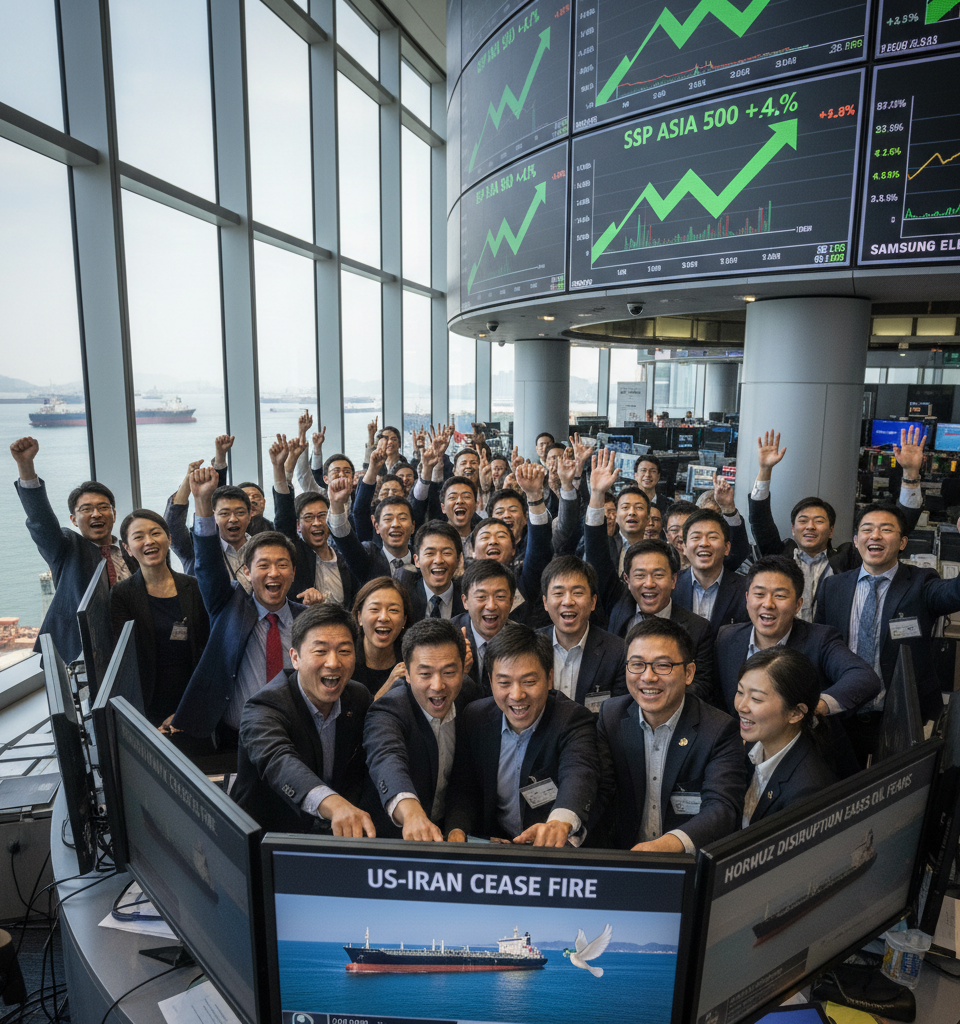
Shares of Asian technology and semiconductor companies experienced a marked surge in trading today, driven by the announcement of a conditional two-week ceasefire agreement between the United States and Iran. This diplomatic breakthrough has significantly alleviated concerns over potential disruptions to global shipping lanes, particularly through the strategically vital Strait of Hormuz, which had been weighing heavily on market sentiment.
The immediate positive reaction in the tech sector underscores the profound interconnectedness of global supply chains with geopolitical stability. The Strait of Hormuz, a narrow waterway between the Persian Gulf and the Gulf of Oman, is a critical transit point for a substantial portion of the world's oil supply and, by extension, the intricate logistics networks that support manufacturing and trade. Geopolitical tensions in this region frequently translate into increased freight costs, insurance premiums, and, most critically for the tech industry, uncertainty regarding the timely delivery of vital components and raw materials.
Geopolitical Easing and Market Rebound
The ceasefire, described as 'conditional' and set for a two-week duration, offers a crucial window for de-escalation and potential further diplomatic efforts. While specific details of the conditions were not immediately disclosed, the mere agreement to halt hostilities for this period was sufficient to trigger a wave of buying in risk-sensitive assets. For the technology and semiconductor sectors, which rely heavily on a stable global environment for manufacturing, distribution, and consumer demand, this news represents a tangible reduction in a significant geopolitical overhang. Many of these companies have extensive supply chains that traverse the sensitive Middle East region, making them particularly vulnerable to any escalation of conflict.
Prior to this announcement, the escalating tensions in the Gulf region had led to heightened volatility and a cautious stance among investors, especially concerning industries with global footprints. Uncertainty surrounding energy prices, which are intrinsically linked to Middle Eastern stability, also plays a critical role in the operational costs and profitability forecasts for these companies. The prospect of unhindered passage through the Strait of Hormuz reduces the risk of supply chain bottlenecks and inflationary pressures on energy and transportation, directly benefiting the cost structures of manufacturers.
Impact on the Asian Semiconductor Sector
The semiconductor industry, a cornerstone of the global technology landscape, was particularly vibrant today. Companies involved in chip manufacturing, design, and equipment production saw their valuations climb. This segment is inherently global, with raw materials often sourced from one region, processed in another, and assembled elsewhere before reaching final markets. Any threat to global maritime security or energy supply directly impacts the complex and often 'just-in-time' delivery models employed by these firms. A stable, open shipping environment is paramount for maintaining the smooth flow of critical components necessary for everything from smartphones to data centers.
The conditional nature of the ceasefire suggests that while immediate concerns have eased, market participants will be closely monitoring developments over the next fortnight. The hope is that this initial agreement will pave the way for a more permanent resolution, further cementing the positive trend observed today. However, the temporary duration also serves as a reminder of the fragility of geopolitical settlements and the potential for a swift reversal of sentiment should negotiations falter.
Broader Economic and Supply Chain Implications
Beyond direct stock performance, the ceasefire’s implications extend to broader economic indicators and supply chain resilience. Reduced geopolitical risk generally fosters a more predictable business environment, encouraging investment and long-term planning. For Asian economies, many of which are heavily reliant on exports of manufactured goods, particularly technology products, a stable global trade route is indispensable. The agreement could also indirectly benefit other sectors such as logistics and insurance, which had been pricing in higher risks associated with the Strait of Hormuz.
As the two-week ceasefire unfolds, market attention will undoubtedly turn to the substance of ongoing diplomatic efforts. Should the ceasefire lead to more substantive talks and a lasting de-escalation of tensions, the positive market reaction observed today could transition from a short-term relief rally to a more sustained period of growth for the technology sector, particularly for those Asian companies deeply integrated into global supply and demand networks. Conversely, any breakdown in negotiations could quickly reintroduce volatility and uncertainty, underscoring the precarious balance of geopolitics on global markets.