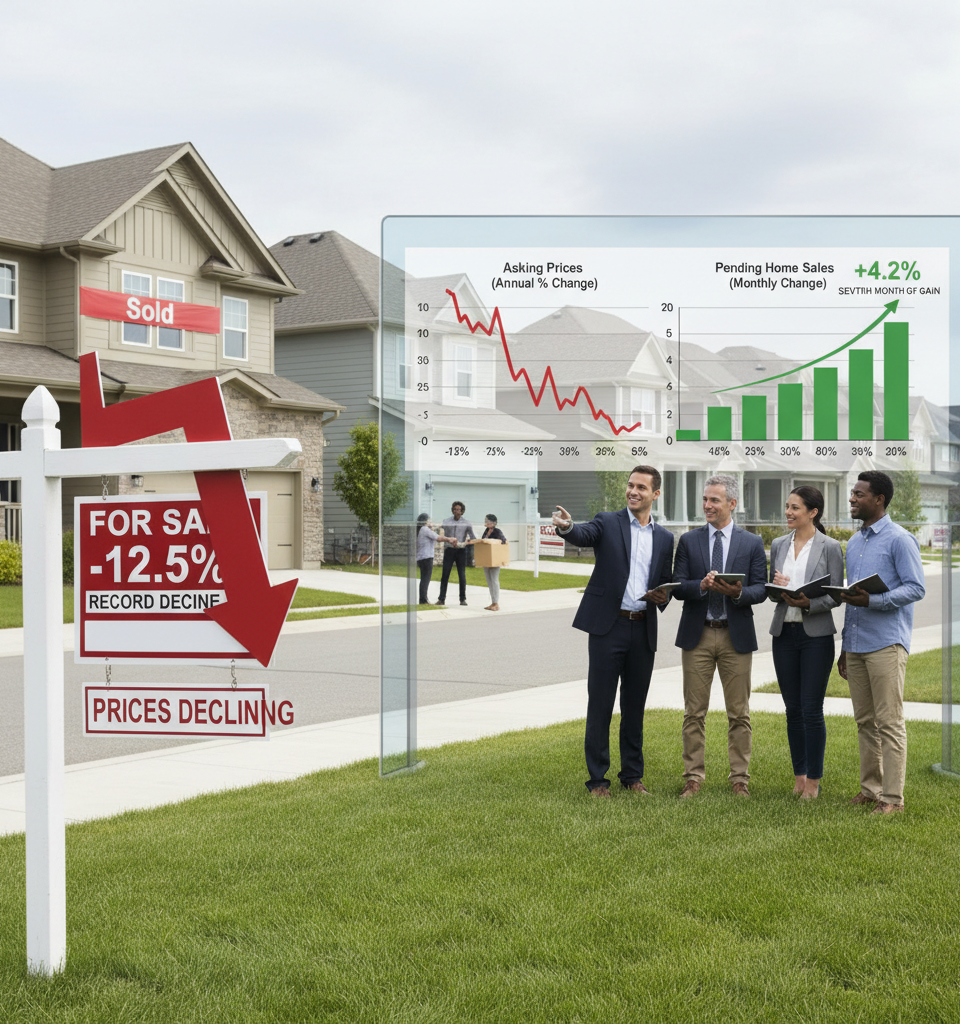
The U.S. housing market is undergoing a notable recalibration, as evidenced by Realtor.com's comprehensive June housing market trends report. Key findings released today, July 2, 2026, indicate that asking prices have registered their largest annual decline on record, a clear signal of sellers adjusting their strategies. Concurrently, pending home sales have demonstrated robust growth, marking their seventh consecutive month of increases, suggesting a responsive buyer base eager to capitalize on more realistic pricing.
Market Dynamics at Play
This evolving landscape signifies a pivotal moment for both buyers and sellers. For an extended period, the housing market was characterized by intense competition and rapidly appreciating values, often leaving prospective buyers at a disadvantage. However, the latest data suggests a shift towards more sustainable conditions. The record-setting decrease in asking prices indicates a broader trend among sellers to price their properties more competitively, moving away from previous expectations driven by an overheated market. This adjustment is proving effective in drawing buyers back into the market, as reflected by the sustained rise in pending sales.
Seller Realism Meets Buyer Demand
The report underscores a crucial interaction between seller behavior and buyer confidence. The record annual drop in asking prices is not merely a statistical anomaly but a direct consequence of sellers embracing more pragmatic valuations for their properties. This willingness to price homes realistically has, in turn, unlocked latent buyer demand. The seven-month upward trajectory in pending sales clearly illustrates that when prices align more closely with buyer expectations and affordability considerations, market activity picks up significantly. This creates a more balanced transactional environment compared to the frenzied pace of recent years.
Broader Economic Impact
The implications of these trends extend beyond individual transactions, affecting the broader economy. A more stable and accessible housing market can contribute to greater consumer confidence and potentially stimulate related sectors such as construction, home improvement, and real estate services. The re-engagement of buyers, spurred by more favorable pricing, could also have a stabilizing effect on financial markets, reducing some of the inflationary pressures previously associated with rapidly appreciating asset values.
What Lies Ahead
Looking forward, market participants will closely monitor whether this trend of record asking price corrections and sustained pending sales growth continues. The current data suggests a potential pathway towards a more normalized housing market, where supply and demand dynamics are less skewed. Future reports will be critical in determining if this recalibration is a sustained shift or a temporary adjustment. For now, the signs point to a market where realistic pricing from sellers is being met with encouraging responsiveness from buyers, setting the stage for continued activity in the coming months.
This rebalancing act is a testament to the market's adaptability. While the record annual decline in asking prices might sound alarming to some, it represents a necessary correction that is invigorating buyer interest. The sustained increase in pending sales offers a positive outlook, confirming that demand for housing remains robust when prices are perceived as fair and attainable. All stakeholders, from potential homeowners to real estate investors, will be keenly observing how these forces continue to shape the trajectory of the housing market through the remainder of 2026 and beyond.